


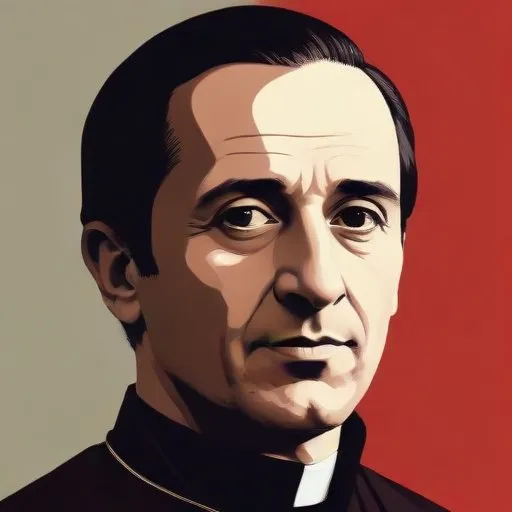
A 14th-century Italian writer who penned influential works on literature, philosophy, and theology, leaving a lasting impact on the Renaissance humanist movement.
Francis of Fabriano, a 13th-century Italian Franciscan friar, is renowned for his extraordinary theological knowledge and literary prowess, earning him the title of a prolific writer on various biblical and theological matters. His remarkable breadth of knowledge characterized his religious life, cementing his position as a prominent figure in the Order of Friars Minor.
Born Francesco Venimbeni on September 2, 1251, in Fabriano, Italy, Francis came from a family of esteemed physicians. His father, a respected doctor, was revered for his compassion towards the poor and ill. Francis's early life was marked by a profound devotion to faith, with him reciting the Divine Office and mastering Latin by the age of ten.
In 1268, Francis felt an intense calling to pursue a religious life, which was met with enthusiasm by his supportive parents. A severe childhood illness, however, threatened to derail his plans. Miraculously, his mother's pilgrimage to the tomb of Francis of Assisi led to his recovery, and it was there that Angelo da Clareno, a close associate of Francis of Assisi, predicted that young Francesco would join the Franciscan Order.
Francis completed his humanities and philosophical studies before seeking admission into the Order of Friars Minor in 1267. At the local convent, he was mentored by Father Gartian and later traveled to Assisi, where he met Brother Leo, one of the earliest companions of St. Francis.
Francis's dedication to theological education and his progressive approach to learning earned him recognition within the order. He acquired an impressive collection of books and publications, including works of Church Fathers, mathematicians, and preachers, which he proudly referred to as the "best workshop in the convent." This pioneering effort laid the groundwork for future generations of Franciscan scholars.
Francis's remarkable contributions to the Franciscan Order have been recognized and celebrated for centuries. On April 1, 1775, Pope Pius VI formally beatified him, acknowledging his extraordinary theological knowledge and commitment to his faith.
Francis of Fabriano's emphasis on education and intellectual pursuits has had a lasting impact on the development of theological studies within the Franciscan Order. His work has inspired generations of scholars, fostering a culture of learning and critical inquiry that continues to shape the order's approach to faith and service.
While few direct quotes from Francis of Fabriano have been recorded, his written works and teachings convey his deep devotion to his faith and his commitment to promoting theological education. His legacy serves as a testament to the power of knowledge and service in the pursuit of a life of faith.
Francis of Fabriano's life and work occurred during a transformative period in the history of the Franciscan Order, marked by rapid growth and expansion. His contributions to the order's intellectual and spiritual development have left an indelible mark, solidifying his position as a pivotal figure in Franciscan history.
Through his remarkable life and achievements, Francis of Fabriano continues to inspire Franciscans and scholars around the world, serving as a beacon of knowledge, faith, and service.
Born in 1304
A 14th-century Italian poet and scholar who pioneered the Renaissance humanist movement, revitalizing interest in classical Greek and Roman literature, and inspiring a new era of artistic and intellectual exploration.
