


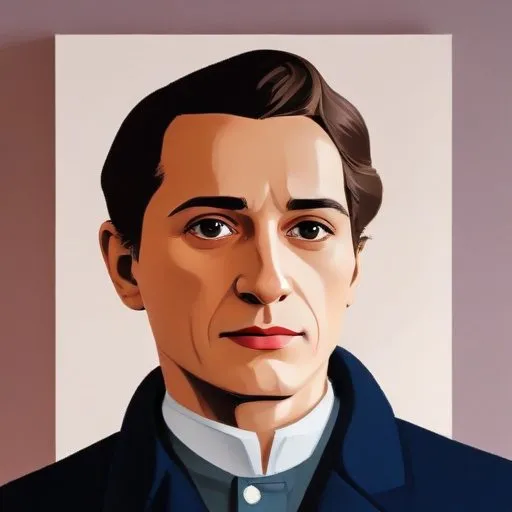
A renowned French writer and satirical editor, best known for founding the provocative magazine Hara-Kiri, which challenged social norms and pushed boundaries of free speech.
Franois Cavanna, the renowned French author and satirical newspaper editor, left an indelible mark on the world of journalism and literature with his groundbreaking works that fearlessly poked fun at the establishment and championed the outsider's perspective. As the co-founder of Hara-Kiri and Charlie Hebdo, two of France's most provocative and iconic satirical publications, Cavanna's irreverent wit and unapologetic penmanship continue to inspire and provoke to this day.
Born on February 22, 1923, in Nogents-sur-Marne, France, Cavanna grew up in a community of Italian immigrants, an experience that would later shape his unique perspective and inform his writings. His father, an Italian from Bettola, Italy, instilled in Cavanna a love for storytelling and a strong sense of justice, which would become hallmarks of his later work.
Cavanna's journalistic debut began in 1945, when he joined the daily newspaper Libération. However, it was his collaboration with fellow writer and artist Georges Wolinski that led to the creation of Hara-Kiri, a satirical weekly that rapidly gained notoriety for its biting wit and audacious cartoons. The magazine's success was short-lived, as it was banned in November 1969. Undeterred, Cavanna and his team responded by renaming the magazine Charlie Hebdo, a move that would cement the publication's status as a beacon of French counterculture.
Cavanna's literary output was as prolific as it was diverse, spanning genres such as reportage, satire, essays, novels, and autobiography. His autobiographical works, including Les Ritals and Lil du lapin, offered a poignant and humorous exploration of his childhood and experiences as a young Italian immigrant in France. The latter book, in particular, showcased Cavanna's skill in weaving together tales of his family's struggles and the hardships faced by the immigrant community.
Cavanna was not only a prolific writer but also a skilled translator. He translated six books about famous cartoonists, including works by Al Capp (Lil Abner) and Wilhelm Busch (Max et Moritz). His literary prowess was recognized with the prestigious Prix Interallié in 1979 for his novel Les Russkoffs, a powerful exploration of his experiences during World War II.
Franois Cavanna's contributions to French literature and journalism are immeasurable. Through his work, he challenged the status quo, lampooned the powerful, and gave voice to the marginalized. His influence can be seen in the many satirical writers and cartoonists who followed in his footsteps, including his own contemporaries at Charlie Hebdo. Cavanna's unwavering commitment to free speech and his fearless satire continue to inspire new generations of writers, artists, and thinkers.
In his later years, Cavanna continued to write, despite being afflicted with Parkinson's disease. His final book, Lune de miel, offered a heart-wrenching and humorous account of his struggles with the disease. Franois Cavanna passed away on January 29, 2014, leaving behind a rich literary legacy that continues to captivate and provoke audiences to this day.
97 Years Old
A provocative French cartoonist known for his biting satire and controversial comics that tackled sensitive topics like politics, religion, and social issues. His work sparked intense debates and censorship.
99 Years Old
Creator of beloved comics like Asterix and Lucky Luke, bringing humor and wit to generations of readers.
99 Years Old
Creator of the beloved comic book series Asterix, known for his humorous and detailed illustrations that brought ancient civilizations to life.
92 Years Old
A French multi-hyphenate who excelled in various roles behind and in front of the camera, crafting unique films that often blended comedy and social commentary. He's most known for his offbeat, satirical style and provocative subject matter.
88 Years Old
A renowned French cartoonist and satirist, known for his provocative and humorous comics that tackled politics, social issues, and current events. His work often sparked controversy and public debate.
