


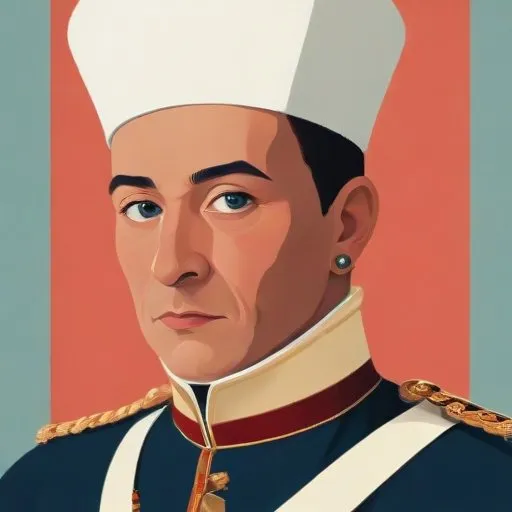
A 17th-century French military leader and Marshal of France, renowned for his victories in the War of the Mantuan Succession and his role in the Thirty Years' War.
Franois de Bonne, Duke of Lesdiguires, was a French soldier of the French Wars of Religion and one of the most renowned Constables of France, earning him the esteemed title of Marshal General of France, a distinction shared by only six others in history. His bravery, strategic prowess, and unwavering commitment to the Huguenot cause have cemented his legacy as a celebrated figure in French military history.
Born on April 1, 1543, in Saint-Bonnet-en-Champsaur, Franois de Bonne hailed from a family of notaries with noble aspirations. He received his education in Avignon under the guidance of a Protestant tutor, and later pursued the study of law in Paris before enlisting in the French army as an archer.
Franois de Bonne served under the lieutenant-general of his native province of Dauphin, Bertrand de Simiane, baron de Gordes. However, when the Huguenots raised troops in Dauphin, Lesdiguires defected to their cause, showcasing his bold yet prudent handling of troops under the command of his kinsman Antoine Rambaud de Furmeyer, whom he succeeded in 1570. He fought valiantly in the Battle of Jarnac and the Battle of Moncontour, earning recognition for his military acumen.
Following the execution of Charles du Puy de Montbrun in Grenoble in 1575, Franois de Bonne became the de facto leader of the Huguenot resistance in the region, earning the title of commandant general. This appointment was subsequently confirmed by Marshal Doraville in 1577, Henry II, Prince of Condé in 1580, and Henry of Navarre in 1582.
In 1577, Lesdiguires seized control of Gap through a daring night attack, reestablishing the reformed religion in the region and fortifying the town. Despite initial successes, he was eventually compelled to surrender Gap to Mayenne in 1580 and witness the dismantling of the fortifications. Undeterred, he continued to fight for the Huguenot cause, securing better terms for the province after two years of intense fighting.
Franois de Bonne's remarkable military career and unwavering dedication to the Huguenot cause have earned him a revered place in French history. He was promoted to the esteemed rank of Marshal General of France, a distinction shared by only six others in the country's history. His name has become synonymous with bravery, strategic brilliance, and unwavering commitment, inspiring generations to come.
Franois de Bonne's military prowess and leadership have had a lasting impact on modern society, serving as a testament to the power of courage, perseverance, and conviction. His unwavering commitment to the Huguenot cause has inspired generations of leaders and military strategists, cementing his legacy as one of the most revered figures in French history.
Born in 1785
The last king of the French monarchy before the French Revolution, known for his tragic and mysterious life, including his imprisonment and disputed death.
Born in 1585
A powerful and cunning statesman who dominated French politics during the 17th century, known for his ruthless suppression of dissent and centralization of power. He was a master strategist and diplomat who shaped the course of European history.
Born in 1608
Third son of King Henry IV of France, a rebellious prince who plotted against his brother King Louis XIII and was known for his military prowess and romantic escapades.
Born in 1579
A French Huguenot leader and writer, known for his military prowess and influential works on politics and warfare. He played a key role in the French Wars of Religion.
Born in 1587
Ruler of Savoy from 1630 to 1637, he played a key role in the Thirty Years' War and expanded his duchy through strategic alliances and military campaigns.
Born in 1562
Ruler of Savoy from 1580 to 1630, he expanded his territories through strategic marriages and military campaigns, earning the nickname "the Great".
