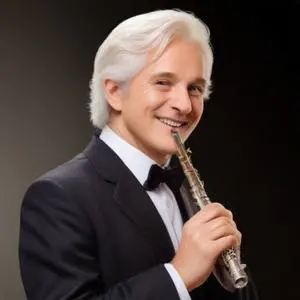
Frans Brggen: The Virtuoso of Recorder and Baroque Flute
A Musical Genius Known for His Innovative Approach
Frans Brggen was a renowned Dutch conductor, recorder player, and baroque flautist, celebrated for his unparalleled mastery of the recorder and his pioneering efforts in historically informed performance practice. Throughout his illustrious career, he introduced novel techniques that revolutionized the way recorder music was played, earning him widespread acclaim and recognition.
Early Life and Education
Born on October 30, 1934, in Amsterdam, Brggen was the youngest of nine children to August Brggen, a textile factory owner, and his wife Johanna ne Verkley, an amateur singer. He embarked on a musical journey at a young age, studying recorder and flute at the Amsterdam Muzieklyceum. Additionally, he pursued musicology at the University of Amsterdam, laying the foundations for his future success.
Academic Appointment and Early Success
At the tender age of 21, Brggen was appointed professor at the Royal Conservatory of The Hague in 1955, a testament to his exceptional talent and dedication. As a virtuoso of the recorder and baroque flute, he commissioned several works, including
Luciano Berio's "Gesti" (1965), which further solidified his reputation in the music world.
Founding of Sour Cream and Innovative Performance Style
In 1972, Brggen co-founded the avant-garde recorder ensemble Sour Cream with Kees Boeke and Walter van Hauwe. This collaboration allowed him to experiment with innovative techniques, such as bending notes in slow passages for emotional effect, warming and cooling tone, and employing messa di voce and rubato. While these approaches initially sparked controversy, they have since become an integral part of historically informed performance practice.
Orchestra of the Eighteenth Century and Later Career
In 1981, Brggen co-founded the Orchestra of the Eighteenth Century (Orkest van de Achttiende Eeuw) with Sieuwert Verster, serving as its de facto chief conductor until his passing. This ensemble aimed to perform classical music on period instruments, adhering to the original composition and intent of the pieces. In 1992, the Orchestra of the Age of Enlightenment (OAE) appointed him as co-principal guest conductor, alongside
Simon Rattle. The OAE later bestowed upon him the title of Emeritus Conductor in 2007.
Radio Kamerorkest and Later Conducting Engagements
From 1991 to 1994, Brggen conducted the Radio Kamerorkest in the Netherlands. He subsequently became joint chief conductor of the orchestra, alongside Pter Etvs, from 2001 until its dissolution in 2005. He also conducted the final concert of the successor to the Radio Kamerorkest, the Netherlands Radio Chamber Orchestra.
Legacy and Impact on Modern Society
Frans Brggen's groundbreaking contributions to recorder music and historically informed performance practice have left an indelible mark on the world of classical music. His innovative approach has inspired generations of musicians, encouraging them to explore and experiment with new techniques. Through his tireless efforts, he has elevated the status of the recorder and baroque flute, cementing their place in the classical music repertoire.
Awards and Honors
Throughout his illustrious career, Brggen received numerous awards and honors, acknowledging his outstanding achievements in the field of music.
- Emeritus Conductor, Orchestra of the Age of Enlightenment (2007)
- Coprincipal Guest Conductor, Orchestra of the Age of Enlightenment (1992)
Personal Milestones and Key Life Events
Frans Brggen's life was marked by significant milestones, shaping his career and personal growth.
- October 30, 1934: Born in Amsterdam, Netherlands
- 1955: Appointed professor at the Royal Conservatory of The Hague
- 1972: Co-founded Sour Cream with Kees Boeke and Walter van Hauwe
- 1981: Co-founded Orchestra of the Eighteenth Century with Sieuwert Verster
- August 13, 2014: Passed away at the age of 79
Philosophical Contributions and Beliefs
Brggen's innovative approach to music was deeply rooted in his philosophical beliefs. He advocated for a more expressive and nuanced approach to recorder playing, believing that music should evoke emotions and convey a sense of humanity.
Influence on Pop Culture
Frans Brggen's work has transcended the realm of classical music, influencing popular culture and inspiring artists across various genres. His legacy continues to inspire new generations of musicians and music enthusiasts alike.
Trivia and Fun Facts
* Frans Brggen was known for his remarkable stage presence, often conducting with his eyes closed, fully immersed in the music.
* He was a strong advocate for the use of period instruments in classical music performances.
Despite his passing in 2014, Frans Brggen's impact on classical music remains profound, ensuring his legacy as a virtuoso of the recorder and baroque flute continues to inspire and educate audiences worldwide.