


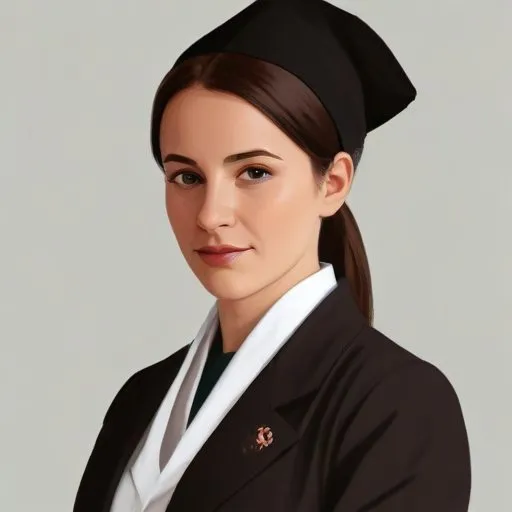
A Czech-Austrian physician and academic who discovered the Chvostek sign, a clinical sign used to diagnose tetany, and made significant contributions to the field of neurology. He also taught and mentored many notable physicians.
Frantiek Chvostek, a Czech-Austrian military physician, is renowned for his groundbreaking discovery of Chvostek's sign, a crucial diagnostic indicator of tetany. This valuable contribution to the field of medicine has cemented his legacy as a pioneer in the diagnosis and treatment of electrolyte imbalances.
Born on May 21, 1835, in Frdek-Mstek, Moravia, Chvostek pursued his medical studies at the prestigious Josephs-Akademie, where he earned his doctorate in 1861. His academic excellence and dedication to the field of medicine laid the foundation for his future accomplishments.
Chvostek's professional journey began at the Garnisonsspital Nr. 1 in Vienna, where he served until 1863. He later became the assistant to Adalbert Duchek from 1863 to 1867, gaining valuable experience and insight into the world of electrotherapy. In 1868, he took on the role of lecturer on electrotherapy at the Josephs-Akademie, solidifying his expertise in the field.
In 1871, Chvostek assumed the responsibility of heading Duchek's medical clinic, a position he held until the academy's closure in 1874. His leadership and expertise led to his appointment as chief of the internal department of the Garnisonsspital Nr. 1, a position he held until his passing in 1884.
In 1876, Chvostek made a landmark discovery, describing Chvostek's sign, a distinctive facial muscle spasm indicative of tetany. This breakthrough finding has since become an essential diagnostic tool for medical professionals worldwide, revolutionizing the diagnosis and treatment of electrolyte imbalances.
Chvostek's outstanding contributions to the field of medicine earned him the title of Oberstabsarzt and professor, a testament to his dedication and expertise.
Throughout his life, Chvostek demonstrated a commitment to his craft, balancing his professional pursuits with personal milestones. His unwavering passion for medicine and his groundbreaking discovery have left an indelible mark on the medical community.
Chvostek's sign has had a profound impact on modern medicine, enabling medical professionals to diagnose and treat electrolyte imbalances with greater accuracy and confidence. His legacy extends beyond the medical community, influencing the lives of countless individuals afflicted with tetany and related conditions.
Frantiek Chvostek's remarkable journey, marked by his groundbreaking discovery of Chvostek's sign, has etched his name in the annals of medical history. His pioneering spirit, coupled with his unwavering commitment to the field of medicine, has left an enduring legacy that continues to inspire and benefit generations of healthcare professionals and patients alike.
Born in 1722
Inventor of percussion, a diagnostic technique where doctors tap on the chest to detect abnormalities, revolutionizing medical diagnosis. This innovation paved the way for modern diagnostic methods.
Born in 1818
Pioneering doctor who introduced handwashing to reduce hospital infections, saving countless lives. He championed antiseptic practices in medicine, revolutionizing healthcare.
Born in 1856
Pioneering psychoanalyst who developed theories on the subconscious mind, childhood experiences, and the structure of personality, revolutionizing our understanding of human behavior and psychology.
Born in 1857
Austrian physician and academic who pioneered the use of fever therapy to treat mental illness, earning a Nobel Prize in Physiology or Medicine in 1927.
