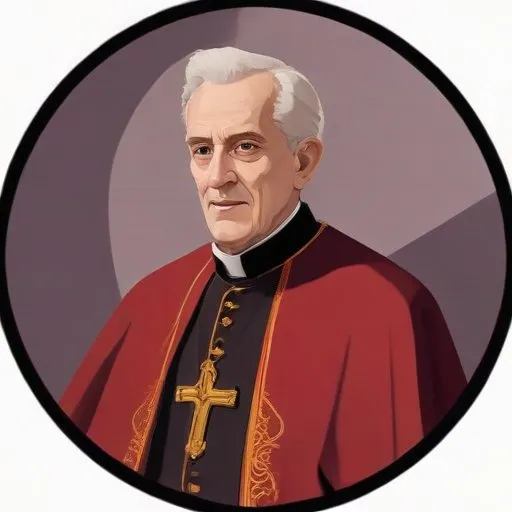
Franz Jchym: A Trailblazing Bishop and Theologian
A Champion of Catholic Values in Turbulent Times
Franz Jchym was a prominent Austrian prelate of the Roman Catholic Church, known for his unwavering commitment to Catholic values and his courageous stance against Nazi occupation during World War II. As the Coadjutor Bishop of Vienna and Titular Archbishop of Maronea, Jchym made significant contributions to the Church, academia, and society, leaving an indelible mark on modern Catholicism.
Early Life and Education
Born on September 3, 1910, in Vienna, Austria-Hungary, Jchym's life took a dramatic turn when he was orphaned at the tender age of eight. Despite this setback, he persevered and entered the Knabenseminar Hollabrunn, a minor seminary in Vienna, in 1925. Jchym's academic prowess earned him a place at the Seminary of Vienna, where he studied theology and went on to earn his Doctor of Divinity from the University of Vienna in 1941.
A Priest in Turbulent Times
On July 19, 1936, Jchym was ordained a priest, and his first assignment was as parochial vicar of Purkersdorf. Just three months later, he returned to work in the chancery of the Archdiocese of Vienna. During this period, Jchym participated in the Rosary demonstration in 1938, a bold protest against the Nazi occupation of Austria. The subsequent violence left him injured, but his spirit remained unbroken.
Rise to Episcopacy
On January 20, 1950, Jchym was appointed Coadjutor Bishop of Vienna and Titular Archbishop of Maronea. His episcopal consecration took place on May 23, 1950, at St. Stephen's Cathedral. As bishop, Jchym continued to teach moral theology at the University of Vienna, earning him the respect of both the academic and ecclesiastical communities.
Legacy and Impact
Franz Jchym's life was a testament to his unwavering commitment to Catholic values, academic excellence, and social justice. Through his teachings, writings, and courageous actions, he inspired generations of Catholics and theologians. Despite facing turbulent times, Jchym remained steadfast in his convictions, leaving behind a legacy that continues to shape modern Catholicism.
Personal Milestones and Key Life Events
- September 3, 1910: Born in Vienna, Austria-Hungary
- 1925: Entered the Knabenseminar Hollabrunn, a minor seminary in Vienna
- 1936: Ordained a priest on July 19
- 1938: Participated in the Rosary demonstration against Nazi occupation
- 1941: Earned his Doctor of Divinity from the University of Vienna
- 1947: Earned habilitation
- 1950: Appointed Coadjutor Bishop of Vienna and Titular Archbishop of Maronea
- 1950: Consecrated as bishop on May 23
- 1983: Retired as bishop
- November 29, 1984: Passed away
Philosophical Contributions and Beliefs
Throughout his life, Franz Jchym remained committed to the principles of Catholic moral theology, emphasizing the importance of faith, reason, and compassion. His teachings and writings continue to inspire theologians, scholars, and laypeople alike, solidifying his place as a prominent figure in modern Catholic thought.
Influence on Modern Society
Franz Jchym's courageous stance against Nazi occupation, coupled with his unwavering commitment to Catholic values, has had a profound impact on modern society. His legacy serves as a beacon of hope, inspiring individuals to stand up against injustice and promote social justice, tolerance, and understanding.
FAQ
What was Franz Jáchyms role in the Catholic Church?
Franz Jáchym was a prominent figure in the Catholic Church, serving as the Archbishop of Vienna from 1956 to 1983. He played a key role in the churchs response to the challenges of the post-war era.
What was Franz Jáchyms stance on social and political issues?
Franz Jáchym was a vocal advocate for social justice, human rights, and ecumenism. He was also a strong critic of totalitarian regimes and defended the rights of religious minorities.
What were Franz Jáchyms achievements as Archbishop of Vienna?
Franz Jáchyms achievements as Archbishop of Vienna include his efforts to rebuild the church in Austria after World War II, his promotion of ecumenical dialogue, and his support for the Catholic Charismatic Renewal movement.
What was Franz Jáchyms relationship with the Vatican?
Franz Jáchym had a close relationship with the Vatican, serving as a confidant to several popes, including Pope John XXIII and Pope Paul VI. He was also involved in the Second Vatican Council.
What is Franz Jáchyms legacy in the Catholic Church?
Franz Jáchyms legacy in the Catholic Church is that of a dedicated shepherd who worked tirelessly to promote ecumenism, social justice, and human rights. He remains a highly respected figure in Austrian Catholicism.