


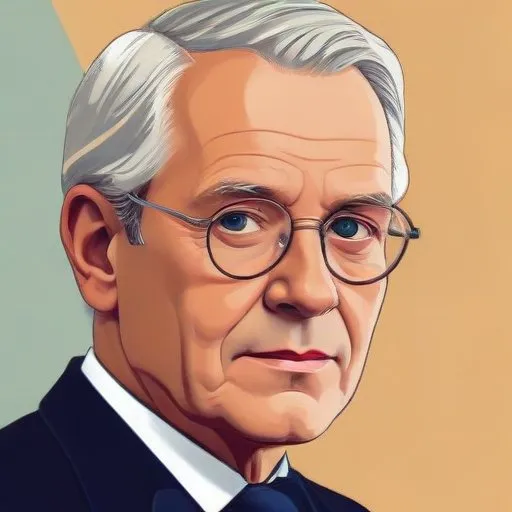
A Dutch psychiatrist and writer who pioneered the concept of group therapy and wrote influential novels exploring the human psyche. His literary works often blurred the lines between fantasy and reality.
Known for his profound contributions to Dutch literature and psychiatry, Frederik van Eeden was a multi-talented individual who left an indelible mark on both fields. As a prominent member of the Tachtigers, a group of Dutch writers who sought to revolutionize Dutch literature, van Eeden's works were instrumental in shaping the country's literary landscape.
Born on April 3, 1860, in Haarlem, Netherlands, van Eeden was the son of Frederik Willem Van Eeden, director of the Royal Tropical Institute in Haarlem. He studied medicine in Amsterdam, where he developed a bohemian lifestyle and began writing poetry. During this period, he coined the term "lucid dream," which is now a standard term in the study of dreams, referring to the ability to dream while knowing that one is dreaming.
Van Eeden's writing career spanned multiple genres, including novels, poetry, plays, and essays. His works were heavily influenced by Hindu ideas of selfhood, Boehme's mysticism, and Fechner's panpsychism. His novel, De koele meren des doods (translated to The Deeps of Deliverance), published in 1900, is a deeply psychological exploration of a woman's struggle with morphine addiction.
One of his most celebrated works is the fantastical adventure, De Kleine Johannes (Little Johannes), which first appeared in the premiere issue of De Nieuwe Gids. This work cemented his status as a leading figure in Dutch literature, showcasing his unique blend of psychological insight and literary flair.
In addition to his literary pursuits, van Eeden was a practicing psychiatrist. His treatment of fellow writer Willem Kloos, a member of the Tachtigers, reflects his commitment to applying his psychiatric insights in real-world settings. Van Eeden's psychiatric practice also informed his writing, as seen in his novel, De koele meren des doods.
Van Eeden's contributions to Dutch literature and psychiatry are undeniable. His works not only shaped the country's literary landscape but also paved the way for future generations of writers and psychiatrists. As a pioneer in both fields, van Eeden's legacy continues to inspire and influence scholars and practitioners today.
Van Eeden's personal life was marked by his bohemian lifestyle during his early years in Amsterdam. He was known for his charismatic personality and his ability to inspire and influence those around him. Despite struggling with personal demons, van Eeden remained committed to his craft, producing works that continue to captivate readers and inspire writers to this day.
Frederik van Eeden passed away on June 16, 1932, in Bussum, Netherlands, leaving behind a rich legacy that continues to shape the world of Dutch literature and psychiatry.
Born in 1856
Pioneering psychoanalyst who developed theories on the subconscious mind, childhood experiences, and the structure of personality, revolutionizing our understanding of human behavior and psychology.
Born in 1875
Developed the concept of collective unconscious and archetypes, and founded analytical psychology, which emphasizes the integration of opposites and the process of individuation.
Born in 1857
A Swiss psychiatrist who coined the term "schizophrenia" and developed a more humane approach to treating mental illnesses, also advocating for forced sterilization of people with mental disabilities.
Born in 1825
A pioneering neurologist and psychologist who laid the groundwork for modern psychiatry, particularly in the study of hysteria and hypnosis.
Born in 1842
Pioneering philosopher and psychologist who explored the nature of consciousness, free will, and religious experience, and is known for his pragmatic approach to philosophy and psychology.
Born in 1734
A German physician and astrologer who developed a theory of "animal magnetism" and is considered the father of hypnosis, known for his controversial and influential ideas about the power of the mind.
