


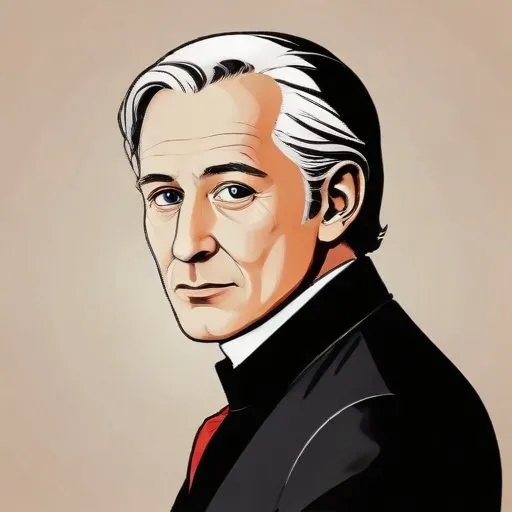
A German composer and conductor who helped establish the Finnish national opera and is credited with composing the music to Finland's national anthem, known for his romantic-style operas.
Fredrik Pacius is celebrated as the Father of Finnish music, a title bestowed upon him for his immense contribution to the country's musical heritage. Born in Hamburg, Germany in 1809, Pacius spent most of his life in Finland, where he composed the country's national anthem, among many other iconic works.
A German-Finnish composer and conductor, Pacius was appointed music teacher at the University of Helsinki in 1834. This marked the beginning of his remarkable journey, during which he founded a musical society, the student choir Akademiska Sngfreningen, and an orchestra.
Pacius' compositions are a testament to his artistic genius. He wrote the music to the poem "Vrt land" by Johan Ludvig Runeberg, which became Finland's national anthem. He also composed music for the Estonian national anthem "Mu isamaa, mu nn ja rm" and the Livonian ethnic anthem "Min izm, min sindim".
In 1852, Pacius created "Kung Karls jakt" (The Hunt of King Charles), the first Finnish opera, with a libretto written by Zacharias Topelius. This masterpiece was designed to showcase Finnish loyalty to the Russian Emperor Nicholas I, who ruled Finland at the time.
His impressive repertoire includes a violin concerto, a symphony, a string quartet, and several operas. Pacius' music is a perfect blend of Romantic nationalism, showcasing his deep understanding of Finnish culture and heritage.
Although Pacius did not receive any specific awards or honors during his lifetime, his legacy has been recognized and celebrated by the Finnish people. He is revered as a national hero, and his music continues to inspire generations of Finns.
Fredrik Pacius passed away on January 8, 1891, at the age of 81, leaving behind a rich cultural heritage. His music has been performed and admired for over a century, and his influence can be seen in the works of many Finnish composers who followed in his footsteps.
Fredrik Pacius' life was a testament to his dedication to Finnish music and culture. His compositions continue to inspire and delight audiences, and his legacy as the Father of Finnish music remains unchallenged. As we celebrate his life and works, we are reminded of the power of music to bring people together and create a sense of national identity.
Born in 1865
A Finnish master of classical music, renowned for his symphonies and tone poems that evoke the mystique of his native land. His iconic works, such as "Finlandia," have become synonymous with Finnish culture.
Born in 1809
A renowned 19th-century musician who masterfully blended classical and romantic styles, creating iconic works like the "Wedding March" and "Elijah" oratorio. His compositions continue to inspire and influence generations of artists.
Born in 1813
A revolutionary composer who transformed opera with his epic, mythological works, creating a new era of musical storytelling. His iconic operas, such as "Der Ring des Nibelungen," continue to captivate audiences worldwide.
Born in 1813
A renowned composer of iconic operas like La Traviata and Aida, known for his masterful blending of drama and music. His works continue to captivate audiences worldwide.
Born in 1811
A virtuosic pianist and composer who revolutionized classical music with his technically demanding and emotionally expressive works, blending Hungarian folk influences with Romantic-era drama.
Born in 1833
A renowned pianist and composer, he crafted complex, expressive works that blended traditional and innovative techniques, leaving an indelible mark on classical music.
Born in 1841
A Czech composer and academic who blended folk influences with classical music, creating iconic works like the "New World Symphony".
Born in 1840
A renowned Russian composer and educator, he is best known for his iconic and beloved ballets, such as Swan Lake and The Nutcracker, which continue to enchant audiences worldwide.
