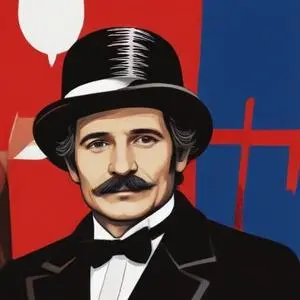
Antonn Dvok: The Master of Symphonic Fusion
The Legacy of a Czech Composer
Antonn Dvok, a renowned Czech composer, is celebrated for his unique blend of folk rhythms and classical symphonic traditions, which earned him international acclaim and recognition as one of the most versatile composers of his time. His iconic works, such as the Slavonic Dances and the Symphony From the New World, continue to captivate audiences worldwide.
Early Life and Musical Beginnings
Born on September 8, 1841, in Nelahozeves, Bohemia (now part of the Czech Republic), Dvok displayed exceptional musical talent from an early age. He began taking violin lessons at the age of six and went on to study music composition at the Prague Organ School.
Rise to Prominence
Dvok's compositions gained recognition in the early 1870s, with his first public performances taking place in Prague in 1872 and 1873. His breakthrough came in 1874, when he won the Austrian State Competition, with
Johannes Brahms on the jury. This victory led to Brahms recommending Dvok to his publisher, Simrock, who commissioned the famous Slavonic Dances, Op. 46.
International Success and Critical Acclaim
The Slavonic Dances, with their lively rhythms and folk-inspired melodies, became an instant success, propelling Dvok to international fame. The sheet music sold extensively, and the work received critical acclaim worldwide. This led to numerous performances of his compositions in the United Kingdom, the United States, and Russia.
New Horizons: America and the National Conservatory of Music
In 1892, Dvok became the director of the National Conservatory of Music of America in New York City, a position that allowed him to share his expertise and passion for music education. During his time in the United States, he composed some of his most celebrated works, including the Symphony From the New World and the Cello Concerto.
Personal Milestones and Key Life Events
- 1874: Wins the Austrian State Competition, with Johannes Brahms on the jury
- 1877: Composes the Slavonic Dances, Op. 46, which becomes an instant success
- 1883: Performs his Stabat Mater in London, leading to increased international recognition
- 1892: Becomes the director of the National Conservatory of Music of America in New York City
- 1893: Composes his famous Symphony From the New World, while on summer vacation in Spillville, Iowa
Philosophical Contributions and Beliefs
Dvok's compositions often reflected his deep connection to his Czech heritage and his commitment to preserving and promoting folk music traditions. He believed that music had the power to bring people together and transcend cultural boundaries.
Quotes and Memorable Sayings
- "Music is the expression of the human spirit, and it should be accessible to all."
- "Folk music is the foundation of our national identity, and it deserves to be celebrated."
Historical Context and Legacy
Dvok's unique blend of folk and classical music helped shape the course of Czech classical music. His contributions to the genre paved the way for future generations of composers, including Bohuslav Martinů and
Josef Suk. Today, Dvok's music remains an integral part of classical music repertoire, with his compositions continuing to inspire and delight audiences worldwide.
Awards and Honors
- Austrian State Competition (1874)
- Appointed director of the National Conservatory of Music of America (1892)
Influence on Modern Society
Dvok's music has transcended cultural boundaries, influencing composers and musicians across the globe. His commitment to preserving folk music traditions has inspired many to appreciate and celebrate their own cultural heritage.
FAQ
What is Antonín Dvořáks most famous composition?
Antonín Dvořáks most famous composition is his Symphony No. 9 From the New World, which was written during his time in the United States. The symphony is considered one of the most popular and iconic works of classical music.
What was Antonín Dvořáks role in Czech music?
Antonín Dvořák was a prominent Czech composer and academic who played a significant role in promoting Czech music and culture. He was a leading figure in the development of Czech classical music and helped to establish the Prague Conservatory.
What is Antonín Dvořáks opera Rusalka about?
Antonín Dvořáks opera Rusalka is a fairy tale opera that tells the story of a water nymph who falls in love with a prince. The opera is considered one of Dvořáks most popular and enduring works.
What was Antonín Dvořáks relationship with Brahms?
Antonín Dvořák had a close relationship with Johannes Brahms, a prominent German composer. Brahms was a mentor and friend to Dvořák, and helped to promote his music in Europe.
How did Antonín Dvořák die?
Antonín Dvořák died on May 1, 1904, in Prague, Czech Republic. He died of natural causes and was buried in the Vyšehrad Cemetery, Prague.