


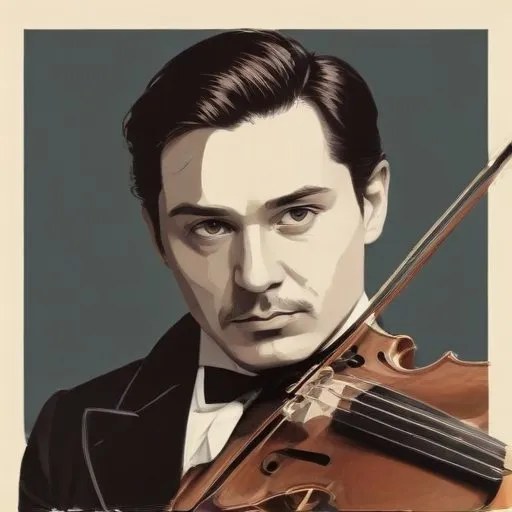
A Czech virtuoso violinist and composer, known for his romantic and expressive works, including his iconic Asrael Symphony, which showcases his mastery of orchestration and emotional depth.
Josef Suk, a renowned Czech composer and violinist, is best known for his profound chamber works and symphonies that echoed the tumultuous landscapes of his life. His music, a testament to his profound connection with nature and humanity, continues to resonate with audiences today.
Born on January 4, 1874, in Keovice, Bohemia, Suk was immersed in music from a young age. His father, Josef Suk Sr., taught him the organ, violin, and piano, laying the foundation for his future compositions.
Suk's musical prowess was further refined under the guidance of esteemed Czech violinist Antonín Bennewitz and composers such as Josef Bohuslav Foerster, Karel Knittl, and Karel Stecker. However, it was his mentorship under Antonín Dvořák, one of Czech Republic's most celebrated composers, that had the most profound impact on his life and work.
Suk's bond with Dvořák went beyond mere mentorship. In 1898, he married Dvořák's daughter, Otilie, marking the beginning of a blissful chapter in his life. This union not only brought Suk closer to his mentor but also infused his music with a sense of joy and optimism.
Tragedy struck, however, when Suk lost both Dvořák and Otilie within a span of 14 months around 1905. This devastating blow inspired Suk's iconic Asrael Symphony, a poignant reflection of his grief and struggle to come to terms with the loss.
Suk, alongside Vítězslav Novák and Otakar Ostrčil, is revered as one of the leading figures of Czech Modernism. His works, deeply rooted in Dvořák's legacy, showcased a unique blend of traditional folk elements and innovative harmony.
Suk's compositions, characterized by their intense emotional depth, captured the attention of prominent musical figures such as Johannes Brahms, Gustav Mahler, and Alban Berg. His involvement with the Czech Quartet further solidified his position as a stalwart of Czech musical heritage.
Suk's symphonies and chamber works continue to inspire generations of musicians and composers. His influence can be seen in the works of contemporaries such as Otakar Ostrčil, with whom he shared a common heritage and artistic vision.
Through his music, Suk transcended the boundaries of tragedy and sorrow, crafting a legacy that echoes the beauty and complexity of the human experience. As we delve into his life and works, we are reminded of the transformative power of art to heal, to console, and to inspire.
Suk's contributions to Czech music earned him numerous accolades, including the prestigious title of Professor of Composition at the Prague Conservatory.
Today, Suk's music remains a testament to the enduring power of art to transcend time and circumstance. As we celebrate his life and legacy, we are reminded of the profound impact he had on the world of classical music.
Born in 1841
A Czech composer and academic who blended folk influences with classical music, creating iconic works like the "New World Symphony".
Born in 1824
A Czech pianist and composer who is often referred to as the father of Czech national music, known for his operas and symphonic poems that evoke a strong sense of national identity.
Born in 1854
A Czech composer and theorist who created innovative, folk-inspired operas and orchestral works that explored the human experience, often with a focus on social justice and morality.
