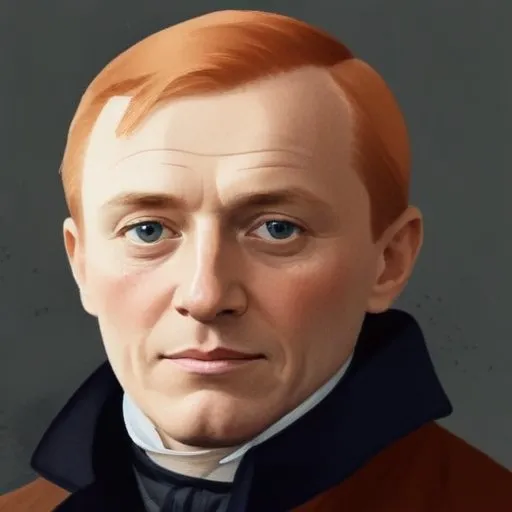
Friedrich Bernhard Westphal: A Master of Genre Painting
Friedrich Bernhard Westphal, affectionately nicknamed Fritz Westphal, was a German-Danish genre painter and illustrator renowned for his exquisite works that captured the essence of everyday life in the 19th century. His artistic flair and attention to detail have earned him a lasting legacy, making him a prominent figure in the world of art.
Early Life and Education
Born on October 5, 1803, in Schleswig, Westphal's early life was marked by a fascination with art. He pursued his passion at the Royal Danish Academy of Fine Arts in Copenhagen, where he studied from 1821 to 1826 alongside notable artists such as Carl Andreas August Goos, Hermann Wilhelm Bissen, and Harro Harring. During this period, Westphal formed a close bond with Thomas Fearnley, a Norwegian landscape painter, with whom he would later embark on a hike through Schleswig in 1823.
Rise to Prominence
Westphal's artistic prowess was first showcased in 1827, when he returned to his birthplace and produced a stunning lithograph of J. F. Fritz's Four Seasons sequence in Flensburg. This early work set the tone for his subsequent creations, which would often blend historical events with everyday life. In 1828, Westphal traveled to Munich, where he further refined his skills, before moving to Dresden in 1829 to study alongside Fearnley. It was during this period that he befriended Joseph Petzl, a genre painter who would greatly influence Westphal's style.
Biedermeier Style and Historical Context
Westphal's artistic style, characterized by intricate details and a focus on the mundane, was heavily influenced by the Biedermeier movement. This cultural and artistic phenomenon, which emerged in Germany and Austria during the 1820s and 1830s, celebrated the beauty of everyday life and the quiet pleasures of middle-class existence. Westphal's works often reflected this ethos, as seen in his depictions of historical events, such as the Tyrolese struggle against the Austrian Empire and the Greeks' suffering from cholera epidemics.
Illustrations and Literary Collaborations
In addition to his paintings, Westphal was also an accomplished illustrator. From 1837 onwards, he collaborated with prominent Danish writers, including Christian Winther,
Heinrich Hertz, and Carsten Hauch, to produce exquisite illustrations for their books. These collaborations not only showcased Westphal's artistic versatility but also deepened his connection to the literary world.
Personal Milestones and Legacy
Despite facing setbacks, including his failure to win the Great Gold Medal at the Royal Danish Academy of Fine Arts in 1837, 1839, and 1841, Westphal continued to pursue his passion for art. After his death on December 24, 1844, his sister Sophie endeavored to keep his memory alive by publishing a collection of his genre paintings, titled
Genre-Bilder in Bildern und Tnen von Fritz Westphal. This testament to Westphal's remarkable talent has ensured that his artistic legacy endures, inspiring future generations of artists and art enthusiasts alike.
Visual Timeline and Milestones
- 1803: Born on October 5th in Schleswig
- 1821-1826: Studied at the Royal Danish Academy of Fine Arts in Copenhagen
- 1823: Embarked on a hike through Schleswig with Thomas Fearnley
- 1827: Produced a lithograph of J. F. Fritz's Four Seasons sequence in Flensburg
- 1828: Studied in Munich
- 1829: Moved to Dresden to study alongside Fearnley
- 1832: Went on a hike through Norway
- 1837: Began producing illustrations for books by Danish writers
- 1837, 1839, 1841: Competed for the Great Gold Medal at the Royal Danish Academy of Fine Arts
- 1840: Became a costumier at the Royal Danish Theatre in Copenhagen
- 1844: Passed away on December 24th
Trivia and Fun Facts
- Westphal's nickname "Fritz" was affectionately bestowed upon him by his friends and family.
- His diary-like drawings, often created with Joseph Petzl, provided a unique glimpse into his artistic, romantic, and everyday life.
- Westphal's paintings often captured historical events, making him a chronicler of his time.
FAQ
What were Friedrich Bernhard Westphals artistic contributions?
Friedrich Bernhard Westphal was a skilled painter who made significant contributions to the development of Danish art. He was particularly known for his landscapes, which often featured the Danish countryside and coastlines. Sub-question: How did Westphals use of light and color reflect the Danish national identity?
What was Friedrich Bernhard Westphals role in the development of Danish art?
Friedrich Bernhard Westphal played a crucial role in the development of Danish art, helping to establish Copenhagen as a center for artistic innovation. He was a key figure in the Danish Golden Age, a period of cultural flourishing in the early 19th century.
How did Friedrich Bernhard Westphals education shape his artistic style?
Friedrich Bernhard Westphals education at the Royal Danish Academy of Fine Arts had a profound impact on his artistic style. He was influenced by the Academys emphasis on traditional techniques and its focus on capturing the beauty of the natural world.
What were Friedrich Bernhard Westphals contributions to art education?
Friedrich Bernhard Westphal was a dedicated art educator, teaching at the Royal Danish Academy of Fine Arts and inspiring a new generation of Danish artists. He promoted the importance of traditional techniques and encouraged his students to explore the natural world.
How did Friedrich Bernhard Westphals life reflect his artistic passion?
Friedrich Bernhard Westphals life was a testament to his passion for art. He devoted himself to his craft, capturing the beauty of the Danish landscape and inspiring others to do the same. His legacy continues to inspire artists and art lovers today.