


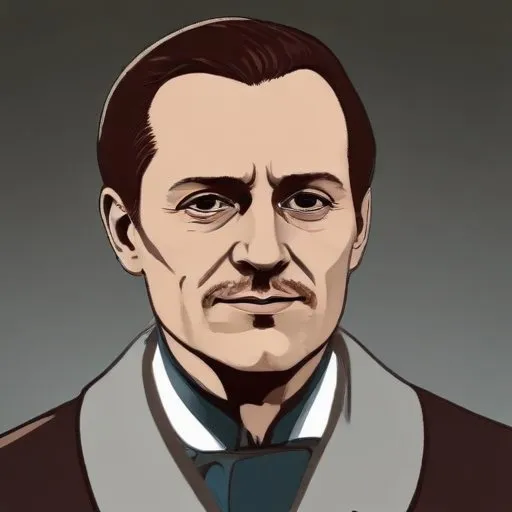
A German surgeon and academic who pioneered the use of first aid and emergency medical services, and is credited with developing the Esmarch bandage, a type of triangular bandage still used today.
Friedrich von Esmarch is best known for developing the Esmarch bandage, a revolutionary medical tool that has saved countless lives on the battlefield. As a renowned German surgeon, he also founded the Deutscher Samariter-Verein, the precursor to the Deutscher Samariter-Bund, which has been instrumental in providing medical aid to those in need.
Born on January 9, 1823, in Tönning, Schleswig-Holstein, Esmarch's journey towards becoming a prominent surgeon began with his studies at Kiel and Göttingen. In 1846, he became the assistant to Bernhard Rudolf Konrad von Langenbeck at the Kiel surgical hospital, where he honed his skills and developed a passion for military surgery.
Esmarch's experience in the Schleswig-Holstein War of 1848 as a junior surgeon sparked his interest in military surgery. He was taken prisoner but later exchanged, and then appointed as a surgeon to a field hospital. During this time, he developed the Esmarch bandage, a tourniquet-like device that could be used to staunch bleeding and prevent shock.
In 1854, Esmarch became the director of the surgical clinic at Kiel and later head of the general hospital and professor at the University of Kiel. His dedication to military surgery continued during the Schleswig-Holstein War of 1864, where he provided medical aid to the field hospitals of Flensburg, Sundewitt, and Kiel.
In 1866, Esmarch was called to Berlin as a member of the hospital commission and tasked with overseeing surgical work in the hospitals. When the Franco-Prussian War broke out in 1870, he was appointed surgeon-general to the army and later became the consulting surgeon at the great military hospital near Berlin.
His expertise in military surgery led to the publication of his seminal work, Handbuch der kriegschirurgischen Technik, which was written for a prize offered by Empress Augusta on the occasion of the Vienna Exhibition of 1877.
In recognition of his contributions to medicine and military surgery, Esmarch was conferred a patent of nobility in 1887. He married Princess Caroline Christiane Auguste Emilie Henriette Elisabeth of Schleswig-Holstein-Sonderburg-Augustenburg in 1872, aunt of Empress Augusta Viktoria.
Friedrich von Esmarch's innovative contributions to military surgery have had a lasting impact on the medical community. His work has saved countless lives and continues to inspire future generations of surgeons and medical professionals. As a pioneer in his field, Esmarch's legacy serves as a testament to the power of dedication, innovation, and compassion.
Friedrich von Esmarch passed away on February 23, 1908, but his legacy continues to inspire and influence the world of medicine and military surgery.
Born in 1821
A pioneer in modern medicine, he founded the field of social medicine, emphasizing the importance of social and environmental factors on health, and made significant contributions to cellular pathology.
Born in 1821
A 19th-century physician and physicist who made significant contributions to the fields of electromagnetism, thermodynamics, and the physiology of human perception, particularly in the study of vision and hearing.
Born in 1835
German chemist and Nobel laureate who synthesized barbituric acid and developed the theory of organic dyes, revolutionizing the textile industry. His work laid the foundation for modern dye chemistry.
Born in 1868
Developed a process to synthesize ammonia, revolutionizing agriculture and warfare, and was awarded the Nobel Prize in Chemistry in 1918.
Born in 1874
Developed the Haber-Bosch process, a method to produce ammonia on an industrial scale, revolutionizing fertilizer production and agriculture. This innovation had a profound impact on global food supply and population growth.
Born in 1857
A pioneer in the field of electromagnetism, he discovered radio waves and proved James Clerk Maxwell's theories, paving the way for modern wireless communication. His experiments led to the development of radio, television, and mobile phones.
