


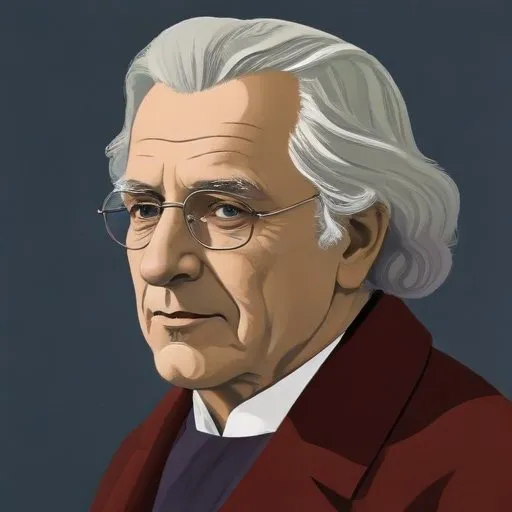
A metaphysicist and philosopher who wrote extensively on spirituality, exploring the universal principles underlying world religions, and advocating for a traditionalist and perennialist perspective. His works delve into the nature of reality, human consciousness, and the interconnectedness of all things.
Frithjof Schuon, a Swiss metaphysician of German descent, is renowned for his profound contributions to the Traditionalist School of Perennialism. Through his extensive writings and teachings, he established himself as one of the 20th century's most prominent representatives of the philosophia perennis, alongside René Guénon and Ananda Coomaraswamy.
Born on June 18, 1907, in Basel, Switzerland, Schuon's life was marked by a deep fascination with metaphysics, spirituality, and the mysteries of the human condition. He spent his early years in France and Switzerland, where he developed a strong foundation in languages, philosophy, and literature.
Schuon's magnum opus lies in his metaphysical writings, which span over two decades and comprise more than twenty works. His treatises on metaphysics, spirituality, religion, anthropology, and art have been translated into multiple languages, cementing his reputation as a leading authority on perennial philosophy.
Central to Schuon's metaphysics is the notion of an absolute Principle, which he believed to be the source of all existence. He advocated for the idea that all divine revelations, despite their differences, share a common essence – one and the same Truth.
Schuon was deeply influenced by the Traditionalist School, which posits that all religions and spiritual traditions share a common, timeless essence. He saw himself as part of a long lineage of metaphysicians, including Plato, Plotinus, Adi Shankara, Meister Eckhart, and Ibn Arabi, who sought to affirm the metaphysical unity between the Principle and its manifestation.
Schuon's spiritual journey led him to establish close relationships with individuals from diverse religious and cultural backgrounds. He was initiated into the Sufi Shadhili Order by Sheikh Ahmad al-Alawi and went on to found the Tarîqa Maryamiyya, a spiritual order dedicated to the Universal Mother.
Schuon's fascination with indigenous cultures led him to form strong bonds with Native American leaders, including those from the Lakota Sioux and Crow tribes. He was adopted into both tribes, a testament to his deep respect for and connection to the traditions of the North American Plains Indians.
Frithjof Schuon's philosophical contributions have had a profound impact on contemporary spirituality and metaphysics. His emphasis on the perennial philosophy and the importance of traditional roots continues to inspire scholars, seekers, and spiritual practitioners worldwide.
As a testament to his enduring legacy, Schuon's works remain a valuable resource for those seeking to deepen their understanding of the human condition, the nature of reality, and the mysteries of the divine.
In the words of Schuon himself, "The truth is not a thing, it is a state; it is not a concept, it is an experience."
Born in 1909
A renowned expert on Sufism and Islamic mysticism, known for his in-depth studies and translations of classical Arabic texts, particularly the works of Ibn Arabi.
Born in 1921
American actress known for her roles in classic TV shows and films, particularly in the 1950s and 1960s, including the iconic sitcom "The Dick Van Dyke Show".
