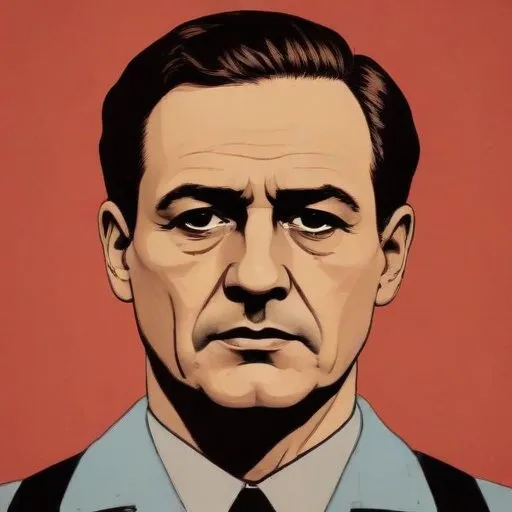
Fritz Haarmann: The Butcher of Hanover
A Serial Killer of Unspeakable Brutality
Fritz Haarmann, a German serial killer, earned the nickname "The Butcher of Hanover" for his heinous crimes between 1918 and 1924. During this period, he sexually assaulted, murdered, mutilated, and dismembered at least 24 young men and boys in the city of Hanover, leaving a trail of terror and carnage in his wake.
Early Life and Warning Signs
Born on October 25, 1879, in Hanover, Haarmann was the sixth and youngest child of Johanna and Ollie Haarmann. From an early age, he exhibited unusual behavior, shunning boys' activities and preferring to play with his sisters' dolls and dress in their clothes. His mother, who spoiled him, played a significant role in his life, and he developed a passion for needlework and cookery.
The Crimes and Capture
Haarmann's modus operandi involved targeting young men and boys, often luring them to his apartment, where he would sexually assault and murder them. He would then mutilate and dismember their bodies, often leaving behind gruesome remains. The police were baffled by the lack of motive or connection between the victims, but Haarmann's downfall came when he was caught with a human bone in his pocket.
Trial and Execution
In December 1924, Haarmann was found guilty of 24 of the 27 murders he was tried for. He was sentenced to death by beheading, and on April 15, 1925, he was executed by guillotine. During his trial, Haarmann's lawyers attempted to use his troubled childhood and allegedly inherited syphilis from his father as mitigating factors, but the court remained unconvinced.
The Legacy of Horror
Fritz Haarmann's crimes shocked the world, earning him the nickname "The Vampire of Hanover" and "The Wolf Man." His brutality and calculating nature have made him one of the most infamous serial killers in history, with his crimes serving as a testament to the darkness that lurks within humanity.
Personal Beliefs and Philosophies
While Haarmann's motivations for his crimes remain unclear, it is evident that he had a warped sense of morality and a lack of empathy for his victims. His fascination with needlework and cookery, activities traditionally associated with femininity, may have been a manifestation of his own psychological struggles.
Influence on Modern Society
Haarmann's crimes had a significant impact on the city of Hanover, leading to increased police presence and a heightened sense of fear among the community. His case also brought attention to the issue of serial killers and the importance of understanding their motivations and psychological profiles.
Trivia and Fun Facts
- Fritz Haarmann was known to have a peculiar habit of sniffing his victims' clothes before murdering them.
- He was a skilled craftsman and made wooden toys and furniture in his spare time.
- Haarmann's victims were often from poor families, and he targeted them due to their vulnerability.
Historical Context and Legacy
Fritz Haarmann's crimes took place during a tumultuous period in German history, when the country was struggling to rebuild after World War I. His case served as a dark reminder of the dangers that lurked in the shadows, even in times of great social change and upheaval.
FAQ
What was Fritz Haarmanns occupation?
Fritz Haarmann was a serial killer and a businessman, running a successful butcher shop in Hanover, Germany.
How many people did Fritz Haarmann kill?
Fritz Haarmann was convicted of murdering at least 24 young men and boys between 1918 and 1924, although some estimates place the number of victims at over 50.
What was Fritz Haarmanns modus operandi?
Fritz Haarmanns modus operandi involved targeting young men and boys, often luring them to his butcher shop or apartment, where he would kill and dismember them.
What was the investigation into Fritz Haarmanns crimes like?
The investigation into Fritz Haarmanns crimes was one of the largest and most complex in German history at the time, involving multiple police departments and forensic experts.
What was the impact of Fritz Haarmanns crimes on German society?
Fritz Haarmanns crimes had a significant impact on German society, sparking widespread outrage and fears about the safety of children and young people.