


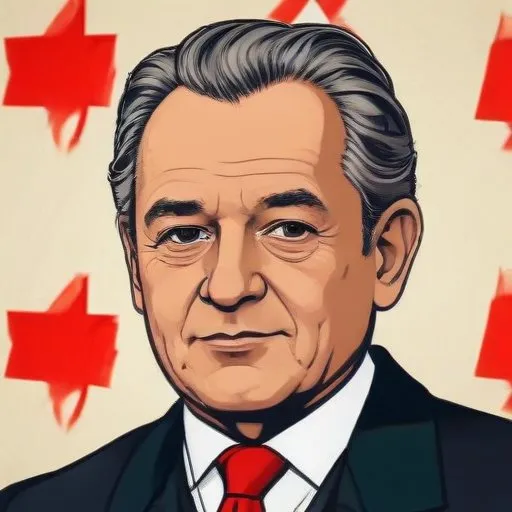
A Swiss lawyer and politician who served as a Federal Councillor and Minister of Economy, known for his efforts to promote Swiss industry and trade. He played a key role in shaping the country's economic policy during the 1980s.
Fritz Honegger is renowned for his remarkable tenure as a member of the Swiss Federal Council, during which he revolutionized the country's economic landscape and left an enduring legacy. As the head of the Federal Department of Economic Affairs, he implemented pivotal reforms that shaped Switzerland's economic destiny.
Born on July 25, 1917, in Zurich, Switzerland, Honegger's fascination with politics and economics began at a young age. He pursued his passion, earning a degree in law from the University of Zurich and later becoming a prominent figure in the Free Democratic Party.
Honegger's exceptional leadership skills and economic acumen caught the attention of the Swiss government, leading to his election to the Swiss Federal Council on December 7, 1977. This milestone marked the beginning of a transformative era in Swiss politics, as he took the reins of the Federal Department of Economic Affairs.
In 1982, Honegger reached the pinnacle of his political career, becoming the President of the Confederation. During his tenure, he introduced far-reaching economic reforms, focusing on deregulation, privatization, and liberalization. These bold initiatives had a profound impact on Switzerland's economy, propelling it towards unprecedented growth and stability.
Honegger's visionary leadership and economic prowess left an indelible mark on Switzerland's history. His reforms not only revitalized the economy but also cemented the country's position as a global financial hub. His commitment to fiscal responsibility and free market principles continues to inspire generations of Swiss politicians and economists.
In recognition of his outstanding service to the nation, Honegger received numerous accolades, including the esteemed title of "Honorary Citizen of the City of Zurich."
Honegger's unwavering commitment to fiscal discipline and his advocacy for entrepreneurship sparked debate among his contemporaries. While some criticized his policies as overly restrictive, others praised his vision and perseverance in the face of adversity.
Honegger's economic philosophy was rooted in the principles of classical liberalism, emphasizing individual freedom, limited government intervention, and market-oriented reforms. He believed that economic growth and social progress were inextricably linked.
| 1917 | Born in Zurich, Switzerland |
| 1977 | Elected to the Swiss Federal Council |
| 1982 | Becomes President of the Confederation |
| 1982 | Hands over office on December 31 |
| 1999 | Passes away on March 4 |
Fritz Honegger's remarkable journey, marked by unwavering dedication to his country and its people, serves as a beacon of inspiration for generations to come. His legacy continues to shape Switzerland's economic landscape, ensuring his place in the annals of Swiss history.
Born in 1913
A Swiss lawyer and politician who served as the President of the Swiss Confederation, known for his progressive policies and efforts to modernize the country's education system.
Born in 1923
A Swiss lawyer and politician who served as the President of the Swiss Federal Supreme Court and was a member of the Swiss Federal Council, known for his contributions to Swiss law and politics.
Born in 1908
A Swiss lawyer and politician who served as the President of the Swiss Confederation, known for his diplomatic efforts and contributions to Swiss politics.
Born in 1924
The 70th President of the Swiss Confederation was a prominent figure in Swiss politics, serving as President from 1971 to 1972 and 1977 to 1978, and is known for his efforts to maintain Switzerland's neutrality during the Cold War. He played a key role in shaping the country's foreign policy and economy during a tumultuous period in world history.
Born in 1924
A Swiss lawyer and politician who served as the 77th President of the Swiss Confederation, known for his leadership and contributions to Swiss politics. He played a significant role in shaping the country's governance and policies.
