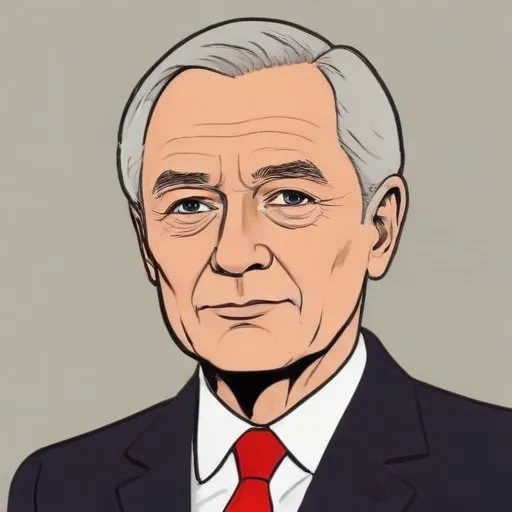
Kurt Furgler: A Pillar of Swiss Politics
A Life of Public Service
Kurt Furgler, a Swiss politician and member of the Swiss Federal Council, left an indelible mark on the country's politics and economy during his tenure from 1972 to 1986. As a stalwart of the Christian Democratic People's Party of Switzerland, Furgler held various key positions, including the Federal Department of Justice and Police and the Federal Department of Economic Affairs, cementing his reputation as a shrewd and visionary leader.
A President of Distinction
Furgler's three terms as President of the Confederation (1977, 1981, and 1985) were marked by significant milestones. He championed equal rights for women, pioneered economic reforms, and modernized immigration and Swiss family law. His commitment to European integration led to the signing of the Luxembourg Declaration in 1982, which paved the way for closer cooperation between the European Union and the European Free Trade Association (EFTA).
Awards and Honors
Furgler's illustrious career was punctuated by several accolades, including:
- Presidency of the Confederation (three terms)
- Federal Councilor (1972-1986)
- Head of the Federal Department of Justice and Police (1972-1982)
- Head of the Federal Department of Economic Affairs (1983-1986)
Philosophical Contributions and Beliefs
As a conservative centrist, Furgler advocated for a strong central government, placing emphasis on socioeconomic balance and stability. His commitment to equality and justice was reflected in his efforts to advance women's rights and modernize family law.
Personal Milestones and Key Life Events
Born on June 24, 1924, in St. Gallen, Switzerland, Furgler was raised in a family that valued education and public service. He studied jurisprudence in Fribourg, Zurich, and Geneva, and obtained his license to practice law in St. Gallen in 1948.
Influence on Modern Society
Furgler's presidency saw significant advancements in Swiss politics, including the signing of the Luxembourg Declaration, which strengthened ties between Switzerland and the European Union. His commitment to equality and modernization left a lasting impact on Swiss society.
Historical Context and Legacy
Furgler's tenure as Federal Councilor and President of the Confederation spanned a transformative period in Swiss history, marked by social, economic, and political change. His leadership and vision helped shape the country's development, cementing his place as one of Switzerland's most influential politicians.
Visual Timeline and Milestones
- June 24, 1924: Born in St. Gallen, Switzerland
- 1948: Obtained license to practice law in St. Gallen
- December 8, 1971: Elected to the Federal Council of Switzerland
- 1977, 1981, and 1985: Served as President of the Confederation
- 1982: Signed the Luxembourg Declaration
- December 31, 1986: Handed over office as Federal Councilor
- July 23, 2008: Passed away at the age of 84
Trivia and Fun Facts
Did you know that Kurt Furgler was an avid handball player in his youth? This sportive passion reflected his energy and drive, which he later channeled into his dedicated public service.
Impact on Pop Culture
Furgler's presidency and commitment to European integration inspired a new generation of Swiss leaders, fostering a sense of European identity and cooperation. His leadership and vision continue to influence Swiss politics and society, shaping the country's role in the global community.
FAQ
Who was Kurt Furgler and what was his role in Swiss politics?
Kurt Furgler was a Swiss politician who served as the 70th President of the Swiss Confederation. He held this office from 1977 to 1978 and was a member of the Christian Democratic Peoples Party of Switzerland.
What were Kurt Furglers contributions to Swiss foreign policy?
During his presidency, Kurt Furgler played a significant role in shaping Switzerlands foreign policy. He worked towards strengthening the countrys relationships with European nations and was a strong advocate for international cooperation.
What were Kurt Furglers views on European integration?
Kurt Furgler was a proponent of European integration and believed that Switzerlands interests were closely tied to those of Europe. He supported the countrys participation in international organizations and advocated for closer economic ties with European nations.
How did Kurt Furglers presidency impact Switzerlands economy?
During his presidency, Kurt Furgler implemented several economic reforms that helped stabilize Switzerlands economy. He worked to reduce inflation, promote trade, and increase economic growth.
What is Kurt Furglers legacy in Swiss politics?
Kurt Furglers legacy in Swiss politics is marked by his commitment to European integration, economic stability, and international cooperation. He is remembered as a skilled diplomat and statesman who worked tirelessly to promote Switzerlands interests on the global stage.