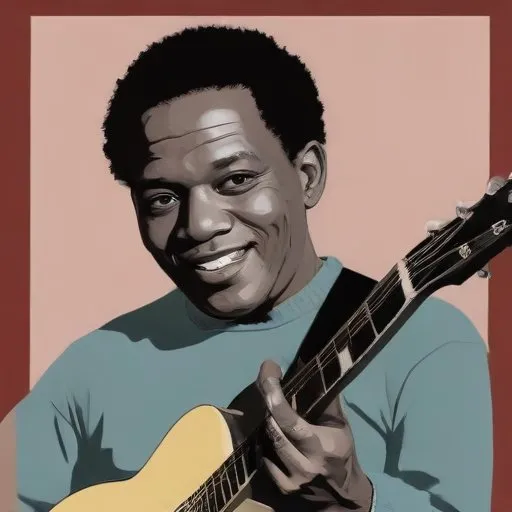
Furry Lewis: The Blues Legend Who Defied Time
A Country Blues Guitarist and Songwriter Like No Other
Furry Lewis is best known for being one of the earliest blues musicians to be rediscovered during the 1960s folk blues revival, marking a triumphant return to the music scene after decades of obscurity. With a career spanning over seven decades, Lewis left an indelible mark on the world of blues music, inspiring generations of musicians and earning his place as a true blues legend.
Early Life and Career
Born in Greenwood, Mississippi, in either 1893, 1895, 1898, or 1899 (the exact date remains uncertain), Lewis grew up in a musical family and was exposed to the blues from a young age. His family moved to Memphis when he was just seven years old, where he began playing solo gigs at parties, taverns, and on the street by the time he was 15.
The Accidental Life Change
In 1916, Lewis's life took a dramatic turn when he lost his leg in a gruesome accident while trying to jump a freight train in Du Quoin, Illinois. After a month-long hospital stay and a year of adjusting to his new prosthetic leg, Lewis was forced to give up his traveling lifestyle and settle down in Memphis. However, this setback did not deter him from pursuing his passion for music.
The Street Sweeper Turned Blues Icon
In 1922, Lewis took up a permanent position as a street sweeper for the city of Memphis, a job he held until his retirement in 1966. This peculiar occupation allowed him to continue performing music on the side, and he eventually began recording for Vocalion Records in Chicago in 1927. His early recordings showcased his unique blend of country blues and folk, featuring tracks like "
Casey Jones" and "John Henry."
The Rediscovery and Revival
After fading into obscurity in the 1930s, Lewis's music career experienced a remarkable resurgence in the 1960s, thanks in part to the folk blues revival. He began performing at festivals and recording new material, introducing his music to a whole new generation of fans.
Influence and Legacy
Furry Lewis's contributions to the blues genre are undeniable, and his influence can be heard in the work of many notable musicians, including
Bob Dylan,
Jonny Lang, and
Eric Clapton. His perseverance in the face of adversity serves as an inspiration to artists everywhere, and his music continues to captivate audiences to this day.
Quote
"The blues ain't nothin' but the truth, and the truth is hard." - Furry Lewis
Discography Highlights
- Furry Lewis (1927) - Vocalion Records
- Furry Lewis (1928) - Victor Records
- Back on My Feet Again (1961) - Prestige Records
- Furry Lewis Sings the Blues (1963) - Folkways Records
Awards and Recognition
* Inducted into the Blues Foundation's Hall of Fame (1983)
* Received the National Heritage Fellowship from the National Endowment for the Arts (1985)
Furry Lewis: A True Blues Original
In a career marked by twists and turns, Furry Lewis remained true to his art, leaving behind a legacy that continues to inspire and influence musicians across genres. His remarkable story serves as a testament to the power of perseverance and the enduring spirit of the blues.
FAQ
What was Furry Lewiss most famous song?
Furry Lewiss most famous song is Kassie Jones, Part 1, a blues classic that has been covered by numerous artists.
What style of music did Furry Lewis play?
Furry Lewis was a delta blues musician, known for his distinctive fingerpicking style and soulful vocals.
What was Furry Lewiss early life like?
Furry Lewis was born in Mississippi and began playing music at a young age, eventually moving to Memphis to pursue a music career.
How did Furry Lewiss music influence the development of blues?
Furry Lewiss music helped shape the development of delta blues, influencing future musicians such as Robert Johnson and Son House.
What awards did Furry Lewis receive for his music?
Furry Lewis was inducted into the Blues Foundations Hall of Fame in 1986, recognizing his contributions to the genre.