


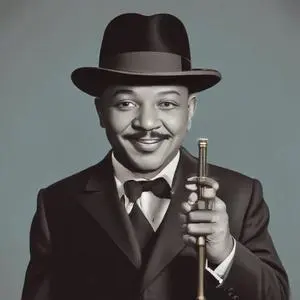
The "Father of the Blues" revolutionized American music by codifying and popularizing blues music, creating a unique sound that influenced generations of musicians.
W.C. Handy, the renowned American composer and musician, is often revered as the "Father of the Blues" for his pivotal role in popularizing this quintessential American music genre. Handy's groundbreaking compositions not only elevated the blues from a regional phenomenon to a national sensation but also left an indelible mark on the country's musical landscape.
Born on November 16, 1873, in Florence, Alabama, William Christopher Handy grew up in a strict Christian household where his father, Charles Barnard Handy, disapproved of musical instruments as "tools of the devil." Undeterred, Handy secretly acquired his first guitar and later taught himself to play the cornet, eventually joining a local band as a teenager.
In the early 1900s, Handy began to document and publish blues music, which until then was largely confined to the Deep South. His pioneering efforts led to the publication of "St. Louis Blues" in 1914, which became a massive hit and catapulted Handy to fame. This seminal work not only popularized the blues genre but also introduced it to a broader audience, earning Handy his nickname.
Handy's impact on modern society extends far beyond the realm of music. His work played a significant role in shaping American cultural identity, particularly during the Harlem Renaissance of the 1920s and 1930s. Handy's music also influenced the development of subsequent genres, such as jazz, swing, and rhythm and blues.
"The blues are the racial consciousness of the American Negro."
"I'd rather hear a good blues singer than a whole band of mediocre musicians."
"Music is a universal language, and I think the blues is one of the most universal forms of music."
Handy's contributions to American music are immeasurable. He not only popularized the blues but also paved the way for future generations of musicians. His legacy extends beyond the realm of music, as his work played a significant role in shaping American cultural identity and promoting racial understanding.
W.C. Handy's legacy has been recognized and celebrated through various tributes and honors, including:
Today, W.C. Handy's music continues to inspire new generations of musicians and music enthusiasts, ensuring his place as one of the most influential figures in American musical history.
Born in 1894
A powerful blues singer known for her soulful, raspy voice and emotive performances, often referred to as "The Empress of the Blues".
Born in 1886
A pioneering blues singer-songwriter known for her powerful, soulful voice and hit songs like "Bo-Weavil Blues" and "See See Rider". She was a key figure in the development of Chicago blues.
Born in 1887
A renowned pianist and composer, he was a leading figure in the development of ragtime music, creating iconic songs like "Memories of You" and "I'm Just Wild About Harry".
Born in 1904
A virtuosic pianist and singer-songwriter who blended jazz, blues, and stride piano to create infectious, energetic tunes that still delight audiences today. Known for his soulful, raspy vocals and iconic hits like "Ain't Misbehavin'" and "Honeysuckle Rose".
Born in 1899
A legendary jazz pianist, composer, and bandleader who revolutionized the genre with his unique style and iconic compositions, such as "Take the A Train" and "Mood Indigo".
Born in 1904
A legendary jazz pianist and bandleader who led a iconic orchestra, blending swing and blues to create a unique sound that influenced generations of musicians. Known for his distinctive "less-is-more" style and hits like "April in Paris" and "One O'Clock Jump".
Born in 1901
A legendary jazz musician who revolutionized the genre with his unique trumpet playing and raspy vocals, leaving an indelible mark on American music.
Born in 1909
A virtuosic clarinetist and bandleader, known as the "King of Swing," who revolutionized jazz music with his energetic and sophisticated style, leading a racially integrated orchestra in the 1930s.
