


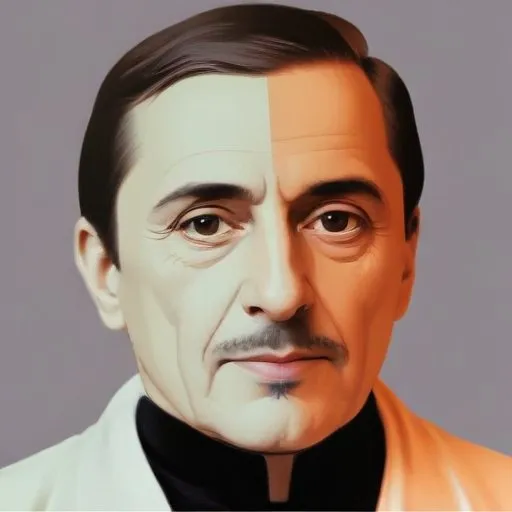
A renowned British historian and academic who wrote extensively on English history, particularly the social and cultural aspects of the 18th and 19th centuries.
G. M. Trevelyan, a renowned British historian and academic, is best known for his engaging and partisan historical narratives that redefined the way people understood the past. As a master storyteller, Trevelyan's works were characterized by their literary flair, making history accessible to a broad audience.
Born on February 16, 1876, in Stratford-upon-Avon, Trevelyan was the third son of Sir George Otto Trevelyan, 2nd Baronet. His maternal grandfather, Robert Needham Philips, was a wealthy Lancashire merchant and Liberal Member of Parliament for Bury. This aristocratic background instilled in Trevelyan a strong sense of liberal Whig principles, which would later influence his historical writings.
Trevelyan's academic career spanned over four decades, during which he held several prestigious positions, including Fellow of Trinity College, Cambridge, and Regius Professor of History at the University of Cambridge. His passion for history was evident in his works, which often blurred the lines between scholarship and literary flair.
One of his most notable contributions was the Garibaldi trilogy, a series of books that reeked of bias, as Trevelyan himself acknowledged. He believed that without bias, he would never have written them, for they were motivated by a poetic sympathy with the passions of the Italian patriots of the period.
Trevelyan's historical writings were deeply rooted in the Whig tradition, which emphasized the role of the common people in shaping history. He believed that democratic government would bring about steady social progress and that the Whig Party's ideals were essential to this progress.
In his essay "Bias in History," Trevelyan argued that bias was an inherent part of historical writing, and that it was impossible to separate facts from personal opinions. This philosophy influenced his approach to history, making his works engaging, yet partisan.
Trevelyan's works had a profound impact on modern society, inspiring a new generation of historians and scholars. His emphasis on the role of the common people in shaping history resonated with the ideals of the Whig Party, which continued to influence British politics.
Today, Trevelyan is remembered as one of the last historians of the Whig tradition, leaving behind a legacy of engaging and partisan historical narratives that continue to captivate readers.
In 1940, Trevelyan became the Master of Trinity College, Cambridge, a position he held until 1951. During this period, he also served as the Chancellor of Durham University, a testament to his dedication to education and academia.
Trevelyan passed away on July 21, 1962, leaving behind a rich legacy of historical writings and a profound impact on modern society.
In conclusion, G. M. Trevelyan was a historian who brought the past to life through his engaging and partisan narratives. His legacy continues to inspire historians and scholars, and his works remain a testament to the power of storytelling in shaping our understanding of history.
Born in 1903
A renowned English writer, known for his witty satires and novels of manners, particularly "Brideshead Revisited", which explores the British aristocracy's decline.
Born in 1898
Renowned author of fantasy series, including The Chronicles of Narnia, and prominent Christian apologist, exploring the intersection of faith and reason.
Born in 1892
Creator of Middle-earth, a richly detailed fantasy world, and author of The Hobbit and The Lord of the Rings trilogy, which have become cultural touchstones.
Born in 1906
A renowned historian and academic who reshaped the understanding of modern European history, particularly World War I and II, through provocative and insightful writings.
Born in 1914
A renowned historian and academic who wrote extensively on European history, particularly the Renaissance and Nazi Germany, and was known for his meticulous research and engaging writing style.
Born in 1909
A Latvian-English historian and philosopher who explored the intersection of philosophy, history, and politics, and is renowned for his work on the Enlightenment, liberty, and the nature of humanity.
