


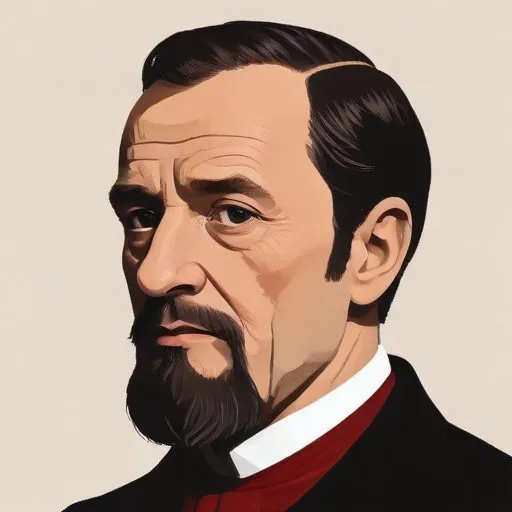
A renowned historian and academic who wrote extensively on European history, particularly the Renaissance and Nazi Germany, and was known for his meticulous research and engaging writing style.
Hugh TrevorRoper, a legendary English historian, is best known for his groundbreaking work on England in the 16th and 17th centuries and Nazi Germany. His polemicist style and essayist approach have had a profound impact on the way we think about the past, with some of his short essays being credited with transforming their respective fields.
Born on January 15, 1914, in Glanton, Northumberland, England, TrevorRoper was the son of Kathleen Elizabeth Davidson and Bertie William Edward TrevorRoper, a doctor. He went on to study at Christ Church, Oxford, and later became a Fellow of Merton College, Oxford.
TrevorRoper's most commercially successful book, The Last Days of Hitler (1947), emerged from his assignment as a British intelligence officer in 1945 to uncover the truth about the final days of Hitler's bunker. Through meticulous research and interviews with witnesses, he demonstrated that Hitler was indeed dead and had not escaped from Berlin, debunking rumors of the Führer's possible survival.
In 1983, TrevorRoper's reputation was severely damaged when he authenticated the Hitler Diaries, only to later discover they were forgeries. This incident has been seen as a major stain on his otherwise illustrious career.
TrevorRoper's work has had a lasting impact on modern society, shaping the way we understand the complexities of Nazi Germany and the intricacies of English history. His essays, though often polemical, have been praised for their ability to distill complex subjects down to their essence.
TrevorRoper was appointed Regius Professor of Modern History at the University of Oxford in 1957, a position he held until 1980. He was also awarded a life peerage in 1979, becoming Baron Dacre of Glanton.
TrevorRoper was known for his distinctive writing style, often incorporating witty remarks and clever wordplay into his essays. He was also an avid collector of rare books and was known to be quite particular about his personal library.
Hugh TrevorRoper's legacy is complex and multifaceted, marked by both brilliant scholarship and controversy. Despite the setbacks, his contributions to the field of history remain unparalleled, and his essays continue to inspire and educate scholars to this day.
In the words of John Kenyon, "some of TrevorRoper's short essays have affected the way we think about the past more than other men's books." His impact on the field of history is undeniable, and his work will continue to be studied and appreciated for generations to come.
Born in 1906
A renowned historian and academic who reshaped the understanding of modern European history, particularly World War I and II, through provocative and insightful writings.
Born in 1909
A Latvian-English historian and philosopher who explored the intersection of philosophy, history, and politics, and is renowned for his work on the Enlightenment, liberty, and the nature of humanity.
Born in 1921
A renowned Tudor historian, expertly reconstructing 16th-century English politics and society through meticulous archival research. His work significantly shaped modern understanding of the Tudor period.
Born in 1876
A renowned British historian and academic who wrote extensively on English history, particularly the social and cultural aspects of the 18th and 19th centuries.
