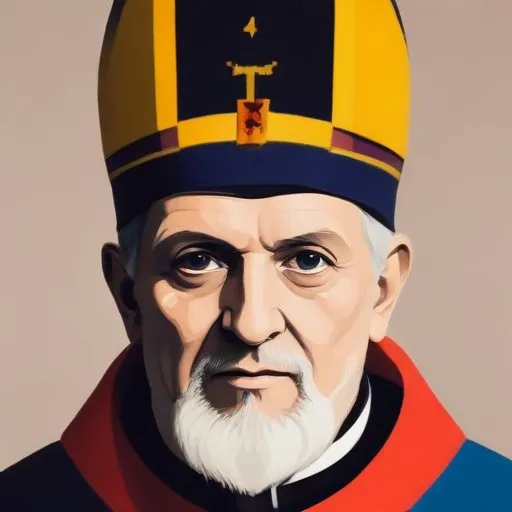
Gabriel of Komana: A Beacon of Orthodox Christianity in Western Europe
A Visionary Leader and Spiritual Guide
Gabriel of Komana, born Guido de Vylder, was a renowned Eastern Orthodox archbishop of the Ecumenical Patriarchate who led the Patriarchal Exarchate for Orthodox Parishes of Russian Tradition in Western Europe from 2003 to 2013. Through his tireless efforts, he fostered a deeper understanding and appreciation of Orthodox Christianity in the Western world, earning him a revered place in the annals of Orthodox history.
Early Life and Spiritual Journey
Born on June 13, 1946, in Lokeren, Belgium, Gabriel was raised in a Catholic Flemish family. His early fascination with philosophy and theology led him to pursue higher education, culminating in a diploma in moral and religious studies from the University of Leuven. It was during this period that he was introduced to Orthodox Christianity at the parish of St. Andrew in Ghent, an encounter that would forever change the course of his life.
The Turning Point: Embracing Orthodox Christianity
In January 1974, Gabriel officially converted to Orthodox Christianity, marking a pivotal moment in his spiritual journey. This newfound faith would guide him in his future endeavors, shaping his character and leadership style.
A Life of Service and Ministry
Gabriel's commitment to Orthodox Christianity led him to pursue a life of service and ministry. He was ordained as a deacon on October 5, 1975, by Archbishop George Tarassov at the
Alexander Nevsky Cathedral in Paris. A year later, on June 27, 1976, he was ordained a celibate priest at the same cathedral.
Throughout his ministry, Gabriel demonstrated a remarkable ability to foster growth and development within Orthodox communities. He played a key role in establishing Orthodox parishes in Maastricht, Deventer, Breda, and Antwerp. In 1992, he was appointed rector of the parish in Liege, Belgium, and later, in 1998, he became rector of the parish of Maastricht.
Rise to Prominence: Leadership and Vision
Gabriel's dedication and leadership prowess did not go unnoticed. In 1994, he took monastic vows, and in 2001, he was elected and consecrated as an auxiliary bishop of the exarchate. Following the final illness of his predecessor, Archbishop Serge Konovaloff, Gabriel acted as administrator of the exarchate from December 2002. His leadership and vision ultimately led to his election as the head of the exarchate on May 1, 2003, a position he would hold until 2013.
A Controversial Episode: The Bishop Basil Affair
On June 8, 2006, the Holy Synod of the Patriarchate of Constantinople issued a statement receiving Bishop Basil of Sergievo into the Patriarchate of Constantinople. This move sparked controversy, as Bishop Basil had not been released from the Moscow Patriarchate. Gabriel, in his capacity as archbishop, navigated this complex situation with tact and diplomacy.
Legacy and Impact
Throughout his illustrious career, Gabriel of Komana left an indelible mark on Orthodox Christianity in Western Europe. His commitment to fostering greater understanding and cooperation between Orthodox and other Christian traditions has inspired generations of clergy and laity alike. As a beacon of hope and spiritual guidance, Gabriel's legacy will continue to illuminate the path for those seeking a deeper connection with Orthodox Christianity.
- Ordained as a deacon in 1975 and as a celibate priest in 1976
- Appointed rector of the parish in Liege, Belgium in 1992
- Elected and consecrated as an auxiliary bishop of the exarchate in 2001
- Acted as administrator of the exarchate from December 2002
- Elected as the head of the exarchate on May 1, 2003
As we reflect on Gabriel of Komana's remarkable life and ministry, we are reminded of the transformative power of faith and leadership. His legacy serves as a testament to the enduring spirit of Orthodox Christianity, inspiring future generations to follow in his footsteps.