


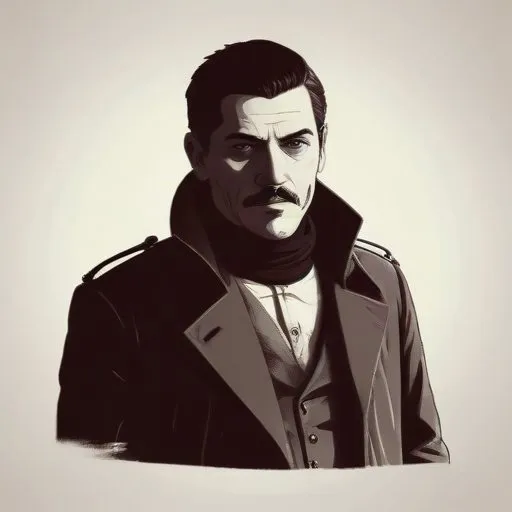
An Italian anarchist who assassinated King Umberto I of Italy in 1900, sparking widespread outrage and a crackdown on anarchist movements. This event had significant repercussions for the Italian monarchy and the anarchist movement.
Gaetano Bresci, an Italian anarchist, etched his name in history books as the assassin of King Umberto I of Italy in 1900. This brazen act of regicide sent shockwaves throughout the country, cementing Bresci's status as a controversial figure in the annals of Italian history.
Born on November 11, 1869, in Prato, Tuscany, Gaetano Bresci grew up in a lower-middle-class family of farmers. The economic downturn in the late 19th century, coupled with cheap grain imports from the United States, pushed his family into poverty. This tumultuous backdrop fueled Bresci's anger towards the Italian state, which he believed was responsible for his family's plight.
As a young man, Bresci worked as a weaver, where he faced exploitation and mistreatment. These experiences further radicalized him, drawing him to anarchism as a means to challenge the status quo. He soon became involved with other like-minded individuals in Paterson, New Jersey, where he emigrated in search of better opportunities.
In 1900, Bresci returned to Italy, driven by the news of the Bava Beccaris massacre, in which the Italian military brutally suppressed a peaceful protest in Milan. This event galvanized Bresci's resolve to take action against the monarchy. He traveled to Monza, where King Umberto I was scheduled to appear, and on July 29, 1900, Bresci fatally shot the king.
The lack of security at the event and the government's failure to act on intelligence reports about Bresci's return to Italy raised questions about the circumstances surrounding the assassination. Despite initial suspicions of a conspiracy, no evidence linking Bresci to other co-conspirators was found, and he was subsequently sentenced to life imprisonment for murder.
Gaetano Bresci's actions sparked a wave of anarchist sentiment across Italy, inspiring others to take up the mantle of propaganda by deed. His martyrdom, enshrined in the hearts of Italian anarchists, motivated figures like Leon Czolgosz to carry out their own acts of political violence, including the assassination of US President William McKinley in 1901.
In a testament to Bresci's enduring influence, Italian anarchists erected a monument in his honor in Carrara, despite the government's attempts to block it. This symbol of resistance against the state continues to inspire generations of radicals and freedom fighters.
Bresci's life was marked by personal tragedy, including the loss of his daughter, who died of tuberculosis in 1899. This heartbreak, coupled with his own poverty and disillusionment with the system, likely contributed to his decision to take drastic action.
On May 22, 1901, less than a year after his imprisonment, Bresci was found dead in his cell on Santo Stefano Island, allegedly having taken his own life. This tragic end to a tumultuous life only added to the mystique surrounding Bresci, cementing his place as a martyr for the anarchist cause.
Gaetano Bresci's story serves as a testament to the power of ideology and the human desire for change. While his methods were controversial and deadly, his impact on the Italian anarchist movement and beyond is undeniable. His legacy continues to inspire and provoke, challenging us to question the nature of power and resistance.
Born in 1844
King of Italy from 1878 to 1900, known for unifying Italy and establishing the modern Italian state. He played a key role in Italian politics and foreign policy during his reign.
