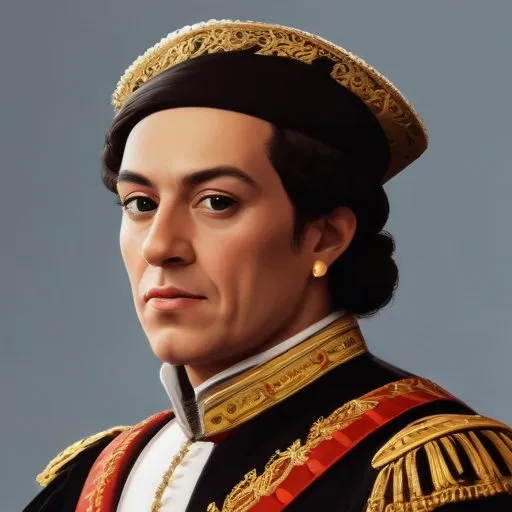
The Iron Duke of the Spanish Navy: García Álvarez de Toledo, 4th Marquis of Villafranca
A Legacy of Naval Supremacy
García Álvarez de Toledo, the 4th Marquis of Villafranca, is renowned for his exceptional military prowess and strategic brilliance, which propelled the Spanish Navy to unprecedented heights during the 16th century. As a seasoned admiral, statesman, and noble, Toledo's achievements reverberated across Europe, earning him the esteemed title of "Iron Duke of the Spanish Navy."
Early Life and Career
Born in 1514, García Álvarez de Toledo hailed from a distinguished noble family in Spain. His early life was steeped in the traditions of chivalry and martial excellence, which laid the foundation for his future successes. Toledo's military career began under the tutelage of his uncle, the 3rd Marquis of Villafranca, where he honed his skills in battle strategy and naval warfare.
Rise to Prominence
Toledo's meteoric rise to prominence began in 1533, when he commanded a fleet of galleys during the Spanish conquest of Tunis. His valiant efforts earned him recognition from King Charles I of Spain, who appointed him as the Captain-General of the Spanish Navy in 1544. Under his leadership, the Spanish Navy became an unstoppable force, with Toledo spearheading several victorious campaigns against the Ottoman Empire and other European powers.
The Battle of Lepanto: A Turning Point in History
The most notable triumph of Toledo's career was the Battle of Lepanto in 1571, where he played a pivotal role in the Holy League's crushing defeat of the Ottoman Empire. This pivotal battle marked a significant shift in the balance of power in the Mediterranean, cementing Spain's status as a dominant naval force.
Reforms and Innovations
Toledo's legacy extends beyond his military conquests. He introduced several reforms and innovations that transformed the Spanish Navy. These included the development of more maneuverable and heavily armed galleons, the creation of a formal naval academy, and the establishment of a standardized system of naval recruitment and training.
Personal Milestones and Key Life Events
- In 1552, Toledo married María de Mendoza, a noblewoman from a prominent Spanish family, with whom he had several children.
- During his tenure as Captain-General, Toledo was involved in several diplomatic missions, including a pivotal trip to Rome in 1555, where he negotiated a peace treaty with the Pope.
- In 1573, Toledo was appointed as the Viceroy of Sicily, a position he held until his death in 1584.
Legacy and Historical Context
García Álvarez de Toledo's remarkable achievements have left an indelible mark on the annals of Spanish history. His military campaigns, reforms, and innovations transformed the Spanish Navy, establishing it as a formidable force for centuries to come. As a testament to his enduring legacy, Toledo's name has become synonymous with naval excellence and strategic brilliance.
Comparative Analysis with Contemporaries
Toledo's contemporaries, including notable figures like
Andrea Doria and Juan Austriaco, also made significant contributions to the development of naval warfare during the 16th century. However, Toledo's unique blend of military acumen, diplomatic prowess, and innovative spirit set him apart as a true visionary in the realm of naval warfare.
Inspirational Stories and Motivations
Toledo's extraordinary life serves as a beacon of inspiration to generations of military leaders, strategists, and historians. His unwavering commitment to excellence, coupled with his innovative approach to naval warfare, continues to motivate and educate those who seek to make a lasting impact on the world.