


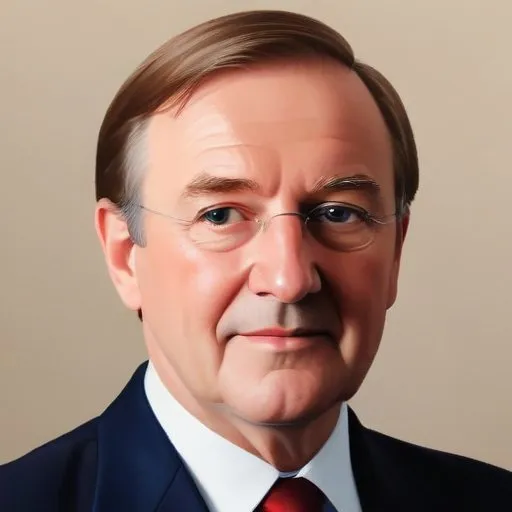
Australian Minister of Foreign Affairs who served from 1988 to 1996 and played a key role in shaping the country's foreign policy, particularly in the Asia-Pacific region.
Gareth Evans, a prominent Australian politician, international policymaker, academic, and barrister, is renowned for his unwavering commitment to promoting peace, justice, and human rights globally. For over four decades, Evans has made significant contributions to shaping international relations, conflict prevention, and disarmament, earning him international recognition and numerous accolades.
Evans' political journey began in 1978 when he represented the Labor Party in the Australian Senate and House of Representatives. He held various cabinet positions in the Hawke and Keating governments, including Attorney-General, Minister for Resources and Energy, Minister for Transport and Communications, and Minister for Foreign Affairs from 1988 to 1996. Evans' leadership skills were further demonstrated when he served as the Leader of the Government in the Senate from 1993 to 1996 and Deputy Leader of the Opposition from 1996 to 1998.
After leaving politics, Evans continued to shape global debates as the President and CEO of the Brussels-based International Crisis Group (ICG) from 2000 to 2009. During his tenure, he oversaw the ICG's expansion into new regions, including the Middle East and Asia, and played a crucial role in resolving several high-profile conflicts.
Evans has also served on various international commissions and panels, including the International Commission on Intervention and State Sovereignty (2000-2001) and the International Commission on Nuclear Non-proliferation and Disarmament (2008-2010). His expertise has been sought by organizations such as the United Nations, the European Union, and the Australian Government.
Evans is an accomplished author, having written extensively on international relations, legal, constitutional, and political affairs. His publications include "Cooperating for Peace" and "The Responsibility to Protect: Ending Mass Atrocity Crimes Once and for All". He has also contributed to various academic journals and newspapers, such as the Australian Journal of International Affairs and The Australian.
Evans' contributions to international relations, human rights, and conflict prevention have been recognized with numerous awards and honors. He was appointed a Companion of the Order of Australia (AC) in 2002 and a Knight Commander of the Order of St Michael and St George (KCMG) in 2012. He has also received the Centenary Medal in 2001 and the Australian Human Rights Medal in 2008.
Gareth Evans was born on September 5, 1944, in Melbourne, Victoria, to a tram driver father and a mother who ran a small babywear business from home. He was educated at Hawthorn West Central School and later pursued his higher education.
From 2010 to 2020, Evans served as the Chancellor of the Australian National University (ANU). He is currently an Honorary Professorial Fellow at the ANU and a member of the Board of Sponsors for the Bulletin of the Atomic Scientists. Evans' tireless efforts continue to inspire future generations of leaders, policymakers, and scholars to work towards a more just and peaceful world.
96 Years Old
Leader of the Australian Labor Party who served as Prime Minister from 1983 to 1991, known for his charismatic leadership and economic reforms.
82 Years Old
The 24th Prime Minister of Australia, a Labor Party leader who implemented significant economic reforms, including deregulation and privatization, and is known for his bold and charismatic leadership style.
64 Years Old
The first female Prime Minister of Australia, serving from 2010 to 2013, known for her progressive policies and leadership during a period of significant economic reform.
68 Years Old
The 26th Prime Minister of Australia, a diplomat, and leader who apologized to the Indigenous Australians for past injustices and played a key role in shaping the country's climate change policies.
68 Years Old
The 28th Prime Minister of Australia, a conservative leader who served from 2013 to 2015, known for his tough stance on immigration and climate change skepticism. He's also a Rhodes Scholar and athlete.
71 Years Old
Australian journalist and politician who served as the 29th Prime Minister of Australia, known for his leadership during a tumultuous period in Australian politics and his advocacy for progressive policies.
58 Years Old
The 30th Prime Minister of Australia, serving from 2018 to 2022, known for his conservative policies and leadership during the COVID-19 pandemic. He's also remembered for his role in shaping Australia's climate change response.
93 Years Old
The 21st Governor-General of Australia, serving from 1989 to 1996, known for his significant reforms and contributions to the country's politics and economy. He played a crucial role in shaping Australia's modern identity.
