


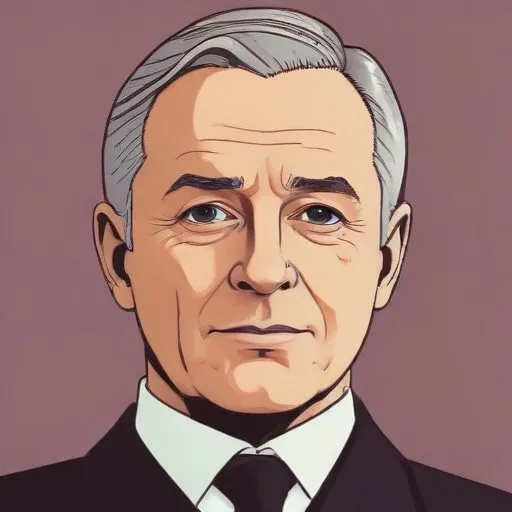
A renowned British sociologist and academic who made significant contributions to the field of sociology, particularly in the areas of historical sociology and social theory. His work has had a lasting impact on our understanding of social structures and institutions.
Garry Runciman, 3rd Viscount Runciman of Doxford, was a renowned British historical sociologist and hereditary peer, best known for his groundbreaking research in comparative and historical sociology, as well as his influential contributions to the field of neo-Darwinian evolutionary theory.
Runciman was born on November 10, 1934, to Leslie Runciman, 2nd Viscount Runciman of Doxford, and his second wife, Katherine Schuyler Garrison. His uncle, Sir Steven Runciman, was a prominent British historian. Runciman was educated at Eton College, where he was an Oppidan Scholar, and Trinity College, Cambridge, where he earned his degree.
Runciman's academic career spanned over five decades, during which he made significant contributions to the field of sociology. He joined the faculty of Trinity College, Cambridge, in the 1950s as a historical sociologist and became a junior research fellow after submitting a thesis entitled "Plato's Later Epistemology." In the 1960s, he shifted his focus primarily to sociology, becoming a senior research fellow in 1971.
Runciman's principal research interest was the application of neo-Darwinian evolutionary theory to cultural and social selection. He authored several publications in his field, including The Social Animal, A Treatment of Social Theory, and The Theory of Cultural and Social Selection.
Runciman held honorary degrees from King's College London, the Universities of Edinburgh, Oxford, and York. He was an Honorary Foreign Member of the American Academy of Arts and Sciences and an Honorary Bencher of Inner Temple. In 1975, he was elected to the British Academy, serving as its president from 2001 to 2005. Runciman was also an honorary fellow of Nuffield College, Oxford.
Runciman's expertise extended beyond academia. He was invited by the Governor of the Bank of England to serve on the Securities and Investment Board (later the Financial Services Authority), from which he retired in 1998. Additionally, he chaired the British Government's Royal Commission on Criminal Justice from 1991 to 1993.
Garry Runciman's contributions to sociology and historical research have had a lasting impact on our understanding of cultural and social evolution. His work has influenced generations of scholars and continues to shape the field of sociology today. Runciman's commitment to academic excellence and public service has left an indelible mark on British intellectual life.
88 Years Old
A prominent sociologist who developed the theory of structuration, which explores the relationship between individual agency and social structure, and is known for his work on modernity and globalization.
83 Years Old
Acclaimed filmmaker behind gritty, stylish, and intense crime dramas and thrillers, often exploring themes of morality and redemption. Known for iconic films like "Heat" and "Collateral".
Born in 1923
A prominent sociologist and academic who made significant contributions to the field of sociology, particularly in the areas of education and social class. Known for his work on the British class system and its effects on education.
97 Years Old
A prominent sociologist and politician who served as a European Commissioner and advocated for social and economic reforms, known for his theories on social conflict and modern capitalism.
Born in 1897
Developed the concept of "civilizing process" to explain how human behavior and societal norms change over time, and is known for his work on the sociology of knowledge and the process of state formation.
96 Years Old
A French sociologist, anthropologist, and philosopher who developed the concept of "cultural capital" and critiqued social inequality, highlighting how power and privilege are maintained through cultural and symbolic means.
Born in 1820
A pioneering thinker who coined the phrase "survival of the fittest" and applied evolutionary principles to social sciences, shaping modern sociology and philosophy.
