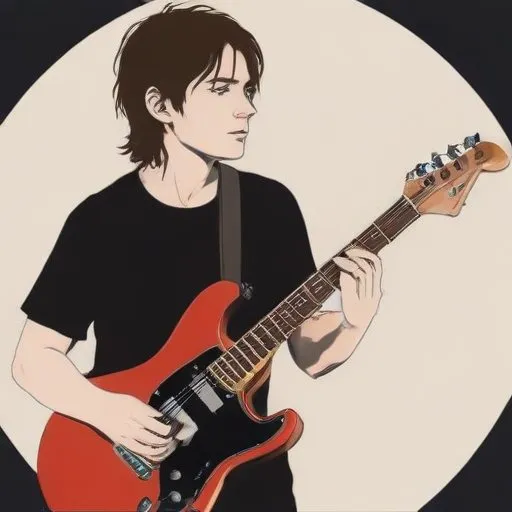
Gary Duncan: The Guitar Maestro of Psychedelic Rock
A Legacy of Riffs and Sonic Exploration
Gary Duncan, born Eugene Duncan, Jr., was an American guitarist, singer, and songwriter who left an indelible mark on the world of psychedelic rock. As a founding member of Quicksilver Messenger Service, Duncan's innovative guitar playing and musical chemistry with
John Cipollina defined the sound of this San Francisco-based band.
Early Life and Musical Roots
Born on September 4, 1946, in San Diego, California, Duncan grew up in Ceres, California, where he developed a passion for music. Under the name Gary Grubb, he played guitar for the Ratz, an opening act for the Byrds and the Rolling Stones at the War Memorial Auditorium in San Jose, California.
The Brogues and the Birth of Gary Duncan
In 1965, Duncan joined the Brogues in Merced, California, alongside future Quicksilver Messenger Service drummer Greg Elmore. It was during this period that he adopted the stage name Gary Duncan, which would become synonymous with psychedelic rock. Although the Brogues disbanded in 1965, Duncan's musical journey was only just beginning.
Quicksilver Messenger Service: The Golden Era
Late in 1965, Duncan received an offer from John Cipollina to audition for Quicksilver Messenger Service. Alongside Elmore, Duncan joined the band, and their debut performance at The Matrix in December 1965 marked the beginning of a new era in psychedelic rock. The complex guitar interplay between Duncan and Cipollina redefined the genre, pushing the boundaries of sound and experimentation.
A Year of Self-Discovery and Reinvention
In early 1969, Duncan left Quicksilver Messenger Service, embarking on a year-long sabbatical to explore new horizons. He spent time riding motorcycles, living in New York City and Los Angeles, and "going crazy" – as he described it. This period of self-discovery and introspection rejuvenated his creative energy, preparing him for the next chapter in his musical journey.
Reunion and Evolution
By the beginning of 1970, Duncan rejoined Quicksilver Messenger Service, this time with singer-guitarist Dino Valenti. The trio steered the band toward a more folk-rock oriented sound, which continued to evolve throughout the 1970s. Although the original lineup eventually disbanded, Duncan, Elmore, and Valenti kept the Quicksilver Messenger Service flame burning until the end of the decade.
Later Career and Legacy
In the mid-1980s, Duncan continued to perform and record music, leaving behind a rich legacy of psychedelic rock mastery. His influence on the genre is undeniable, and his innovative guitar playing continues to inspire new generations of musicians.
Quotes and Memorable Sayings
- "I left for a year and rode motorcycles and lived in New York City and Los Angeles and just kind of went crazy for about a year." – Gary Duncan on his 1969 sabbatical
Impact on Modern Society
Gary Duncan's contributions to psychedelic rock have had a lasting impact on modern society. His music continues to transport listeners to a bygone era of counterculture and free-spirited creativity, inspiring new waves of artists and fans alike.
FAQ
What style of music did Gary Duncan play?
Gary Duncan was a guitarist known for his work in the psychedelic rock and folk rock genres, particularly with the band Quicksilver Messenger Service.
What was Gary Duncans role in Quicksilver Messenger Service?
Gary Duncan was a founding member and lead guitarist of Quicksilver Messenger Service, one of the most influential psychedelic rock bands of the 1960s.
How did Gary Duncans guitar playing style evolve?
Gary Duncans guitar playing style evolved from his early work in folk rock to a more experimental and psychedelic approach, characterized by his use of feedback, distortion, and other effects.
Did Gary Duncan release any solo albums?
Yes, Gary Duncan released several solo albums, including Gary Duncan and Quicksilver and Rhythm and Blues. These albums showcased his continued innovation and experimentation as a guitarist.
What was Gary Duncans legacy in San Francisco rock?
Gary Duncan was a key figure in the San Francisco rock scene of the 1960s, and his work with Quicksilver Messenger Service helped to define the sound of psychedelic rock.