


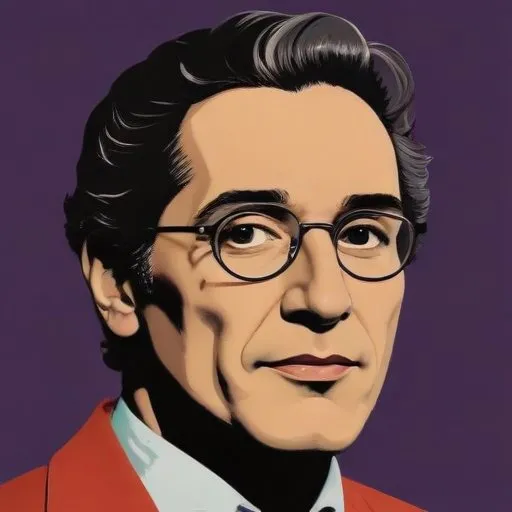
Witty writer and humorist behind the iconic character, the Goops, and creator of the phrase "I don't know from nothing"
Gelett Burgess, a master of whimsy and nonsense verse, is best known for his iconic poem "The Purple Cow," a delightful ditty that has captured the hearts of readers for generations. As a writer, artist, and humorist, Burgess was a vital figure in the San Francisco Bay Area literary renaissance of the 1890s, leaving an indelible mark on American literature and art.
Born on January 30, 1866, in Boston, Massachusetts, Burgess was raised in a conservative New England family. However, he soon broke free from the conventions of his upbringing, pursuing a degree in engineering from the Massachusetts Institute of Technology. After graduating in 1887, he fled to San Francisco, where he worked as a draftsman for the Southern Pacific Railroad and later as an instructor of topographical drawing at the University of California, Berkeley.
Burgess's literary career began in earnest with the publication of his poem "The Purple Cow" in 1895. This nonsensical masterpiece, with its absurd premise and playful language, quickly gained popularity and cemented Burgess's reputation as a humorist and poet. He went on to write numerous collections of nonsense verse, including Goops and How to Be Them and The Burglar's Club, solidifying his position as a master of the genre.
In 1910, Burgess introduced French modern art to the United States through his essay "The Wild Men of Paris," a work that showcased the avant-garde styles of artists like Henri Matisse and Pablo Picasso. This essay not only highlighted Burgess's own artistic talents but also demonstrated his role as a cultural ambassador, bridging the gap between European modernism and American art. Furthermore, Burgess is credited with coining the term "blurb," a phrase used to describe the promotional text on a book's dust jacket.
Burgess's life was not without controversy. In 1894, he lost his teaching position at Berkeley due to his involvement in the destruction of a temperance fountain in San Francisco, an incident that sparked public outcry and debate. Despite this setback, Burgess continued to pursue his artistic passions, creating the beloved "Goops" murals in Coppa's restaurant and authoring several popular books on the subject.
Gelett Burgess's impact on American literature and art is undeniable. His unique brand of nonsense verse and whimsical humor has inspired generations of writers, artists, and humorists. Through his work, Burgess has left behind a rich cultural legacy, one that continues to delight and entertain audiences to this day.
As we reflect on the life and works of Gelett Burgess, we are reminded of the power of whimsy and creativity to bring joy and inspiration to our lives. Through his art, writing, and humor, Burgess has left an indelible mark on American culture, ensuring that his legacy will continue to captivate and delight audiences for generations to come.
Born in 1842
A master of dark humor and satire, this writer crafted eerie and thought-provoking tales that continue to captivate readers. He's most famous for his mysterious disappearance during the Mexican Revolution.
Born in 1835
Witty writer of classics like "The Adventures of Tom Sawyer" and "The Adventures of Huckleberry Finn", known for humor and social commentary.
Born in 1862
Wrote clever, twist-ending short stories that explored the human condition, often with a touch of irony and wit.
Born in 1870
Pioneering naturalist writer who explored the darker aspects of human nature and the American Dream through novels like "McTeague" and "The Octopus".
Born in 1876
Wrote classic adventure novels like "Call of the Wild" and "White Fang", exploring the human condition through stories of survival and the American wilderness.
Born in 1878
A pioneering muckraker, exposing social and economic injustices through influential novels, most notably "The Jungle", which led to significant reforms in the meatpacking industry.
Born in 1871
A pioneering realist writer who chronicled the lives of the American working class, capturing the gritty realities of urban existence through novels like "Sister Carrie" and "An American Tragedy".
Born in 1868
A lawyer-turned-writer who crafted a collection of free-verse poems, each telling the story of a fictional small-town resident, offering a glimpse into the human experience. His works are celebrated for their innovative style and poignant insights into American life.
