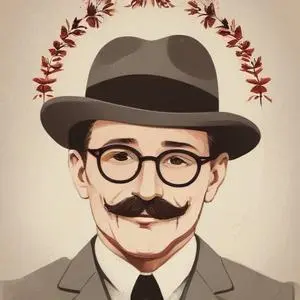
O. Henry

O. Henry

O. Henry was born on September 11th, 1862

Full Name: William Sydney Porter
Place of Birth: Greensboro, North Carolina
Profession: Short Story Writer
Nationality: American
Notable Work: The Gift of the Magi
Education: Lindenwood College
Born: September 11, 1862
Died: June 5, 1910

Wrote clever, twist-ending short stories that explored the human condition, often with a touch of irony and wit.

Timeline
1862
Birth in North Carolina
O. Henry (William Sydney Porter) was born in Greensboro, North Carolina, and would go on to become a renowned American short story writer.
1882
Moved to Texas
Henry moved to Austin, Texas, where he worked as a bank teller and began writing short stories in his free time.
1896
Published First Story
Henry published his first short story, Whistling Dicks Christmas Stocking, which marked the beginning of his literary career.
1902
Published The Four Million
Henry published his influential short story collection The Four Million, which explored themes of love, loss, and redemption.
1910
Death in New York
O. Henry died in New York City, leaving behind a legacy as one of Americas most beloved short story writers.
O. Henry

O. Henry Quiz

What is a distinctive feature of O. Henry's short stories?

Score: 0/5
FAQ
What type of stories did O. Henry write?
O. Henry was a master of the short story, specializing in tales of everyday life, romance, and the American experience. His stories often featured unexpected twists, humor, and poignancy.
What is O. Henrys most famous short story?
O. Henrys most famous short story is The Gift of the Magi, a poignant tale of a young couples sacrifice and love during the holiday season. The story has become a Christmas classic, beloved for its emotional depth and surprise ending.
How did O. Henrys life experiences influence his writing?
O. Henrys life experiences, including his time in prison and struggles with poverty, deeply influenced his writing. His stories often reflected his empathy for the downtrodden and his fascination with the human condition.
What is O. Henrys legacy in American literature?
O. Henrys legacy in American literature is that of a pioneering short story writer who captured the essence of American life and culture. His innovative style, wit, and insight into human nature have inspired generations of writers and continue to delight readers today.
How did O. Henrys writing style contribute to his popularity?
O. Henrys writing style, marked by its warmth, humor, and clever plot twists, contributed significantly to his popularity. His stories were accessible, relatable, and entertaining, making him a beloved author among readers of all ages and backgrounds.

Related People:

O. Henry

Born in 1862

Wrote clever, twist-ending short stories that explored the human condition, often with a touch of irony and wit.

Guy de Maupassant

Born in 1850

A 19th-century French literary mastermind who crafted hauntingly beautiful short stories and novels that probed the human psyche, often with a dark, ironic twist. His works remain widely read and adapted today.

Anton Chekhov

Born in 1860

A renowned Russian literary mastermind, celebrated for crafting poignant, psychologically nuanced tales that probe the human condition, and pioneering the modern short story genre.

Edgar Allan Poe

Born in 1809

A master of dark and atmospheric storytelling, crafting haunting tales of mystery and horror that continue to captivate readers to this day.

H. P. Lovecraft

Born in 1890

Creator of cosmic horror, crafting eerie tales of ancient deities and supernatural entities that lurk in the shadows, exploring the darker aspects of human nature. 82

Mark Twain

Born in 1835

Witty writer of classics like "The Adventures of Tom Sawyer" and "The Adventures of Huckleberry Finn", known for humor and social commentary.

Ambrose Bierce

Born in 1842

A master of dark humor and satire, this writer crafted eerie and thought-provoking tales that continue to captivate readers. He's most famous for his mysterious disappearance during the Mexican Revolution.

William Faulkner

Born in 1897

A Nobel Prize-winning author of complex, psychologically rich novels and short stories that explore the American South's troubled history and human nature. His writing style, blending stream-of-consciousness and non-linear narrative, has influenced generations of writers.