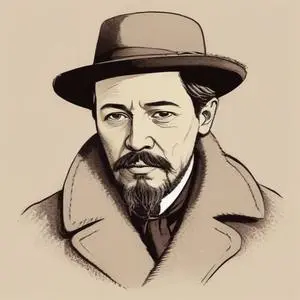
The Master of the Modern Short Story: Anton Chekhov
A Legacy of Emotional Depth and Psychological Insight
Anton Chekhov, a Russian playwright and short-story writer, is renowned for his profound impact on modern literature. With a career spanning over three decades, Chekhov's works have been celebrated for their emotional depth, psychological insight, and profound exploration of the human condition.
A Life of Words and Medicine
Born on January 29, 1860, in Taganrog, Russia, Chekhov was the third of six surviving children to Pavel Yegorovich Chekhov, a former serf, and his wife. Although he pursued a career in medicine, becoming a physician by profession, Chekhov's true passion lay in writing. As he once said, "Medicine is my lawful wife, and literature is my mistress."
Career Highlights and Major Works
Chekhov's writing career can be divided into two distinct phases. Initially, he wrote short stories to earn a living, but as his artistic ambition grew, he began to experiment with innovative narrative techniques, revolutionizing the modern short story. Some of his most notable works include:
- "The Lady with the Dog" (1899)
- "The Duel" (1891)
- "Ward No. 6" (1892)
- "The Seagull" (1896)
- "Uncle Vanya" (1899)
- "Three Sisters" (1901)
- "The Cherry Orchard" (1904)
The Birth of Modernism in Theatre
Alongside
Henrik Ibsen and
August Strindberg, Chekhov is considered one of the three seminal figures in the birth of early modernism in theatre. His plays, characterized by subtle yet powerful explorations of the human psyche, challenged traditional dramatic structures and paved the way for future generations of playwrights.
Awards and Honors
Chekhov's contributions to literature were recognized during his lifetime, earning him several awards and honors, including:
- Pushkin Prize (1888)
- Honourary Academician (1900)
- Order of St. Vladimir (1902)
Philosophical Contributions and Beliefs
Chekhov's writing embodies a profound philosophical understanding of human nature, often exploring themes of existentialism, morality, and the human condition. He believed that the role of an artist was to pose questions, not provide answers, encouraging readers to engage with his work on a deeper level.
Trivia and Fun Facts
- Chekhov was a prolific writer, publishing over 500 short stories and plays during his lifetime.
- He was an avid hunter and loved the Russian countryside.
- Chekhov's plays were initially met with criticism, but were later revived to great acclaim.
Legacy and Impact
Anton Chekhov's influence on modern literature is immeasurable. His innovative storytelling techniques, psychological insight, and emotional depth have inspired generations of writers, including
Virginia Woolf,
Ernest Hemingway, and
Raymond Carver. As a master of the modern short story, Chekhov's legacy continues to captivate readers and inspire writers around the world.
FAQ
What are some of Anton Chekhovs most famous short stories?
Anton Chekhov is renowned for his short stories, including The Lady with the Dog and Ward No. 6, which are considered some of the greatest short stories ever written.
How did Anton Chekhovs background in medicine influence his writing?
Anton Chekhovs background in medicine had a significant impact on his writing, as it influenced his observational skills and his ability to craft nuanced character portraits.
What were some of the themes explored in Anton Chekhovs plays?
Anton Chekhovs plays often explored themes of love, relationships, and the human condition, as seen in works such as The Cherry Orchard and Three Sisters.
What was Anton Chekhovs writing style?
Anton Chekhovs writing style was characterized by its simplicity, elegance, and subtlety, which allowed him to convey complex emotions and ideas with great precision.
How did Anton Chekhovs life influence his writing?
Anton Chekhovs life had a profound impact on his writing, as his experiences as a doctor, his relationships, and his travels all influenced his work.