


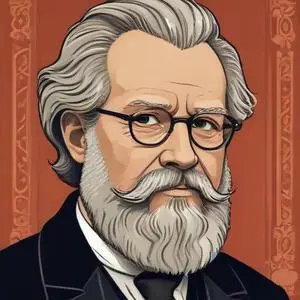
A pioneer of realism in theater, known for plays that probed the human condition, challenging social norms and morals through complex characters and situations.
Known as the founder of modernism in theatre, Henrik Ibsen is often referred to as the father of realism and one of the most influential playwrights of the 19th century. His works continue to captivate audiences worldwide, with his plays being performed more frequently than any other playwright except Shakespeare.
Born on March 20, 1828, in Skien, Norway, Ibsen was raised in a family of merchants and had strong ties to the affluent families of Telemark. He was drawn to literature and poetry from an early age and began writing plays in his teenage years.
Ibsen's early works, such as Brand and Peer Gynt, showcased his poetic and surreal style, but it was his later plays that earned him international recognition. His transition to realistic prose marked a significant shift in his writing style and paved the way for his most renowned works.
Ibsen's plays often explored the complexities of human nature, societal norms, and the constraints of bourgeois life. Some of his most notable works include:
Ibsen's plays not only reflected the social and cultural climate of his time but also continue to influence contemporary theatre, literature, and art. His works have inspired countless adaptations, parodies, and references in popular culture, ensuring his legacy endures.
Many notable playwrights, including George Bernard Shaw and Oscar Wilde, credited Ibsen as a major influence on their work. His impact on modernism and realism in theatre paved the way for future generations of writers and playwrights.
Ibsen's personal life was marked by periods of solitude, self-doubt, and introspection. He lived in Italy and Germany for 27 years, returning to Norway only briefly before settling in Christiania (now Oslo) in 1891.
Awards and honors bestowed upon Ibsen during his lifetime included the Grand Cross of the Order of St. Olav and the Royal Norwegian Order of Merit.
Ibsen's contributions to world literature and theatre are immeasurable. His plays continue to be performed, studied, and revered globally, with A Doll's House being the most performed play in the world in 2006.
As a pioneer of realism and modernism, Ibsen's influence extends beyond the realm of theatre to literature, art, and popular culture. His works remain a testament to his innovative spirit, creative genius, and unwavering commitment to artistic expression.
"The strongest man in the world is he who stands most alone."
"The task of the theatre is to make the impossible possible."
"The truth is that we are all in the gutter, but some of us are looking at the stars."
Ibsen's words continue to inspire and provoke, reminding us of the power of art to challenge, provoke, and transform.
Ibsen's life and works serve as a testament to the enduring power of creativity, perseverance, and innovation. His struggles, triumphs, and unwavering dedication to his craft continue to inspire generations of artists, writers, and thinkers.
As we reflect on Ibsen's remarkable legacy, we are reminded of the transformative potential of art to shape our understanding of the world and ourselves. His plays remain a powerful reminder of the importance of critical thinking, empathy, and human connection.
Born in 1849
A pioneering figure in Swedish literature, known for his bold, innovative, and often provocative works that explored the human psyche, relationships, and societal norms.
Born in 1821
A Russian literary mastermind who penned psychologically complex novels that probed the human condition, exploring themes of morality, philosophy, and the darker aspects of human nature.
Born in 1828
A Russian literary giant who penned sweeping novels like "War and Peace" and "Anna Karenina", exploring the human condition with profound insight and masterful storytelling.
Born in 1813
A Danish philosopher and author who is considered the father of existentialism, known for his philosophical and theological writings that emphasized individualism and subjective experience.
Born in 1854
A witty and flamboyant literary mastermind, renowned for crafting clever, humorous, and poignant works that continue to delight audiences with their clever wordplay and societal commentary.
Born in 1856
A renowned Irish playwright and critic, known for his witty, thought-provoking plays that often challenged social norms and conventions. His works include Pygmalion and My Fair Lady.
Born in 1860
A renowned Russian literary mastermind, celebrated for crafting poignant, psychologically nuanced tales that probe the human condition, and pioneering the modern short story genre.
