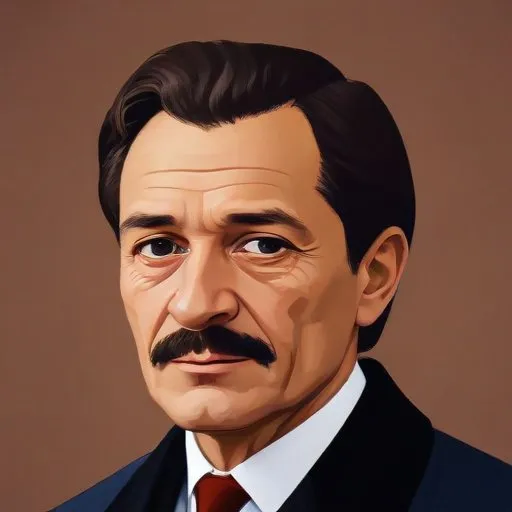
Georg Wst: The Pioneer of Atlantic Oceanography
A New Perspective on Ocean Currents
Georg Wst, a German oceanographer, revolutionized our understanding of the Atlantic Ocean with his groundbreaking work on water masses and boundary currents. His research provided the first evidence of the concentration of water mass spreading in western boundary currents, a crucial discovery that transformed the field of oceanography.
Early Life and Education
Born on June 15, 1890, in Berlin, Germany, Wst was the son of Prussian civil servant Max Wst and his wife Clara. He attended the Charlottenburg high school in Berlin and later studied geography and oceanography at the Friedrich-Wilhelm-University (now Humboldt University of Berlin) from 1910. Under the guidance of renowned professors Albrecht Penck and Alfred Merz, Wst developed a strong foundation in meteorology, mathematics, and physics.
Influential Mentorship and Early Career
Wst's most significant mentor was Alfred Merz, who became the director of the Institute and Museum of Marine Sciences in 1920. Merz's influence paved the way for Wst to join Bjrn Helland-Hansen in Bergen, Norway, where he learned Norwegian colleagues' methods. Wst gained practical experience in ocean observations by working on lightships, surveying vessels, and during cruises on the Norwegian research vessel
Armauer Hansen in the Nordic Seas.
Doctoral Thesis and World War I
Wst passed his examinations in 1914, but his doctoral thesis was printed only in 1919, after World War I. During the war, he served as a meteorologist and was wounded near Verdun in 1917. After the war, he became an assistant to Merz and participated in several research cruises in the North and Baltic Seas.
Pioneering Work in the Atlantic Ocean
Merz's plan for a systematic hydrographic survey of the Atlantic Ocean was approved, and Wst played a crucial role in this endeavor. His work on the Atlantic Ocean provided a new perspective on the motions of water masses between the northern and southern hemispheres. Wst's findings on the concentration of water mass spreading in western boundary currents were a significant breakthrough in the field of oceanography.
Legacy and Impact
Wst's contributions to oceanography have had a lasting impact on our understanding of the Atlantic Ocean. His work laid the foundation for future research in ocean currents, oceanography, and climate science. Today, Wst is recognized as a pioneer in the field of oceanography, and his research continues to influence modern scientists and researchers.
Personal Milestones and Key Life Events
- 1910: Began studying geography and oceanography at the Friedrich-Wilhelm-University in Berlin
- 1912: Joined Bjrn Helland-Hansen in Bergen, Norway, to learn Norwegian colleagues' methods
- 1914: Passed his doctoral thesis examinations
- 1917: Wounded near Verdun during World War I
- 1919: Received his doctoral degree after the war
- 1977: Passed away on November 8th
Influence on Modern Society
Wst's work has had a profound impact on our understanding of the Atlantic Ocean and its role in shaping global climate patterns. His research has contributed to the development of more accurate climate models, improved weather forecasting, and a better understanding of ocean currents and their impact on global weather patterns.
Career Highlights and Major Works
Wst's most notable work is his research on the Atlantic Ocean, which provided a new perspective on the motions of water masses between the northern and southern hemispheres. His findings on the concentration of water mass spreading in western boundary currents are considered a major breakthrough in oceanography.
FAQ
What was Georg Wüsts contribution to oceanography?
Georg Wüst was a German oceanographer and academic, who made significant contributions to the field of oceanography, including the discovery of the Gulf Streams warm-water component.
What were Georg Wüsts research interests?
Georg Wüsts research interests focused on ocean currents, thermohaline circulation, and the dynamics of the oceans interior, which helped shape our understanding of global ocean circulation.
What were some of Georg Wüsts notable publications?
Georg Wüst published several influential papers on oceanography, including Die Strömungen im Atlantischen Ozean and Der Weltmeere, which presented his research on ocean currents and circulation.
How did Georg Wüsts work impact climate research?
Georg Wüsts work on ocean circulation and thermohaline dynamics laid the foundation for modern climate research, as it highlighted the critical role of the oceans in regulating Earths climate.
What is Georg Wüsts legacy in oceanography?
Georg Wüsts legacy in oceanography is that of a pioneering researcher, who advanced our understanding of ocean circulation and its role in shaping global climate patterns.