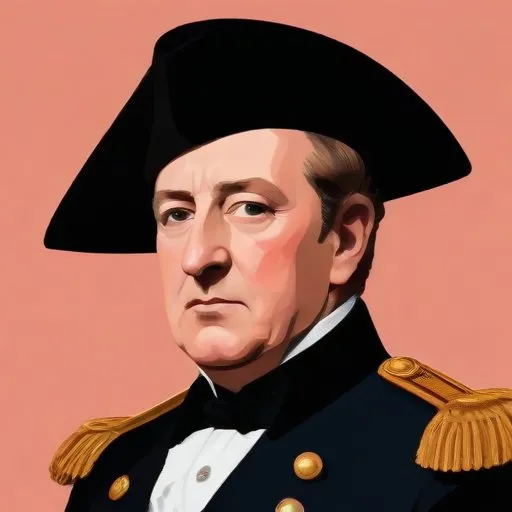
George Brydges Rodney, 1st Baron Rodney: The Hero of the Battle of the Saints
A Legendary British Naval Commander
George Brydges Rodney, 1st Baron Rodney, is iconic for his victorious command during the Battle of the Saints, a pivotal naval engagement that took place on April 12, 1782, in the West Indies. This remarkable feat earned him a lasting reputation as one of the most skilled and courageous naval commanders in British history.
Early Life and Naval Career
Born on February 13, 1718, in Walton, Somerset, England, Rodney was raised in a family of modest means. Despite the financial constraints, his family managed to secure him a position as a volunteer on the HMS
Suffolk in 1732, marking the beginning of his illustrious naval career. Over the years, Rodney proved himself to be an outstanding officer, rising through the ranks with remarkable speed and earning recognition for his bravery and tactical prowess.
Rise to Prominence
Rodney's big break came in 1759 when he was appointed commander of the HMS
Dublin. He played a crucial role in the British capture of the French island of Grenada, which led to his promotion to Rear-Admiral of the Blue in 1762. Throughout the 1760s and 1770s, Rodney continued to distinguish himself in various naval campaigns, solidifying his reputation as a skilled and fearless commander.
The Battle of the Saints
The Battle of the Saints, fought on April 12, 1782, was a defining moment in Rodney's career. As commander of the British fleet, he successfully broke through the French line, employing a daring and innovative tactic known as "breaking the line." This bold move allowed the British to gain the upper hand, ultimately leading to a decisive victory over the French fleet. The triumph was hailed as a masterpiece of naval strategy, cementing Rodney's status as a hero and earning him the title of 1st Baron Rodney.
Philosophical Contributions and Beliefs
Throughout his life, Rodney demonstrated a strong sense of duty, honor, and loyalty. He believed in the importance of discipline and training, recognizing that a well-prepared and well-led crew was essential to success in battle. Rodney's leadership style was characterized by his courage, tactical genius, and ability to inspire loyalty in his men.
Personal Milestones and Key Life Events
- February 13, 1718: Born in Walton, Somerset, England
- 1732: Joined the HMS Suffolk as a volunteer
- 1759: Appointed commander of the HMS Dublin
- 1762: Promoted to Rear-Admiral of the Blue
- April 12, 1782: Led the British fleet to victory in the Battle of the Saints
- May 24, 1782: Created 1st Baron Rodney
- May 24, 1792: Died in London, England
Legacy and Impact on Modern Society
Rodney's achievements have had a lasting impact on naval strategy and tactics. His innovative approach to breaking the line has been studied and adopted by navies around the world. Moreover, his emphasis on discipline, training, and leadership has inspired generations of naval officers. Today, Rodney is remembered as a towering figure in British naval history, a testament to the power of courage, skill, and strategic genius.
Trivia and Fun Facts
- Rodney was known for his flamboyant and extravagant lifestyle, earning him the nickname "the dandy admiral."
- He was a talented musician and played the violin in his spare time.
- Rodney's victory at the Battle of the Saints was celebrated with a grand procession and a musical composition by William Boyce.
Historical Context and Comparative Analysis with Contemporaries
Rodney's achievements must be viewed within the context of the Anglo-French rivalry, which dominated the 18th century. His victory at the Battle of the Saints was a significant turning point in the American Revolutionary War, as it prevented a potential French invasion of the British West Indies. When compared to his contemporaries, such as Admiral Horatio Nelson, Rodney's tactical genius and bravery are equally impressive, solidifying his position as one of the greatest naval commanders in British history.
FAQ
What were the major naval victories of George Brydges Rodney, 1st Baron Rodney?
George Brydges Rodney, 1st Baron Rodney, was a renowned British admiral who won several major naval victories, including the Battle of the Saintes in 1782, which helped to turn the tide of the American Revolutionary War in favor of the British.
How did George Brydges Rodney, 1st Baron Rodney, impact the British Royal Navy?
Rodney played a significant role in shaping the British Royal Navy, as he helped to modernize its fleet, improve its tactics, and develop new strategies for naval warfare. He was also a strong advocate for the importance of naval power in British foreign policy.
What was George Brydges Rodney, 1st Baron Rodney, known for besides his naval career?
Besides his naval career, Rodney was also known for his role in politics, where he served as a member of Parliament and held several high-ranking positions, including Lord of the Admiralty.
How did George Brydges Rodney, 1st Baron Rodney, deal with challenges during his career?
Rodney faced several challenges during his career, including conflicts with rival admirals, bureaucratic red tape, and the pressures of wartime command. However, he persevered and continued to achieve success, earning him the respect and admiration of his peers and superiors.
What is George Brydges Rodney, 1st Baron Rodney, remembered for today?
Today, Rodney is remembered as one of the greatest admirals in British naval history, whose victories and innovations helped to shape the course of British history. His legacy continues to inspire and influence naval officers around the world.