


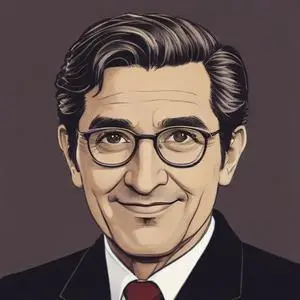
A pioneering physician and academic who discovered the importance of liver therapy in treating pernicious anemia, revolutionizing the field of hematology.
George Minot, a renowned American medical researcher, is celebrated for his groundbreaking work on pernicious anemia, a debilitating disease that was once shrouded in mystery. Together with George Hoyt Whipple and William P. Murphy, Minot shared the 1934 Nobel Prize in Physiology or Medicine, revolutionizing the field of hematology and transforming the lives of countless patients.
Born on December 2, 1885, in Boston, Massachusetts, Minot was the namesake of his great-great-grandfather, George Richards Minot (1758-1802). His father, James Jackson Minot, was a physician, and his great-grandfather, James Jackson, co-founded the Massachusetts General Hospital. Minot's fascination with the natural sciences and medicine was nurtured from a young age.
Minot pursued his undergraduate degree at Harvard College, where he was elected to The Owl Club, and graduated in 1908. He then obtained his M.D. degree from Harvard Medical School in 1912. During his time at Harvard, he worked in the William Henry Howell's lab at Johns Hopkins School of Medicine, focusing on blood thinning proteins, such as antithrombin.
In 1915, Minot secured a junior position on the medical staff of the Massachusetts General Hospital, where he initiated his research on blood anemia. His pioneering work led to a deeper understanding of the disease, and he discovered that pernicious anemia was caused by a lack of intrinsic factor, a protein necessary for vitamin B12 absorption.
This groundbreaking finding paved the way for the development of effective treatments, including liver therapy, which significantly improved patient outcomes. Minot's work not only shed light on the mysteries of pernicious anemia but also laid the foundation for further research in the field of hematology.
Minot's Nobel Prize-winning research had a profound impact on modern medicine. His work inspired a new generation of researchers and clinicians, who continued to build upon his discoveries. The development of liver therapy and subsequent treatments for pernicious anemia have saved countless lives and improved the quality of life for millions of patients worldwide.
In addition to his scientific contributions, Minot was an esteemed educator, serving as a professor of medicine at Harvard University and director of the Thorndike Memorial Laboratory at Boston City Hospital. His commitment to teaching and research has left an indelible mark on the medical community.
George Minot's remarkable journey, marked by scientific curiosity and dedication, has left an enduring legacy in the field of medicine. His pioneering work on pernicious anemia has improved the lives of countless individuals, and his contributions continue to inspire future generations of medical researchers and clinicians.
As we reflect on the remarkable life and achievements of George Minot, we are reminded of the power of scientific inquiry and the boundless potential of human discovery.
Born in 1892
A physician and academic who discovered the importance of folic acid in preventing anemia, and was awarded the Nobel Prize in Physiology or Medicine in 1934.
Born in 1878
A pioneering physician and pathologist who discovered the importance of liver therapy in treating pernicious anemia, leading to a Nobel Prize in Physiology or Medicine in 1934.
Born in 1914
A master of macabre and B-movie kingpin, known for his campy horror films and outrageous marketing gimmicks that added to the cinematic experience.
Born in 1899
Developed the first vaccine against yellow fever, saving millions of lives, and made significant contributions to the field of virology.
