


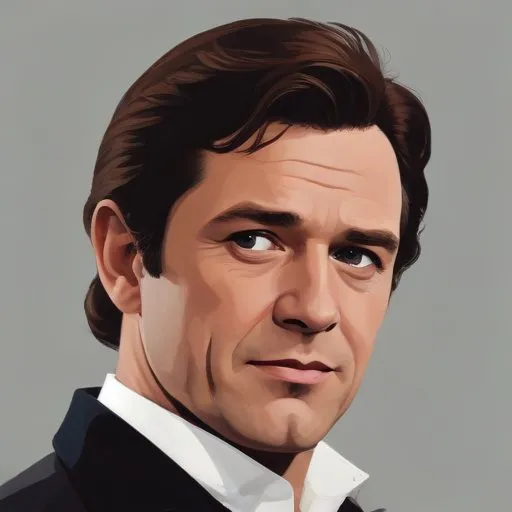
Silent film star and rugged leading man of the 1920s and 1930s, known for his dashing good looks and athletic build, starring in films like "The Iron Horse" and "Sunrise".
George O'Brien was an American actor who dominated the silver screen during the silent film era and transitioned seamlessly into the sound film era of the 1930s. He is best remembered for his starring role in F.W. Murnau's 1927 masterpiece, Sunrise: A Song of Two Humans, which won three major Academy Awards and remains an iconic classic of American cinema.
Born on April 19, 1899, in San Francisco, California, George O'Brien was the oldest son of Daniel J. and Margaret L. (née Donahue) O'Brien. His father later became the chief of police for the City of San Francisco, and in 1921, he ordered the arrest of Roscoe "Fatty" Arbuckle in connection with a scandalous Labor Day party.
In 1917, O'Brien enlisted in the United States Navy to fight in World War I, serving on a submarine chaser. He voluntarily acted as a stretcher bearer for wounded Marines and was decorated for bravery. After the war, O'Brien became the Light Heavyweight boxing champion of the Pacific Fleet.
O'Brien came to Hollywood in his early 20s, hoping to become a cameraman, and worked as an assistant cameraman for both Tom Mix and Buck Jones. He began his acting career in bit parts and as a stuntman, with one of his early roles being in the 1922 George Melford-directed drama Moran of the Lady Letty, which starred Rudolph Valentino.
In 1924, O'Brien received his first starring role in the drama The Man Who Came Back with English actress Dorothy Mackaill. The same year, he was chosen by John Ford to star in The Iron Horse with actress Madge Bellamy. The film was an immense success at the box office, and O'Brien went on to make nine more films for Ford.
In the 1930s and 1940s, O'Brien transitioned to starring in a number of Westerns, solidifying his status as a leading man of American cinema. Although he continued to act in film and television until the 1950s, his popularity waned with the advent of talkies.
George O'Brien's contributions to the silent film era and his iconic performances in classics like Sunrise have cemented his place in the annals of American cinematic history. His bravery in World War I and his subsequent boxing championship only add to his fascinating story.
O'Brien passed away on September 4, 1985, leaving behind a legacy of memorable performances and a testament to the enduring power of silent cinema.
Born in 1912
Leading man of 1930s-1950s films, starring in musicals and westerns, including the iconic "Miracle on 34th Street".
Born in 1918
A glamorous Hollywood icon of the 1940s, known for her stunning beauty, captivating dance moves, and memorable film roles. She was a major sex symbol and pin-up girl during World War II.
Born in 1901
A glamorous and androgynous Hollywood icon, known for her sultry voice, striking features, and trailblazing gender-bending style on screen. She mesmerized audiences with her unique blend of European sophistication and American charm.
Born in 1901
Iconic star of Hollywood's Golden Age, known for his distinctive drawl and stoic, rugged on-screen presence in classic Westerns and dramas.
Born in 1908
A screwball comedy queen of the 1930s, known for her rapid-fire wit, charming on-screen presence, and iconic film roles in "Twentieth Century" and "My Man Godfrey".
Born in 1904
Debonair leading man of Hollywood's Golden Age, starring in iconic romantic comedies and dramas, known for suave charm and witty banter.
Born in 1915
A legendary actress who captivated audiences with her natural, emotional performances in films like "Casablanca" and "Autumn Sonata", earning her three Academy Awards.
Born in 1899
Iconic leading man of classic Hollywood cinema, starring in timeless films like Casablanca and The African Queen, embodying a tough, charismatic on-screen presence.
