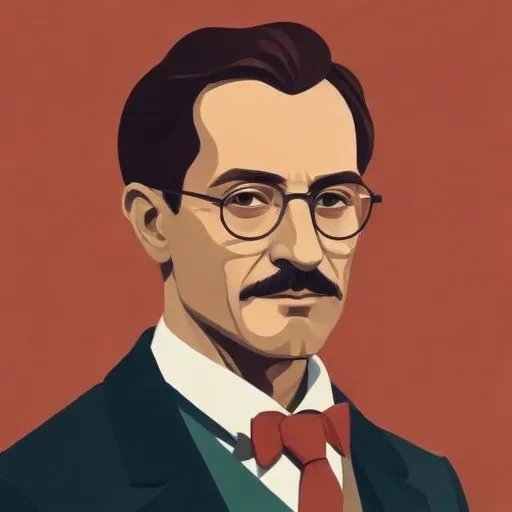
Sir George Radda: The Pioneer of Magnetic Resonance in Medicine
A Trailblazer in the Field of Spectroscopy
Sir George Radda, a Hungarian-British chemist, is renowned for his groundbreaking work in developing spectroscopic techniques for metabolic studies, revolutionizing the field of medicine. His pioneering efforts in using nuclear magnetic resonance (NMR) to study tissue metabolites have had a profound impact on our understanding of complex biological processes.
Early Life and Education
Born on June 9, 1936, in Hungary, Radda's interest in literary criticism initially led him to pursue a career in that field. However, he eventually shifted his focus to chemistry, attending Merton College, Oxford, in 1957. This decision would prove to be a pivotal moment in his life, setting him on the path to becoming a leading figure in the scientific community.
Breakthrough Research and Innovations
Radda's research career was marked by several significant milestones. In 1974, he published a seminal paper introducing the use of NMR to study tissue metabolites, a breakthrough that would change the face of medical research. This was followed by the first scientific report on the clinical application of his work in 1981, which led to the installation of a large magnet for NMR investigations at the
John Radcliffe Hospital in Oxford in 1983.
Awards and Honours
Radda's contributions to science have been recognized with numerous prestigious awards and honours, including:
- Buchanan Medal (1987)
- CBE (Commander of the Order of the British Empire) (1993)
- Knighthood (2000)
- Fellow of the Royal Society
- Fellow of Merton College, Oxford
- British Heart Foundation Professor of Molecular Cardiology
- Honorary Member of the American Heart Association
- Citation for International Achievement
- Honorary Citizen of Singapore (2015)
Leadership and Legacy
From 1996 to 2004, Radda served as the Chief Executive of the Medical Research Council in the UK, further solidifying his reputation as a leader in the scientific community. His legacy continues to inspire future generations of researchers, ensuring that his groundbreaking work will have a lasting impact on the field of medicine.
Personal Milestones and Key Life Events
Radda's commitment to science has been matched only by his dedication to his personal life. He has been a devoted friend, colleague, and family man, always prioritizing those around him.
Influence on Modern Society
Sir George Radda's work has had a profound impact on modern society, enabling the development of new diagnostic tools and treatments for a range of diseases. His pioneering spirit and relentless pursuit of knowledge have inspired countless individuals to pursue careers in science, ensuring that his legacy will continue to shape the future of medicine.
Philosophical Contributions and Beliefs
Throughout his career, Radda has remained committed to the pursuit of knowledge, driven by a deep-seated curiosity about the natural world. His work embodies the power of human ingenuity and the importance of interdisciplinary collaboration.
Historical Context and Legacy
Radda's contributions to science have been recognized as a significant milestone in the history of medicine. His work has paved the way for future generations of researchers, ensuring that his legacy will continue to inspire and shape the course of medical research.
Visual Timeline and Milestones
| 1936 |
Born on June 9th in Hungary |
| 1957 |
Attended Merton College, Oxford, to study chemistry |
| 1974 |
Published seminal paper introducing the use of NMR to study tissue metabolites |
| 1981 |
Published first scientific report on the clinical application of NMR |
| 1983 |
Large magnet installed for NMR investigations at the John Radcliffe Hospital in Oxford |
| 1996-2004 |
Served as Chief Executive of the Medical Research Council in the UK |
| 2000 |
Awarded a knighthood |
| 2015 |
Conferred an award as an Honorary Citizen of Singapore |
FAQ
What was George Raddas field of research?
George Radda was a Hungarian-born British chemist who made significant contributions to the field of magnetic resonance imaging (MRI). He was a pioneer in the development of MRI technology and its applications in medicine.
What awards did George Radda win?
George Radda won several awards for his work, including the Royal Medal, the Gold Medal of the Royal Society, and the Wolf Prize in Chemistry. He was also knighted in 1987 for his services to science.
What institutions did George Radda work at?
George Radda worked at several institutions, including the University of Oxford, where he was a professor of chemistry, and the Francis Crick Institute, where he was a director.
What was George Raddas role in the development of MRI?
George Radda played a key role in the development of MRI technology, including the design of the first MRI scanner and the development of new MRI techniques. He also worked on the application of MRI in medicine, including its use in cancer diagnosis and treatment.
What is George Raddas legacy in science?
George Radda is remembered as a pioneer in the development of MRI technology and its applications in medicine. He is known for his contributions to the advancement of scientific knowledge and his impact on the field of chemistry and medicine.