


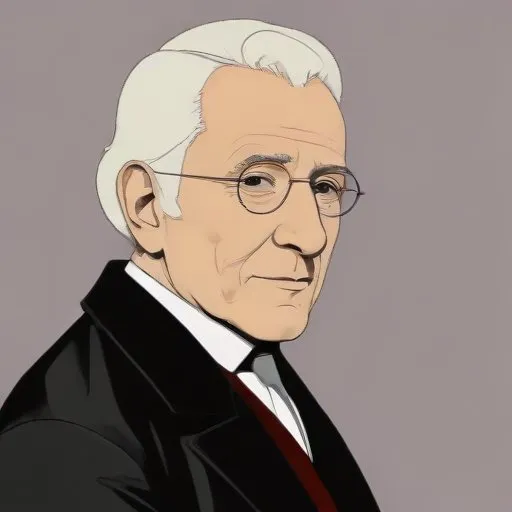
A renowned composer and educator, he challenged traditional modernist music with his eclectic and expressive style, blending elements of Romanticism and serialism.
Renowned American composer George Rochberg is best known for his unconventional approach to music composition, which led to a radical shift in his style, abandoning serialism after the tragic loss of his teenage son in 1964. This transformative event marked a turning point in Rochberg's career, as he sought to infuse his music with a deeper sense of emotion and humanity.
Born on July 5, 1918, in Paterson, New Jersey, Rochberg's musical journey began at the Mannes College of Music, where he was mentored by George Szell and Hans Weisse. He later attended the Curtis Institute of Music, studying under the guidance of Rosario Scalero and Gian Carlo Menotti.
Rochberg served in the United States Army during World War II, an experience that would later influence his music. Following the war, he began his academic career, becoming a professor at the University of Pennsylvania in 1948, a position he held until 1983. During this time, he also served as chairman of the music department from 1952 to 1968.
In the 1970s, Rochberg's incorporation of tonal passages in his music sparked controversy among critics and fellow composers. This bold move was seen as a rejection of the prevailing serialist movement, and Rochberg's new approach was met with both praise and criticism.
Rochberg's oeuvre includes a range of works, from symphonies and chamber music to opera and vocal pieces. Some of his notable compositions include:
George Rochberg's innovative approach to music composition has left an indelible mark on the world of contemporary classical music. His bold rejection of serialism and embracing of tonality has inspired generations of composers, and his music continues to be performed and celebrated worldwide.
"The only thing that matters is the music itself, not the rationalizations or justifications we invent to explain it."
George Rochberg passed away on May 29, 2005, at the age of 86, leaving behind a legacy of musical innovation and creative courage.
Rochberg's music and archives are preserved at the Paul Sacher Foundation in Basel, Switzerland, as well as various institutions in the United States, including the New York Public Library and the Library of Congress.
96 Years Old
A pioneer of avant-garde music, this composer and educator is renowned for his innovative and theatrical works that often feature unconventional instruments and techniques.
Born in 1908
A pioneering composer of modern classical music, known for his complex and innovative works that pushed the boundaries of harmony and rhythm.
Born in 1925
A renowned French musician who revolutionized classical music with his avant-garde compositions and innovative conducting style, pushing boundaries and redefining the genre.
97 Years Old
A pioneer of electronic and avant-garde music, this composer pushed boundaries with unconventional sounds and performances, influencing generations of musicians and artists.
Born in 1925
An Italian maestro who blended classical and avant-garde styles, creating innovative compositions that pushed musical boundaries. He's renowned for his bold, eclectic works that challenged traditional conventions.
Born in 1923
A visionary composer and educator who pushed the boundaries of classical music with his avant-garde and innovative works, blending dissonance and harmony in unique ways.
Born in 1922
A visionary composer who merged mathematics and music, creating complex, avant-garde works that pushed the boundaries of sound and performance.
Born in 1926
A pioneer of indeterminacy in music, creating subtle, atmospheric soundscapes that defy traditional composition, and teaching generations of musicians to think outside the box.
