


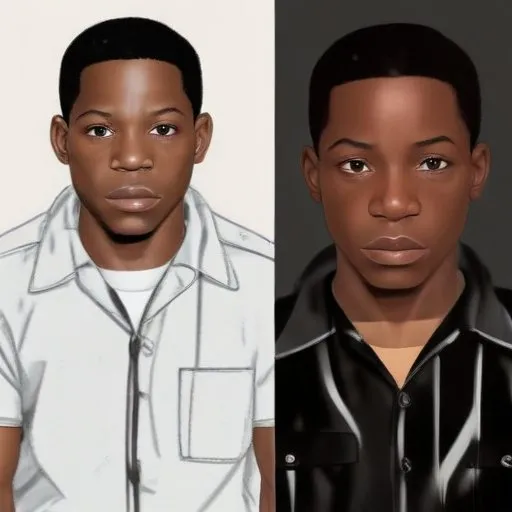
A wrongly convicted 14-year-old African-American boy who was executed in 1944, known for being the second youngest person in the U.S. to receive the death penalty. His tragic story has become a symbol of racial injustice and a catalyst for reform.
On March 24, 1944, the bodies of two young white girls, Betty June Binnicker and Mary Emma Thames, were found in a ditch in Alcolu, South Carolina. The town was gripped with fear and outrage, and the search for the killer began.
Within days, Stinney, a young black boy, was accused of the crime. The police claimed that Stinney had confessed to the murders, but there were many inconsistencies in his supposed confession. Despite the lack of evidence, Stinney was arrested, put on trial, and found guilty.
The trial was a sham, with the prosecution relying on circumstantial evidence and questionable witnesses. Stinney's defense team was inexperienced and failed to call any witnesses on his behalf. The trial lasted only a few hours, and the jury took just 10 minutes to deliver a guilty verdict.
On June 16, 1944, just 81 days after the murders, Stinney was led to the electric chair. He was so small that the guards had to use books to prop him up in the chair. Stinney's last words were "I didn't do it."
The execution of George Stinney Jr. is widely regarded as a grave miscarriage of justice. In 2014, a judge finally vacated Stinney's conviction, citing the lack of evidence and the flawed trial process.
Stinney's story serves as a heartbreaking reminder of the racial tensions and injustices that plagued the United States in the mid-20th century. His case highlights the need for fair and unbiased justice, and serves as a warning against the dangers of racial prejudice and hysteria.
George Stinney Jr. was born on October 21, 1929, in Pinewood, South Carolina. He was the youngest of seven children, and his family moved to Alcolu when he was just 10 years old.
Stinney was a quiet and shy boy, who loved to play with his siblings and explore the woods around his home. His family remembered him as a kind and gentle soul, who did not deserve the fate that befell him.
The story of George Stinney Jr. is a tragic reminder of the injustices of the past. His case serves as a warning against racial prejudice and the importance of ensuring that justice is fair and unbiased. Stinney's legacy lives on, a symbol of the ongoing struggle for racial equality and justice in the United States.
85 Years Old
A 14-year-old boy brutally murdered in Mississippi in 1955 for allegedly whistling at a white woman, sparking widespread outrage and contributing to the Civil Rights Movement. His tragic death remains a powerful symbol of racial injustice.
Born in 1913
Refused to give up her seat on a Montgomery, Alabama bus to a white person, sparking the Montgomery Bus Boycott, a pivotal event in the Civil Rights Movement.
97 Years Old
A prominent leader in the civil rights movement, advocating for racial equality and social justice through nonviolent means, leaving a lasting impact on American history.
Born in 1908
A trailblazing lawyer and civil rights champion who broke racial barriers in the US justice system, serving as the first African American on the Supreme Court. He fought tirelessly for equality and justice, leaving a lasting impact on American history.
78 Years Old
The chairman of the Illinois chapter of the Black Panther Party, a charismatic leader who advocated for racial equality and social justice through community empowerment and political activism. He's most known for his impassioned speeches and radical approach to fighting systemic racism.
Born in 1925
A civil rights leader who fought for racial equality and social justice, assassinated in 1963, sparking widespread outrage and fueling the Civil Rights Movement.
