


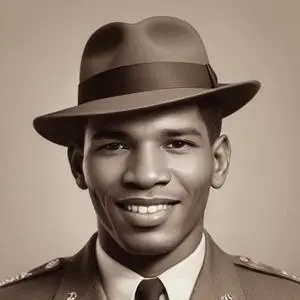
A civil rights leader who fought for racial equality and social justice, assassinated in 1963, sparking widespread outrage and fueling the Civil Rights Movement.
Medgar Evers was a trailblazing civil rights activist who dedicated his life to challenging segregation and racial discrimination in Mississippi during the 1950s and 1960s. As the first field secretary of the NAACP in Mississippi, Evers played a pivotal role in organizing protests, boycotts, and voter registration drives to secure equal rights for African Americans.
Born on July 2, 1925, in Decatur, Mississippi, Evers grew up in a segregated society that denied him and his community basic human rights. However, he refused to accept the status quo and instead chose to fight for change. After serving in the United States Army during World War II, Evers became involved in the civil rights movement, working tirelessly to overturn segregation at the University of Mississippi and expand opportunities for African Americans.
Evers' work was instrumental in exposing the brutal reality of racial discrimination in Mississippi. He played a crucial role in documenting and publicizing the violent attacks on African Americans who attempted to exercise their right to vote. Through his efforts, Evers helped to bring national attention to the issue, prompting the Kennedy administration to take action and eventually pass the Civil Rights Act of 1964.
In recognition of his outstanding contributions to the civil rights movement, Evers was awarded the NAACP's highest honor, the Spingarn Medal, in 1963. This prestigious award is given annually to recognize outstanding achievement by an African American.
On June 12, 1963, Evers' life was tragically cut short when he was assassinated in front of his home in Jackson, Mississippi. His murder sparked widespread outrage and protests, with many civil rights leaders and organizations calling for justice. In 1994, Byron De La Beckwith, a white supremacist, was finally convicted of Evers' murder, 31 years after the crime.
Evers' legacy extends far beyond his tragic death. He inspired a generation of civil rights activists, including Martin Luther King Jr., who credited Evers as a key influence on his own work. Today, Evers is remembered as a champion of racial equality and a hero of the civil rights movement.
Evers believed that the struggle for civil rights was not just about achieving legal equality, but also about transforming the hearts and minds of white Americans. He advocated for nonviolent resistance and encouraged African Americans to take pride in their heritage and identity.
Medgar Evers' courageous struggle for racial equality has had a lasting impact on modern society. His work helped to pave the way for landmark legislation, including the Civil Rights Act of 1964 and the Voting Rights Act of 1965. Today, Evers' legacy inspires continued efforts to promote social justice and equality.
Medgar Evers' widow, Myrlie Evers, continued his work as a civil rights activist, becoming a prominent leader in her own right. She served as the national chair of the NAACP and worked tirelessly to promote social justice and equality.
Medgar Evers' life and legacy serve as a powerful reminder of the ongoing struggle for racial equality and social justice in America. His fearless crusade against segregation and discrimination continues to inspire generations of activists, scholars, and citizens striving to create a more just and equal society.
97 Years Old
A prominent leader in the civil rights movement, advocating for racial equality and social justice through nonviolent means, leaving a lasting impact on American history.
Born in 1913
Refused to give up her seat on a Montgomery, Alabama bus to a white person, sparking the Montgomery Bus Boycott, a pivotal event in the Civil Rights Movement.
Born in 1917
The 35th President of the United States was a charismatic leader who navigated the country through the Cuban Missile Crisis and advocated for civil rights, leaving a lasting legacy in American politics.
Born in 1925
A prominent figure in the Civil Rights Movement, advocating for African American rights and self-defense, and a powerful orator who inspired a generation.
93 Years Old
A pioneering civil rights activist and journalist who fought for racial equality and justice, particularly in the aftermath of her husband's assassination.
Born in 1918
A South African lawyer and politician who fought against apartheid, becoming the country's first black president and a symbol of racial reconciliation, earning a Nobel Peace Prize. He's a beacon of hope and freedom.
Born in 1908
A trailblazing lawyer and civil rights champion who broke racial barriers in the US justice system, serving as the first African American on the Supreme Court. He fought tirelessly for equality and justice, leaving a lasting impact on American history.
85 Years Old
A 14-year-old boy brutally murdered in Mississippi in 1955 for allegedly whistling at a white woman, sparking widespread outrage and contributing to the Civil Rights Movement. His tragic death remains a powerful symbol of racial injustice.
