


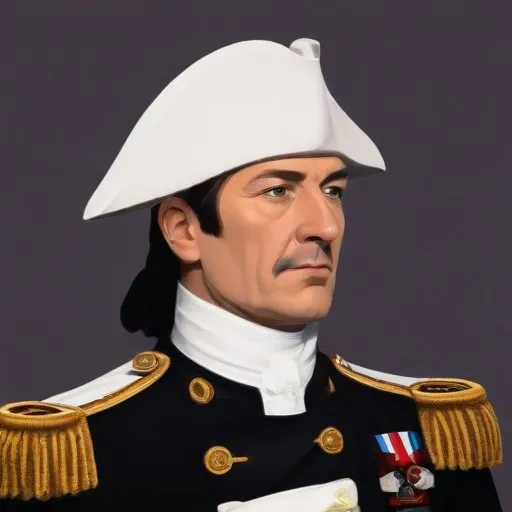
A British naval officer who commanded the Mediterranean Fleet and was involved in a famous naval disaster, leading to significant changes in naval safety procedures.
Known for his tragic demise as the commander of HMS Victoria, which collided with HMS Camperdown during naval manoeuvres off Tripoli, Lebanon in 1893, Vice-Admiral Sir George Tryon left an indelible mark on the British Royal Navy.
Born on January 4, 1832, at Bulwick Park, Northamptonshire, England, Tryon was the third son of Thomas Tryon and Anne Trollope. His brothers, Thomas and Henry, also pursued military careers, with Henry fighting in the Crimean War and Thomas serving in the Indian Mutiny.
Tryon's interest in the navy was self-motivated, and he attended a preparatory school before joining Eton College. In 1848, at the age of 16, he became a naval cadet, two years older than usual. His peers described him as a quick learner with a broad range of knowledge.
Tryon's naval training took place on board ship, and he was posted to HMS Wellesley in spring 1848. Under the command of Captain George Goldsmith and Admiral the Earl of Dundonald, Tryon learned the art of handling sailing ships, which was the primary focus of naval training at the time. However, within a decade, steam power would become the norm in the navy.
Tryon's career was marked by steady progress, and he became a commander in 1863. He served as the commander of HMS Liverpool during the Egyptian War of 1882 and was later promoted to rear-admiral in 1885.
In 1893, Tryon was appointed commander-in-chief of the British Mediterranean Fleet. During a naval exercise off Tripoli, Lebanon, on June 22, 1893, his flagship HMS Victoria collided with HMS Camperdown, resulting in the sinking of the Victoria and the loss of over 350 lives, including Tryon's.
The tragic incident led to a significant overhaul of naval procedures and safety protocols. The British Royal Navy's response to the disaster paved the way for improved communication, navigation, and emergency preparedness.
Tryon's legacy extends beyond his naval career. He was a pioneer in the development of naval tactics and strategy, and his contributions to the British Royal Navy's growth and modernization are still recognized today.
Sir George Tryon's life was marked by tragedy, but his contributions to the British Royal Navy have left a lasting impact on naval history. His legacy serves as a reminder of the importance of safety, innovation, and leadership in the pursuit of excellence.
57 Years Old
A skilled and tenacious midfielder who played for Leeds United and the English national team, earning 42 caps and scoring a crucial goal in the 1992 European Championship semifinals.
Born in 1882
A British naval officer and politician who served as Lord Lieutenant of Somerset, known for his military and administrative accomplishments in the 18th century. He played a significant role in shaping the region's governance and defense.
