


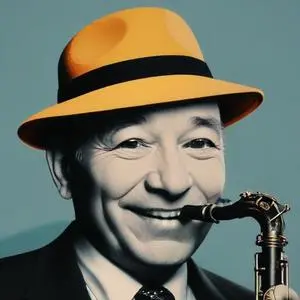
Co-founder of the iconic Newport Folk Festival, a legendary music producer and pianist who brought together folk, jazz, and blues legends on stage. Known for curating unforgettable musical experiences.
George Wein, the renowned American jazz promoter, pianist, and producer, is most famously known for founding the iconic Newport Jazz Festival, a summer staple in Newport, Rhode Island. He also co-founded the Newport Folk Festival with Pete Seeger and Theodore Bikel, cementing his legacy as a pioneering force in the jazz and folk music world.
Born on October 3, 1925, in Lynn, Massachusetts, Wein's early life was steeped in music. His mother, Ruth, was an amateur piano player, and his father, Barnet, worked as an ear, nose, and throat doctor. Wein began learning piano at the age of eight and developed a passion for jazz during his high school years in Newton.
Wein's career was marked by a series of groundbreaking ventures. After serving in the U.S. Army during World War II, he graduated from Boston University's College of Liberal Arts in 1950. He went on to open the Storyville jazz club at Boston's Copley Square Hotel, which, despite an initial closure, eventually reopened at the Buckminster Hotel near Fenway Park.
In 1954, Wein organized the first outdoor jazz festival in the United States, the Newport Jazz Festival, with funding provided by Louis and Elaine Lorillard. This pioneering event became an annual tradition, solidifying Wein's reputation as a visionary promoter.
Wein also established the Storyville record label and taught a course at Boston University on the history of jazz. His company, Festival Productions, promoted large-scale jazz events worldwide, including the New Orleans Jazz & Heritage Festival and the Playboy Jazz Festival in Los Angeles.
Wein's contributions to the jazz and folk music landscape are immeasurable. He was instrumental in the founding of various festivals, including the Newport Folk Festival, which he co-founded with Pete Seeger and Theodore Bikel. These events brought together legendary performers and introduced new talent to the world.
Wein's legacy extends beyond his festivals, with a lasting impact on modern society. He has been recognized for his contributions to the preservation and promotion of jazz, receiving numerous awards and honors, including a Grammy Lifetime Achievement Award and a National Endowment for the Arts Jazz Masters Fellowship.
Wein's personal milestones include serving in the U.S. Army during World War II and graduating from Boston University's College of Liberal Arts in 1950. He also taught a course on the history of jazz at Boston University and was an avid advocate for jazz education.
Wein's philosophical approach to jazz promotion was centered around creating opportunities for musicians to showcase their talents and bringing people together through music. He believed in the power of jazz to transcend boundaries and unite people across generations.
Wein's career was not without controversy. There were times when his festivals faced financial struggles, and he faced criticism for his booking decisions. However, his dedication to the jazz community and his unwavering commitment to promoting the genre ultimately earned him widespread respect and admiration.
Wein's festivals and productions have had a profound impact on popular culture. The Newport Jazz Festival, in particular, has been a launching pad for countless legendary performances, including those by Miles Davis, John Coltrane, and Duke Ellington. His events have also inspired numerous films, books, and documentaries.
George Wein's legacy continues to shape the jazz and folk music landscape. He passed away on September 13, 2021, but his contributions will be felt for generations to come. As a pioneering promoter, producer, and pianist, Wein left an indelible mark on the music world, ensuring his place as one of the most important figures in jazz history.
Born in 1919
A legendary folk musician and social activist, known for his iconic banjo-playing and protest songs that inspired generations to take action for civil rights and environmental causes.
85 Years Old
A folk music icon, known for her soaring vocals and classic hits like "Diamonds & Rust," who used her platform to advocate for civil rights and social justice.
85 Years Old
A legendary musician and poet who transformed the music industry with his thought-provoking lyrics and distinctive voice, leaving an indelible mark on popular culture.
82 Years Old
A highly influential and innovative folk-rock artist, known for poetic lyrics and soaring vocals, who has inspired generations of musicians across multiple genres.
87 Years Old
A folk music icon, known for her soaring vocals and classic hits like "Both Sides Now" and "Send in the Clowns", blending traditional and contemporary styles.
Born in 1913
A blues legend who electrified the genre with his signature sound and influential hits like "Hoochie Coochie Man" and "Mannish Boy", shaping the course of rock 'n' roll .
Born in 1917
A legendary blues musician who mesmerized audiences with his unique, boogie-woogie guitar style and soulful vocals, creating a distinctive sound that influenced many rock and roll artists.
Born in 1910
A blues legend who electrified audiences with his powerful voice and guitar playing, creating a unique sound that influenced many rock and roll artists.
