


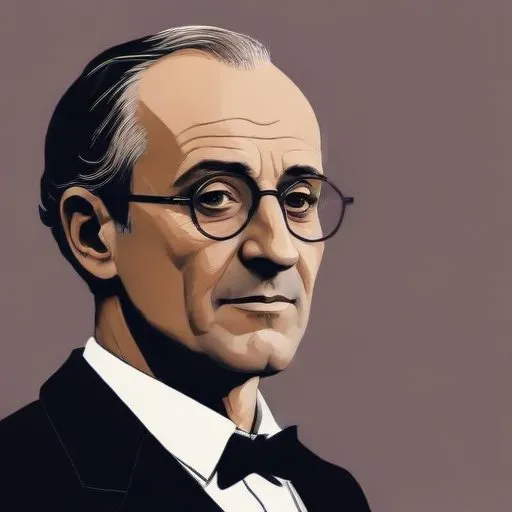
A French journalist, author, and poet who wrote extensively on literature, art, and culture, and was known for his poetic and introspective style. His works often explored the human condition and the search for meaning.
Georges-Emmanuel Clancier was a renowned French poet, novelist, and journalist, celebrated for his remarkable contributions to literature and journalism. He is best known for winning prestigious awards, including the Prix Goncourt for poetry, the Grand Prize of the Académie française, and the Grand Prize of the Société des gens de lettres.
Clancier was born on May 3, 1914, in Limoges, France. He began writing poems and novels at a young age and soon started working for journals, including Les Cahiers du Sud, in 1933. His early career was marked by a strong passion for literature and a desire to make a name for himself in the French literary circle.
During World War II, Clancier joined the editorial board of the journal Fontaine, led by Max-Pol Fouchet in Algiers. He played a crucial role in collecting and transmitting secretly texts of writers of the French Resistance to occupied France between 1942 and 1944. This courageous act demonstrated his commitment to promoting freedom of expression and supporting writers during a time of great turmoil.
Clancier's literary contributions are vast and varied. He founded the magazine Centres with Robert Margerit and René Rougerie and edited a collection of poems, manuscripts, poetry, and criticism for Éditions Rougerie. His novel series, Le Pain noir, published between 1956 and 1961, tells the story of his family and his maternal grandmother, an illiterate shepherd. This work was adapted for television in 1974.
Clancier was a strong advocate for freedom of expression and the promotion of literature. He believed in the power of writing to bring people together and to inspire positive change. Throughout his career, he worked tirelessly to support writers and to promote literary excellence.
Some of Clancier's notable works include:
Georges-Emmanuel Clancier's contributions to literature and journalism have left a lasting impact on modern society. He inspired generations of writers and continues to be celebrated for his courageous wartime efforts and his commitment to promoting freedom of expression. His work serves as a testament to the power of literature to bring people together and to inspire positive change.
Born in 1905
Existentialist philosopher and playwright who argued that humans have complete freedom to choose their actions and create their own meaning in life, influencing modern thought on morality and individual responsibility.
Born in 1908
A pioneering feminist philosopher who wrote extensively on ethics, politics, and gender, famously arguing that "one is not born, but rather becomes, a woman."
Born in 1913
A French novelist, philosopher, and journalist who wrote influential works like "The Stranger" and "The Plague", exploring absurdism and the human condition.
Born in 1901
A French historian, theorist, and author who wrote influential novels and essays on art, politics, and human condition, exploring the complexities of modern society.
Born in 1889
A renowned French creative force, celebrated for his innovative and surreal works that blurred the lines between literature, art, and cinema, leaving an indelible mark on 20th-century culture.
Born in 1897
A leading figure of the French Resistance during WWII, he wrote influential poetry and novels that explored the human condition, blending politics and art.
Born in 1896
French poet and author who founded Surrealism, a cultural movement that explored the subconscious and the world of dreams. He wrote novels, poems, and essays that continue to influence art and literature today.
