


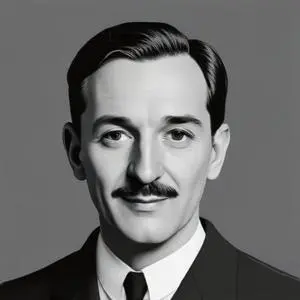
A French-Swiss physician and neurologist who identified and described the neurological disorder characterized by involuntary vocalizations and physical tics, now known as Tourette's syndrome. His work shed light on the complexities of the human brain and behavior.
Georges Gilles de la Tourette, a French neurologist, is renowned for his groundbreaking work on a neurological condition characterized by involuntary vocalizations and physical tics, now known as Tourette syndrome. His tireless efforts to understand and describe this peculiar disorder have earned him a permanent place in the annals of medical history.
Gilles de la Tourette was born on October 30, 1857, in the quaint town of Saint-Gervais-les-Trois-Clochers, France. He was the eldest of four children, and his family instilled in him a strong passion for learning from an early age. Gilles de la Tourette pursued medical studies at Poitiers, where he excelled academically and gained admission to the prestigious Laennec Hospital in Paris.
Gilles de la Tourette's internship began in 1884, under the guidance of the esteemed neurologist Jean-Martin Charcot. This marked the beginning of a fruitful collaboration that would shape his career and contribute significantly to the field of neurology. Gilles de la Tourette's work on hysteria, psychotherapy, and mesmerism (modern-day hypnosis) earned him recognition as an authority in his field.
In 1884, Charcot tasked Gilles de la Tourette with investigating motor disorders, including latah, myriachit, and the Jumping Frenchmen of Maine. Gilles de la Tourette's meticulous research led him to believe that these conditions were related and distinct from chorea. He documented the symptoms of Tourette syndrome in a patient and collected previous observations of similar cases, publishing his findings in 1885. Although his work was not initially well received, Charcot later renamed the syndrome "Gilles de la Tourette's illness" in his honor.
Gilles de la Tourette's pioneering work has had a profound impact on our understanding of Tourette syndrome. His discovery has enabled researchers to develop more effective treatments and raised awareness about this neurological condition. Furthermore, his contributions to the fields of hypnotism, hysteria, and psychotherapy have paved the way for advancements in modern psychology.
Georges Gilles de la Tourette's legacy extends beyond his remarkable discovery. He was a dedicated mentor, teacher, and clinician who inspired generations of neurologists and researchers. His unwavering commitment to understanding the complexities of the human brain has left an indelible mark on the history of neurology.
Today, Gilles de la Tourette's work serves as a testament to the power of human curiosity and perseverance. His story is an inspiration to anyone who has ever been driven to unlock the secrets of the human body and mind.
Born in 1825
A pioneering neurologist and psychologist who laid the groundwork for modern psychiatry, particularly in the study of hysteria and hypnosis.
Born in 1856
Pioneering psychoanalyst who developed theories on the subconscious mind, childhood experiences, and the structure of personality, revolutionizing our understanding of human behavior and psychology.
Born in 1857
A French neurologist and academic who discovered the Babinski reflex, a diagnostic tool for neurological disorders, and made significant contributions to the field of neurology.
Born in 1849
A renowned physician and author who revolutionized medical education and practice with his emphasis on bedside learning and humane patient care. He's also known for his witty writings and insightful essays on medicine and life.
77 Years Old
A renowned development economist and professor, he's most known for his groundbreaking research on poverty, civil war, and African economies, offering insightful solutions for global development.
