


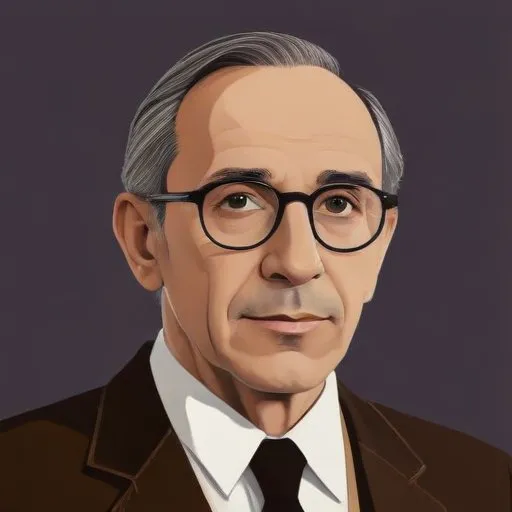
Developed the Higgs mechanism, a fundamental concept in particle physics that explains how particles acquire mass, and was a prominent figure in the discovery of the Higgs boson.
Gerald Guralnik, a renowned physicist, is best known for his groundbreaking work on the Higgs mechanism and Higgs boson alongside C. R. Hagen and Tom Kibble in 1964. This seminal discovery, recognized as one of the milestone papers in Physical Review Letters' history, paved the way for a deeper understanding of particle physics.
Guralnik was born on September 17, 1936, and grew up with a passion for science. He earned his BS degree from the Massachusetts Institute of Technology in 1958 and went on to receive his PhD degree from Harvard University in 1964.
In 1964, Guralnik, Hagen, and Kibble published a paper that introduced the concept of spontaneous symmetry breaking in gauge theories, which led to the prediction of the Higgs boson. Although widely acknowledged as one of the most complete and influential papers on the subject, Guralnik and his collaborators were controversially overlooked for the 2013 Nobel Prize in Physics.
Guralnik's work did not go unnoticed, however. In 2010, he was awarded the American Physical Society's J. J. Sakurai Prize for Theoretical Particle Physics for his contributions to the elucidation of spontaneous symmetry breaking in four-dimensional relativistic gauge theory.
Guralnik's work on the Higgs mechanism has had a profound impact on our understanding of particle physics, influencing generations of physicists. His discovery has led to significant advances in the field, including the detection of the Higgs boson in 2012.
Despite being overlooked for the Nobel Prize, Guralnik's contributions to physics are undeniable. His legacy serves as a testament to the power of collaborative research and the importance of recognizing the achievements of scientists who have shaped our understanding of the universe.
Guralnik passed away on April 26, 2014, at the age of 77, leaving behind a rich legacy in the world of physics.
Throughout his life, Guralnik was driven by a passion for discovery and a dedication to his work. His story serves as an inspiration to scientists and non-scientists alike, demonstrating the importance of perseverance and collaboration in pursuit of groundbreaking research.
97 Years Old
A theoretical physicist who proposed the existence of the Higgs boson, a fundamental particle in the universe, and was awarded the Nobel Prize in Physics for this groundbreaking work.
94 Years Old
A Belgian physicist and academic who won the Nobel Prize for his work on the Higgs boson, a fundamental particle in the universe, and its associated field. His research helped explain how particles acquire mass.
Born in 1922
A Nobel Prize-winning physicist and mathematician who discovered the muon neutrino, a subatomic particle, and made significant contributions to our understanding of the universe. His work has far-reaching implications for particle physics and beyond.
93 Years Old
Developed a unified theory of electromagnetism and the weak nuclear force, predicting the existence of neutral currents. This work led to a deeper understanding of subatomic particles and their interactions.
97 Years Old
A pioneer in particle physics, discovering subatomic particles like quarks and gluons, and developing the theory of quantum chromodynamics.
Born in 1918
A brilliant physicist and engineer who pioneered quantum mechanics and famously explained complex concepts in simple terms, making science accessible to all.
84 Years Old
A brilliant mind who unraveled the mysteries of black holes and the universe, making complex physics accessible to all through bestselling books.
95 Years Old
A renowned expert in the fields of physics, mathematics, and philosophy, known for his groundbreaking work on black holes, cosmology, and the nature of consciousness. His theories have reshaped our understanding of the universe and the human mind.
