


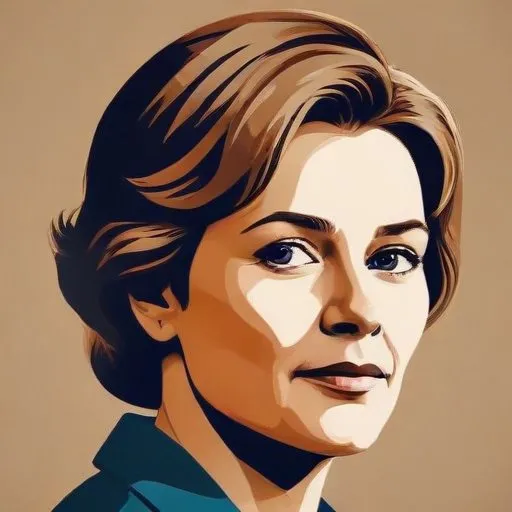
A Dutch trade union leader and politician who served as Minister of Agriculture, known for her efforts to improve agricultural policies and workers' rights. She played a key role in shaping the country's agricultural sector.
Gerda Verburg, a distinguished Dutch politician and diplomat, has left an indelible mark on the global food and agriculture landscape. As the Permanent Representative of the Kingdom of the Netherlands to the United Nations organizations for Food and Agriculture in Rome, she has been a driving force in promoting sustainable development, eradicating hunger, and ensuring food security for all.
Verburg's journey in public service began in the late 1990s, when she was elected as a Member of Parliament for the Christian Democratic Appeal (CDA) party. Throughout her tenure, she focused on matters of social affairs, European Union policies, and energy and innovation. Her dedication to improving the lives of marginalized communities and promoting sustainable development earned her a reputation as a champion of social justice.
In 2007, Verburg was appointed as the Minister of Agriculture, Nature, and Food Quality in the fourth Balkenende cabinet. During her tenure, she championed policies aimed at promoting sustainable agriculture, reducing hunger, and enhancing food security. Her leadership and vision earned her recognition as a key player in global food policy circles.
In 2011, Verburg took on a new challenge as the Permanent Representative of the Kingdom of the Netherlands to the United Nations organizations for Food and Agriculture in Rome. As the representative, she worked tirelessly to promote sustainable development, reduce hunger, and improve food security globally. Her expertise and diplomatic prowess have made her a respected voice in international forums.
Verburg's roots in agriculture date back to her early life. Born on August 19, 1957, in a family of farmers, she was exposed to the importance of sustainable agriculture and its impact on communities. Her education at Protestant schools in Bodegraven and Alphen aan den Rijn laid the foundation for her future endeavors. She later pursued a degree in personnel work and labor relations at the IJsselpoort Protestant School of Social Work in Kampen.
Verburg's professional journey began as the general secretary of Christian Rural Youth. She later worked for the National Federation of Christian Trade Unions in the Netherlands, where she held various leadership positions between 1982 and 1997. Her experience in the trade union movement instilled in her a deep understanding of the needs of workers and the importance of social justice.
Verburg's philosophical underpinnings are rooted in her commitment to social justice, equality, and sustainable development. She firmly believes that food security is a fundamental human right and that sustainable agriculture is key to achieving this goal. Her advocacy for the rights of marginalized communities, particularly women and small-scale farmers, has been instrumental in shaping global food policy debates.
Verburg's impact on modern society is multifaceted. Her tireless advocacy for food security, sustainable development, and social justice has inspired a new generation of leaders to take up the mantle. Her legacy extends beyond the realm of politics, as her work has improved the lives of millions of people around the world.
The world is a better place thanks to Gerda Verburg's unwavering dedication to creating a more just and equitable society. Her contributions to the fields of food security, sustainable development, and social justice continue to inspire and motivate individuals to work towards a brighter future for all.
59 Years Old
The Prime Minister of the Netherlands, leading the country since 2010, known for his economic policies and handling of the European migrant crisis.
65 Years Old
The First Vice President of the European Commission, a seasoned diplomat and politician, is known for championing climate action, social justice, and EU integration. He's a key figure in shaping the EU's policies and future.
85 Years Old
A trailblazing European Commissioner who championed digital innovation, bridging the gap between technology and society. She's credited with shaping the EU's digital agenda, promoting a single digital market, and fostering a culture of entrepreneurship.
63 Years Old
A Dutch politician and educator who advocated for social democracy and served as the leader of the Socialist Party, known for his progressive views on education and social welfare.
