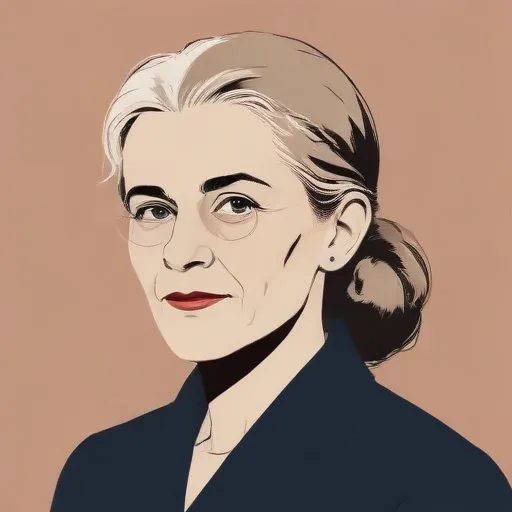
Germaine Tillion: A French Ethnologist and Resistance Heroine
The Unyielding Legacy of a French Icon
Germaine Tillion is renowned for her groundbreaking ethnological research in Algeria and her courageous contributions to the French Resistance during World War II. As a prominent figure in the French intellectual circle, Tillion's remarkable life is a testament to her unwavering dedication to cultural understanding, human rights, and social justice.
Early Life and Educational Foundations
Born on May 30, 1907, in Allegre, Haute-Loire, France, Germaine Tillion was the daughter of Lucien Tillion, a magistrate, and Émilie Cussac Tillion, an art historian and French resistance fighter. Raised in a Catholic family with a strong emphasis on education, Tillion's curiosity and passion for anthropology led her to pursue degrees from the École Pratique des Hautes Études, the École du Louvre, and the INALCO.
Fieldwork in Algeria and the Emergence of an Ethnologist
Between 1934 and 1940, Tillion conducted extensive fieldwork in Algeria, focusing on the Chaoui Berber people in the Aures region. Her research laid the foundation for her doctorate in anthropology and cemented her reputation as a leading ethnologist of her time.
The French Resistance and Imprisonment in Ravensbrück
As the German occupation of France began in 1940, Tillion joined the French Resistance, participating in various clandestine activities, including helping prisoners escape and gathering intelligence for the Allied forces. Unfortunately, she was betrayed by a priest named Robert Alesch and arrested on August 13, 1942. Tillion was later deported to the Ravensbrück concentration camp, where she was imprisoned from 1943 to 1945. During her incarceration, she secretly wrote an operetta comedy to boost the morale of her fellow prisoners.
Post-War Contributions and Legacy
After her liberation from Ravensbrück, Tillion continued to work in Algeria, advocating for the rights of the indigenous population and promoting cultural understanding between France and Algeria. Her remarkable life and work have inspired generations of anthropologists, historians, and social activists. Tillion's legacy extends beyond her academic achievements, as she remains an emblem of French resistance and a testament to the power of human resilience in the face of adversity.
Awards and Honors
- Médaille de la Résistance (Resistance Medal)
- Croix de Guerre (War Cross)
- Médaille des Évadés (Escapees' Medal)
- Commandeur de la Légion d'Honneur (Commander of the Legion of Honor)
Personal Milestones and Key Life Events
- 1934-1940: Conducted fieldwork in Algeria
- 1940: Joined the French Resistance
- 1942: Arrested and deported to Ravensbrück
- 1945: Liberated from Ravensbrück
- 2008: Passed away on April 18
Inspirational Quotes
- "The most important thing is to stay human, even in the midst of inhumanity."
- "Culture is the foundation of humanity; it is what makes us human."
Germaine Tillion's remarkable life serves as a beacon of hope and inspiration, reminding us of the importance of cultural understanding, social justice, and human resilience in the face of adversity. Her legacy continues to inspire generations, ensuring that her courageous spirit and groundbreaking work remain an integral part of our collective cultural heritage.
FAQ
What was Germaine Tillions contribution to French anthropology?
Germaine Tillion was a French anthropologist and academic who made significant contributions to the field of anthropology, particularly in the areas of Berber studies and womens studies.
What did Germaine Tillion study in North Africa?
Germaine Tillion conducted extensive research in North Africa, studying the Berber people and their cultures. Her work helped to promote a greater understanding of Berber society and culture.
Did Germaine Tillion win any awards for her work?
Yes, Germaine Tillion won several awards for her work, including the Grand Prix de la Francophonie and the Prix de lAcadémie française.
What was Germaine Tillions role in the French Resistance?
During World War II, Germaine Tillion played an active role in the French Resistance, helping to smuggle Jews and others out of occupied France.
What is Germaine Tillions legacy in modern anthropology?
Germaine Tillions legacy in modern anthropology is one of pioneering research and dedication to the field. Her work has inspired generations of anthropologists and continues to influence the field today.