


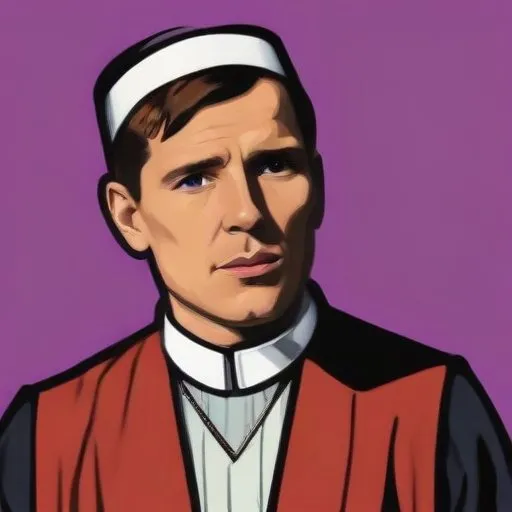
A 17th-century radical who advocated for the abolition of private property and the establishment of a communal society, believing that God's kingdom could be realized on earth.
Gerrard Winstanley, a 17th-century English Protestant reformer, is notably remembered as the leader and founder of the True Levellers, also known as the Diggers. He championed a unique blend of religious and social activism, advocating for the return of common land to the community, challenging the status quo of private ownership.
Born in 1609, Winstanley was baptised in the parish of Wigan, Lancashire. His father, Edward Winstanley, was a mercer, and little is known about his mother. In 1630, Winstanley moved to the City of London, where he apprenticed as a merchant tailor. He eventually became a freeman of the Merchant Tailors Company in 1638. Winstanley married Susan King, the daughter of a London surgeon, in 1639.
The First English Civil War disrupted Winstanley's business, leading to bankruptcy in 1643. With the help of his father-in-law, he relocated to Cobham, Surrey, where he worked as a cowherd. It was during this period that Winstanley penned his influential pamphlet, The New Law of Righteousness. Drawing inspiration from the Book of Acts, Winstanley argued that the Earth was meant to be a common treasure, rather than a repository of private wealth.
The Diggers' movement, led by Winstanley, sought to reclaim and redistribute common land that had been privatised by enclosures. They believed that by working the land together, people could live in harmony and mutual support, free from the shackles of private property and oppression. Winstanley's vision was guided by his conviction that the Earth was a shared resource, meant to provide for the collective well-being of humanity.
Winstanley's most notable works include The New Law of Righteousness, The True Levellers Standard Advanced, and A New-year's Gift for the Parliament and Army. These writings showcased his commitment to social and economic reform, as well as his theological interpretations.
Today, Winstanley is remembered as a pioneering figure in the struggle for social justice and egalitarianism. His ideas continue to inspire modern social movements, from environmentalism to anarchism.
Winstanley's remarkable life and work continue to resonate with those seeking a more just and equitable society. His vision of a shared Earth, where people live in harmony and mutual support, remains an enduring inspiration for generations to come.
Born in 1599
Leader of the Parliamentarian forces during the English Civil War, who later ruled England, Scotland, and Ireland as a republican dictator, known for his military victories and radical reforms.
Born in 1608
Wrote epic poems, including "Paradise Lost", that explored themes of morality, free will, and the human condition.
Born in 1628
A 17th-century Puritan minister and writer who penned influential allegorical novels, including "The Pilgrim's Progress", which remains a beloved classic in Christian literature.
Born in 1626
Lord Protector of Great Britain from 1658 to 1659, he briefly succeeded his father Oliver Cromwell, but was overthrown and exiled, leaving a legacy of failed attempts to restore the monarchy.
Born in 1612
A prominent Parliamentarian commander during the English Civil War, he led the New Model Army to several victories, playing a crucial role in the execution of King Charles I.
