


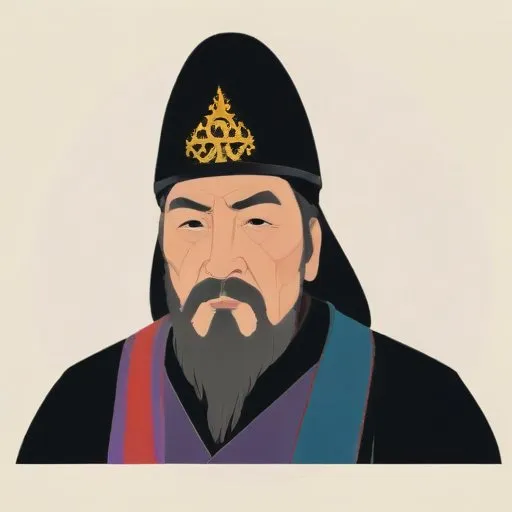
The Mongol ruler of the Ilkhanate who converted to Islam and implemented reforms, promoting religious tolerance and cultural exchange, and is known for his military campaigns and administrative skills.
Ghazan, the seventh ruler of the Mongol Empire's Ilkhanate division, is best known for his historic conversion to Islam in 1295, marking a pivotal shift in the dominant religion of the Mongols in West Asia, including present-day Iran, Iraq, Anatolia, and the South Caucasus. This convert to Islam was also a skilled military leader, a patron of arts and culture, and a reformer of the Ilkhanate's economy and administration.
Ghazan was born on December 11, 1271, in Abaskun, near modern-day Bandar Torkaman, Iran. He was the son of Arghun, the sixth Ilkhan, and his concubine, Kultak Egechi of the Drbd tribe. Ghazan spent his childhood in the nomadic palace of his grandfather Abaqa's favorite wife, Buluqhan Khatun, who raised him as her own.
In 1295, Ghazan succeeded his uncle, Gaykhatu, as the ruler of the Ilkhanate. Shortly after his accession, he met with the famous Islamic scholar, Imam Ibn Taymiyya, which influenced his decision to convert to Islam. This conversion was a significant turning point in the history of the Mongols in West Asia, as it brought the region closer to the Islamic world and paved the way for the Ilkhanate's eventual decline.
Ghazan was a patron of arts and culture, speaking multiple languages and having many hobbies. He also implemented significant reforms in the Ilkhanate, including:
Ghazan had many wives, including Kkchin, a Mongol princess originally betrothed to his father, Arghun. He died on May 25, 1304, and was succeeded by his brother, Öljaitü.
Ghazan's legacy is complex and multifaceted. He brought Islam to the Mongols, which had far-reaching consequences for the region's history. He also implemented significant reforms, which improved the Ilkhanate's economy and administration. Despite his achievements, Ghazan's conversion to Islam and his military campaigns have been subject to controversy and debate among historians.
Ghazan's legacy extends beyond the Mongol Empire. His conversion to Islam had a lasting impact on the religious demographics of West Asia, while his cultural and economic achievements continue to inspire scholars and historians today.
In conclusion, Ghazan was a multifaceted figure who left an indelible mark on history. His conversion to Islam, military campaigns, and cultural achievements continue to fascinate and inspire us today.
Born in 1305
Ruler of the Ilkhanate, a khanate that played a significant role in the Mongol Empire's expansion, known for his military campaigns and administrative reforms. He strengthened the Ilkhanate's economy and promoted cultural exchange.
