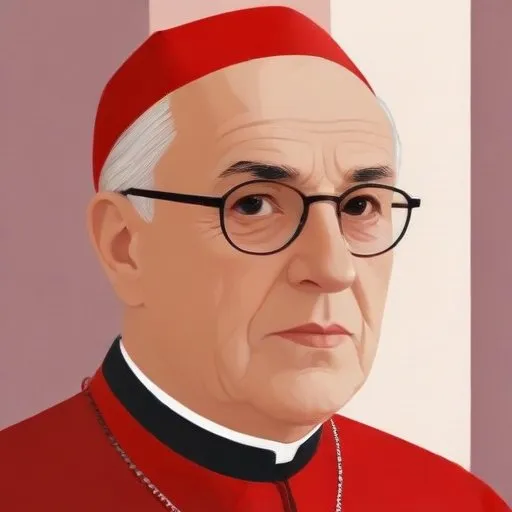
Giacomo Biffi: The Unwavering Defender of Catholic Orthodoxy
Giacomo Biffi, the Italian Cardinal of the Roman Catholic Church, was a bastion of traditional Catholic values, known for his unwavering commitment to upholding the Church's teachings and his unrelenting critique of modernity's influence on faith.
A Life of Service and Orthodoxy
Born in Milan on June 13, 1928, Biffi's life was marked by a deep devotion to the Catholic faith. Ordained to the priesthood in 1950, he went on to teach dogmatic theology at the Seminary of Milan, where he published numerous works on theology, catechetics, and meditation. His 1955 doctoral thesis, "La colpa e la libertà nell'odierna condizione umana" ("Guilt and Freedom in the Modern Human Condition"), demonstrated his keen intellect and understanding of the complexities of faith in the modern world.
Pastoral Work and Episcopal Consecration
Biffi's pastoral work in the Archdiocese of Milan, where he served as a parish priest and later as Episcopal Vicar for Culture, prepared him for his eventual consecration as Auxiliary Bishop of Milan in 1975. He received his episcopal consecration on January 11, 1976, from Cardinal Giovanni Colombo. This marked the beginning of his journey as a leading figure in the Catholic Church, where he would go on to serve as Archbishop of Bologna from 1984 to 2003 and as Cardinal-Priest of Santi Giovanni Evangelista e Petronio from 1985.
Defending Catholic Orthodoxy
Throughout his career, Biffi was unapologetic in his defense of Catholic orthodoxy, often finding himself at odds with those who sought to water down the Church's teachings. He was a vocal critic of modernity's influence on faith, emphasizing the importance of adhering to traditional Catholic values in the face of an increasingly secularized world.
Legacy and Impact
Biffi's legacy extends far beyond his own lifetime, leaving an indelible mark on the Catholic Church. His commitment to upholding Catholic orthodoxy has inspired generations of clergy and laity alike. As a testament to his enduring influence, he was elected President of the Episcopal Conference of Emilia-Romagna in 1984, solidifying his position as a leading figure in the Italian Catholic Church.
Quotes and Memorable Sayings
- "The Church is not a democracy, but a communion of saints."
- "In a world that worships freedom, we must remember that true freedom comes from knowing and obeying God's will."
Historical Context and Legacy
Biffi's life and work were set against the backdrop of a rapidly changing world, where the Catholic Church faced numerous challenges to its authority and tradition. His unwavering commitment to Catholic orthodoxy, however, ensured that the Church remained a beacon of truth and hope in an increasingly uncertain world.
In conclusion, Giacomo Biffi's life was a testament to the enduring power of faith and tradition. His unwavering commitment to Catholic orthodoxy has left an indelible mark on the Catholic Church, inspiring generations to come.
FAQ
What is Giacomo Biffis contribution to the Catholic Church?
Giacomo Biffi was an Italian cardinal who made significant contributions to the Catholic Church, serving as Archbishop of Bologna and playing a key role in the Second Vatican Council.
What was Giacomo Biffis role in the Second Vatican Council?
Giacomo Biffi played a key role in the Second Vatican Council, participating in the councils proceedings and contributing to the development of several important documents, including the Constitution on the Sacred Liturgy.
How did Giacomo Biffis theology influence the Church?
Giacomo Biffis theology, which emphasized the importance of scripture and tradition, had a significant impact on the Church, shaping the thinking of many bishops and theologians.
What awards did Giacomo Biffi receive for his service?
Giacomo Biffi received numerous awards for his service, including the Knight Grand Cross of the Order of Merit of the Italian Republic and the Cardinals Ring.
What is Giacomo Biffis legacy in the Catholic Church?
Giacomo Biffis legacy is one of dedication and service. He remained committed to the Church throughout his life, leaving behind a rich body of work and inspiring generations of priests and theologians.