


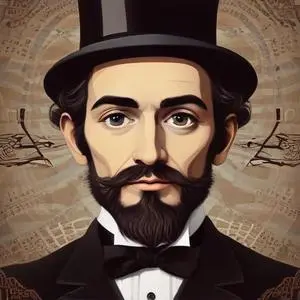
A renowned 19th-century pianist and composer, he revolutionized opera with grand, spectacular productions, blending drama, music, and dance. His works, like "Les Huguenots," remain iconic in the operatic repertoire.
Giacomo Meyerbeer, born Jakob Liebmann Meyer Beer on September 5, 1791, is renowned as the most frequently performed opera composer of the 19th century, bridging the gap between Mozart and Wagner. His groundbreaking operas, particularly Robert le diable (1831), redefined the genre of grand opera, setting a new standard for the art form.
Meyerbeer was born into a wealthy Jewish family in Tasdorf, Prussia (now Poland). His family's financial stability allowed him to pursue music from a young age, and he began his musical career as a pianist. However, he soon shifted his focus to opera, recognizing its immense potential for drama and spectacle.
In 1816, Meyerbeer traveled to Italy, where he spent several years studying and composing. This period was crucial in shaping his unique style, which merged German orchestral traditions with Italian vocal techniques. His 1824 opera, Il crociato in Egitto, brought him widespread recognition across Europe, establishing him as a rising star in the opera world.
Robert le diable, premiered in 1831, catapulted Meyerbeer to international stardom. This iconic opera, with its sensational libretto by Eugène Scribe, incorporated cutting-edge theater technology and raised the bar for dramatic storytelling in opera. Meyerbeer's innovative blend of German orchestration and Italian vocal tradition created a new, distinctly "grand" opera style.
Meyerbeer's subsequent operas, Les Huguenots (1836) and Le prophète (1849), solidified his position as the leading opera composer of his time. These works showcased his mastery of grand opera, with intricate plots, sweeping scores, and opulent productions. His operas dominated the stages of Paris, Berlin, and other major opera houses, cementing his status as a legend in his own lifetime.
As a true patron of the arts, Meyerbeer supported and mentored rising talent, including the young Richard Wagner. He facilitated the premiere of Wagner's opera Rienzi in 1842, helping to launch the composer's career.
Giacomo Meyerbeer's contributions to opera are immeasurable. He revolutionized the genre, elevating it to unprecedented heights of drama, spectacle, and musical sophistication. His operas continue to captivate audiences, inspiring new generations of composers, directors, and performers. As Hector Berlioz aptly observed, Meyerbeer "has not only the luck to be talented, but the talent to be lucky."
Meyerbeer's legacy extends beyond his operas, as he played a crucial role in establishing Paris as the opera capital of the 19th century. His influence on opera production, libretto writing, and musical composition continues to resonate today, ensuring his place as one of the most important figures in the history of opera.
Born in 1813
A revolutionary composer who transformed opera with his epic, mythological works, creating a new era of musical storytelling. His iconic operas, such as "Der Ring des Nibelungen," continue to captivate audiences worldwide.
Born in 1813
A renowned composer of iconic operas like La Traviata and Aida, known for his masterful blending of drama and music. His works continue to captivate audiences worldwide.
Born in 1809
A renowned 19th-century musician who masterfully blended classical and romantic styles, creating iconic works like the "Wedding March" and "Elijah" oratorio. His compositions continue to inspire and influence generations of artists.
Born in 1810
A renowned Romantic-era composer and influential music critic, known for his expressive and emotionally charged works, including symphonies, piano music, and art songs.
Born in 1811
A virtuosic pianist and composer who revolutionized classical music with his technically demanding and emotionally expressive works, blending Hungarian folk influences with Romantic-era drama.
Born in 1803
A French Romantic-era mastermind who composed iconic symphonies, operas, and orchestral works, revolutionizing classical music with his bold, expressive style.
Born in 1801
Operatic mastermind behind bel canto classics like "Norma" and "La Sonnambula", renowned for their beautiful, expressive melodies and dramatic flair.
Born in 1797
A renowned Italian composer of the Romantic era, best known for his operas, particularly "L'elisir d'amore" and "Don Pasquale", which are still widely performed today.
