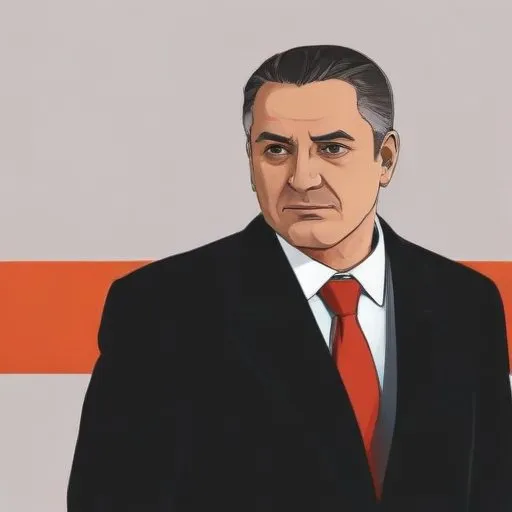
Giovanni Giuriati

Giovanni Giuriati

Giovanni Giuriati was born on August 4th, 1876

Full Name: Giovanni Battista Giuriati
Place of Birth: Venice, Italy
Profession: Lawyer and Politician
Nationality: Italian
Birth Date: August 4, 1876
Death Date: June 6, 1970
Party: National Fascist Party
Notable Role: President of the Italian Senate

An Italian lawyer and politician who served as the Minister of Justice and later as the President of the Italian Senate, known for his role in shaping Italy's fascist regime.

Written by: Victor Malone Victor Malone

Giovanni Giuriati: The Fascist Politician and Irredentist Leader

Giovanni Giuriati is renowned for his prominent role in the Italian fascist movement, serving as a minister in Benito Mussolini's government and leading the irredentist group Trento e Trieste. Born on August 4, 1876, in Venice, Giuriati's life was marked by his unwavering commitment to the fascist ideology and his unrelenting pursuit of Italian territorial expansion.

Early Life and Irredentist Activities

Giuriati graduated in law and established himself as a lawyer before becoming involved with the irredentist group Trento e Trieste in 1903. This organization sought to have the regions of Trento and Trieste secede from Austria-Hungary and join Italy. Giuriati's leadership skills quickly earned him the presidency of the group, which he used to channel aid from Italians in Austria to the earthquake-hit town of Avezzano in 1915.

World War I and the Fiume Episode

Giuriati volunteered as a soldier in World War I and was wounded twice, earning him two decorations. After the war, he returned to his legal practice but soon became involved with the paramilitary movement led by Gabriele D'Annunzio, which aimed to seize the port of Fiume (now Rijeka). Giuriati served as D'Annunzio's Prime Minister and later commanded the Carnaro legion in Zara. In 1920, he was sent to Paris to represent the military government of Fiume at the peace conference, but his efforts were in vain.

Fascist Career and Ministerial Roles

In 1921, Giuriati joined the Partito Nazionale Fascista (PNF) and was elected to the Italian Chamber of Deputies. After the March on Rome, he became Minister of Freed Territories in Mussolini's government. Giuriati played a significant role in shaping fascist policies, particularly with regards to territorial expansion and national identity.

Legacy and Controversies

Giuriati's fascist ideology and involvement in the Fiume episode have been subject to controversy and criticism. His legacy is marked by his unwavering commitment to the fascist cause, which has been interpreted by some as a form of nationalist extremism. Despite this, Giuriati remains an important figure in Italian history, embodying the complex and often conflicting forces that shaped the country's development in the early 20th century.

Personal Milestones and Key Life Events

Giovanni Giuriati's life was marked by his relentless pursuit of Italian territorial expansion and his unwavering commitment to the fascist ideology. While his legacy is controversial, his impact on Italian history and politics remains undeniable.

Timeline
1876
Birth of Giovanni Giuriati
Giovanni Giuriati was born in Italy and would go on to become a prominent lawyer and politician.
1902
Becomes Lawyer
Giovanni Giuriati became a licensed lawyer, practicing law in Italy before entering politics.
1913
Elected to Parliament
Giovanni Giuriati was elected to the Italian Parliament, where he served for several years.
1922
Fascist Party Member
Giovanni Giuriati joined the National Fascist Party, becoming a prominent figure in Italian politics during the fascist era.
1970
Passing of Giovanni Giuriati
Giovanni Giuriati passed away, leaving behind a complex legacy as a lawyer, politician, and fascist party member.
Giovanni Giuriati

Giovanni Giuriati Quiz

Giovanni Giuriati's profession before entering politics was

Score: 0/5
FAQ
What are the contributions of Giovanni Giuriati to Italian politics?
Giovanni Giuriati was a renowned Italian lawyer and politician who made significant contributions to the countrys political landscape. He served as a member of the Chamber of Deputies and was a key figure in the National Fascist Party. His efforts helped shape Italys political landscape during the early 20th century.
What was Giovanni Giuriatis role in the National Fascist Party?
Giovanni Giuriati played a crucial role in the National Fascist Party, serving as its Secretary from 1922 to 1923. During this period, he worked closely with Benito Mussolini, helping to consolidate the partys power and influence in Italy.
How did Giovanni Giuriati impact Italian law and legislation?
As a lawyer and politician, Giovanni Giuriati was instrumental in shaping Italian law and legislation. He contributed to the development of key laws and policies, leveraging his expertise to promote social and economic reform.
What was Giovanni Giuriatis stance on fascism and authoritarianism?
Giovanni Giuriati was a supporter of fascism and authoritarianism, believing that a strong centralized government was essential for Italys growth and prosperity. His views aligned with those of Benito Mussolini, and he worked to promote fascist ideology throughout his career.
What is Giovanni Giuriatis legacy in modern Italian politics?
Giovanni Giuriatis legacy in modern Italian politics is complex and multifaceted. While his contributions to the countrys political landscape are undeniable, his association with fascism and authoritarianism has been widely criticized. Today, his legacy serves as a reminder of the importance of promoting democratic values and human rights.

Related People:

Benito Mussolini

Born in 1883

Italian fascist revolutionary and politician who led the National Fascist Party and ruled Italy from 1922 to 1943, known for his authoritarian regime and aggressive military campaigns.

Italo Balbo

Born in 1896

A key developer of Mussolini's air force, he played a crucial role in shaping Italy's military aviation during World War II. He's most known for his aerial stunts and leading massive flight formations.

Galeazzo Ciano

Born in 1903

Italian Minister of Foreign Affairs who played a crucial role in shaping Italy's foreign policy during World War II, known for his diary that provided valuable insights into the war's inner workings.